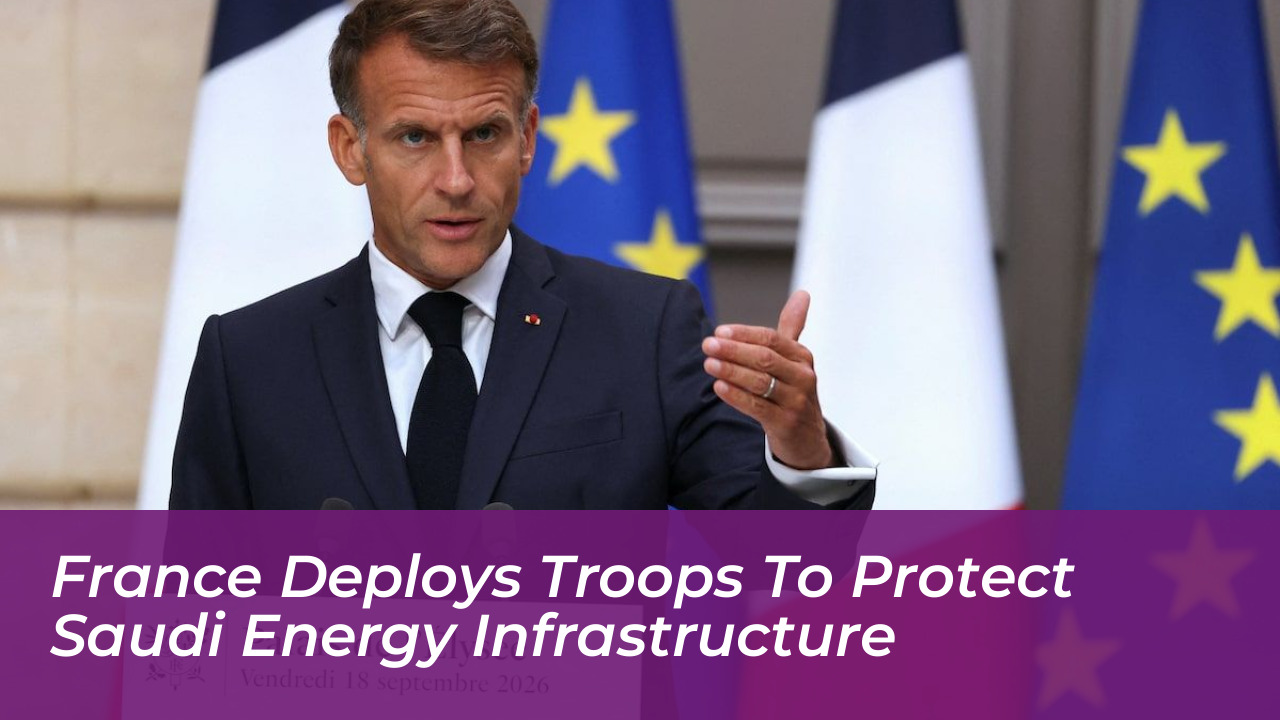
France is dispatching military personnel, radar stations, and advanced air defense systems to Saudi Arabia to safeguard energy infrastructure against mounting regional threats. This decisive action addresses vulnerabilities in international supply chains that directly impact European economic stability. President Emmanuel Macron announced the military mission during a primetime broadcast, emphasizing the urgent need to protect critical logistics hubs on the Red Sea.
- France Deploys Troops and Air Defense to Saudi Arabia
- President Macron Announces the Strategic Deployment
- Focus on the Yanbu Energy Hub
- Strategic Importance of the Yanbu Port and Pipeline
- Core Role in Global Energy Transport
- Threats from Regional Conflict and Maritime Blockades
- Geopolitical Dynamics and France’s Defensive Mandate
- Maintaining a Strictly Defensive Posture
- Bilateral Partnerships and International Diplomacy
- Domestic Economic Pressures and the French Fuel Crisis
- Record Energy Prices and Public Backlash
- Government Financial Interventions
- Future Outlook for Red Sea Security Architecture
- Operational Readiness and Market Stabilization
- Precedents for Critical Infrastructure Protection
- Expanding Defense Cooperation and Regional Stabilization
- Long-Term Economic Implications for Europe
- Frequently Asked Questions
- Why is France deploying troops to Saudi Arabia?
- What role does the Yanbu energy hub play in global trade?
- How does this deployment affect domestic fuel prices in France?
- Is the French military mission considered offensive?
France Deploys Troops and Air Defense to Saudi Arabia
The announcement from Paris signals a direct operational response to ongoing security challenges in the Middle East. French authorities are moving beyond diplomatic statements to provide tangible physical security for vital energy assets.
President Macron Announces the Strategic Deployment
President Macron detailed the military initiative during a joint broadcast on TF1 and France 2 from the Elysee Palace. The deployment package includes specialized military personnel, sophisticated radar tracking stations, and advanced air defense batteries. Officials stress that these assets serve a purely protective mandate rather than any offensive regional intervention.
The decision follows intense diplomatic negotiations held during the United Nations General Assembly in New York. Paris views Riyadh as an indispensable partner for securing Western European energy supplies against asymmetric threats.
Focus on the Yanbu Energy Hub
The primary operational focus centers on the Red Sea port city of Yanbu. This location serves as the western termination point for the massive East-West crude oil pipeline originating in Abqaiq. Bypassing vulnerable maritime bottlenecks like the Strait of Hormuz makes Yanbu an essential lifeline for international oil transport.
Securing this terminal allows crude oil to move seamlessly from eastern Saudi fields to European and North American markets. Protecting this infrastructure directly mitigates the risk of catastrophic supply shortages across the West.
Strategic Importance of the Yanbu Port and Pipeline
Yanbu stands as a cornerstone of global energy security, processing millions of barrels of crude oil daily. Any disruption to this facility reverberates instantly across international commodities markets.
Core Role in Global Energy Transport
The Petroline pipeline links major eastern production fields directly to Red Sea shipping lanes, bypassing volatile maritime choke points. This logistical artery handles colossal volumes of petroleum products destined for foreign refineries. Maintaining uninterrupted flow through this corridor is essential for preventing industrial shutdowns across Europe.
Without reliable operations at Yanbu, global shipping routes face severe bottlenecks. The terminal functions as the primary pressure release valve for Saudi crude exports when traditional maritime paths encounter hostile blockades.
Threats from Regional Conflict and Maritime Blockades
Recent missile and drone strikes by Yemen’s Iran-backed Houthi movement target alternative export channels across the Arabian Peninsula. These attacks exploit vulnerabilities in energy infrastructure and restrict commercial tanker traffic through the Bab el-Mandeb Strait. Asymmetric projectile threats make unshielded industrial sites prime targets for destabilization campaigns.
The constant threat of militant attacks forces consuming nations to rethink supply chain security. Deploying active air defense shields helps neutralize incoming airborne threats before they can damage critical processing facilities.
Geopolitical Dynamics and France’s Defensive Mandate
Positioning French military assets on the Arabian Peninsula requires a careful diplomatic balancing act. Paris maintains a strict policy of avoiding entanglement in broader regional wars.
Maintaining a Strictly Defensive Posture
President Macron reiterated that the military mission is exclusively defensive. The deployed troops and anti-aircraft systems exist solely to intercept hostile projectiles targeting the Yanbu terminal. France refuses to participate in wider military campaigns, keeping the operational scope narrow and transparent.
This targeted approach reassures domestic audiences that the deployment does not represent a slide into foreign entanglement. The focus remains locked on asset protection and maintaining open trade routes.
Bilateral Partnerships and International Diplomacy
Bilateral security agreements are taking precedence over traditional, slow-moving multilateral alliances. Direct talks between Paris and Riyadh established the framework for this rapid military deployment. Securing Saudi energy assets serves as a direct form of economic self-defense for European nations reliant on imported hydrocarbons.
The partnership highlights a pragmatic shift in foreign policy. Industrialized economies are taking independent steps to safeguard the physical assets that sustain their domestic stability.
Domestic Economic Pressures and the French Fuel Crisis
The timing of the military deployment aligns with severe internal financial strain inside France. Citizens are grappling with unprecedented energy inflation and soaring living costs.
Record Energy Prices and Public Backlash
Average diesel prices recently hit an all-time high of 2.41 euros per liter across France. This price shock triggered widespread public anger, protests, and deep anxiety regarding winter heating expenses. Unstable wholesale crude markets directly inflate everyday transport and utility bills for working families.
The government must manage intense voter frustration while navigating a national budget deficit forecast to reach 5.4 percent of gross domestic product. Economic instability at home magnifies the urgency of securing foreign energy supplies to calm wholesale markets.
Government Financial Interventions
| Economic Metric | Previous Baseline | Current Status (September 2026) |
|---|---|---|
| Average French Diesel Price | 1.85 Euros / Liter | 2.41 Euros / Liter |
| Projected French Budget Deficit | 4.8% of GDP | 5.4% of GDP |
| Emergency Consumer Aid | 0 Euros (Standard) | 450 Million Euros |
| Yanbu Defense Deployment | None (Advisory only) | Active French Troops & Air Defense |
Finance Minister David Amiel introduced a 450 million euro emergency aid package to soften the blow for motorists. Meanwhile, Prime Minister Sébastien Lecornu proposed reinvesting fuel value-added tax windfalls directly into consumer relief programs. Balancing these fiscal measures requires constant vigilance as inflation rates strain public resources.
Future Outlook for Red Sea Security Architecture
The deployment of Western military assets to western Saudi Arabia establishes a new paradigm for critical infrastructure protection.
Operational Readiness and Market Stabilization
The long-term success of the Yanbu mission relies on the operational readiness of the deployed radar networks and missile interceptors. Successfully deterring incoming attacks reassures international oil markets and helps lower wholesale prices. Mitigating supply chain shocks protects European manufacturing sectors from recurring inflationary spikes.
Securing vulnerable chokepoints demonstrates that advanced military technology can effectively deter asymmetric threats. This operational model may guide future bilateral security cooperation in other troubled shipping lanes.
Precedents for Critical Infrastructure Protection
Separating geopolitical military interventions from vital economic defense missions is becoming standard practice for major powers. Industrial nations. Major powers can no longer rely solely on passive diplomacy to keep trade corridors open. Direct military assistance tailored to energy protection ensures that global commerce continues uninterrupted despite regional hostilities.
Expanding Defense Cooperation and Regional Stabilization
Regional security frameworks require continuous adaptation to counter evolving drone and missile technologies effectively. Modern warfare demands real-time intelligence sharing between allied nations to intercept projectiles before impact. France intends to integrate its radar telemetry with existing Saudi defense grids to create a unified shield. This technical synergy minimizes reaction times and enhances the survival rate of critical industrial processing units.
Long-Term Economic Implications for Europe
European economies remain acutely vulnerable to external energy shocks that ripple through manufacturing and transportation sectors. Stabilizing Red Sea trade routes directly curbs the inflationary pressures currently eroding purchasing power across the eurozone. Ensuring uninterrupted petroleum flows allows central banks to manage interest rates without triggering severe industrial recessions. Consequently, foreign military deployments serve as indirect monetary stabilizers for domestic consumer markets.
Frequently Asked Questions
Why is France deploying troops to Saudi Arabia?
France is deploying military personnel and air defense systems to protect critical energy infrastructure, specifically the Yanbu oil terminal, against regional projectile threats.
What role does the Yanbu energy hub play in global trade?
Yanbu serves as the western termination point for major crude oil pipelines, allowing shipments to bypass the volatile Strait of Hormuz and reach Western markets.
How does this deployment affect domestic fuel prices in France?
By securing foreign supply chains and calming wholesale commodities markets, the mission aims to mitigate extreme energy inflation and stabilize domestic consumer prices.
Is the French military mission considered offensive?
No, French officials emphasize that the deployment maintains a strictly defensive mandate focused exclusively on intercepting hostile airborne threats targeting vital infrastructure.