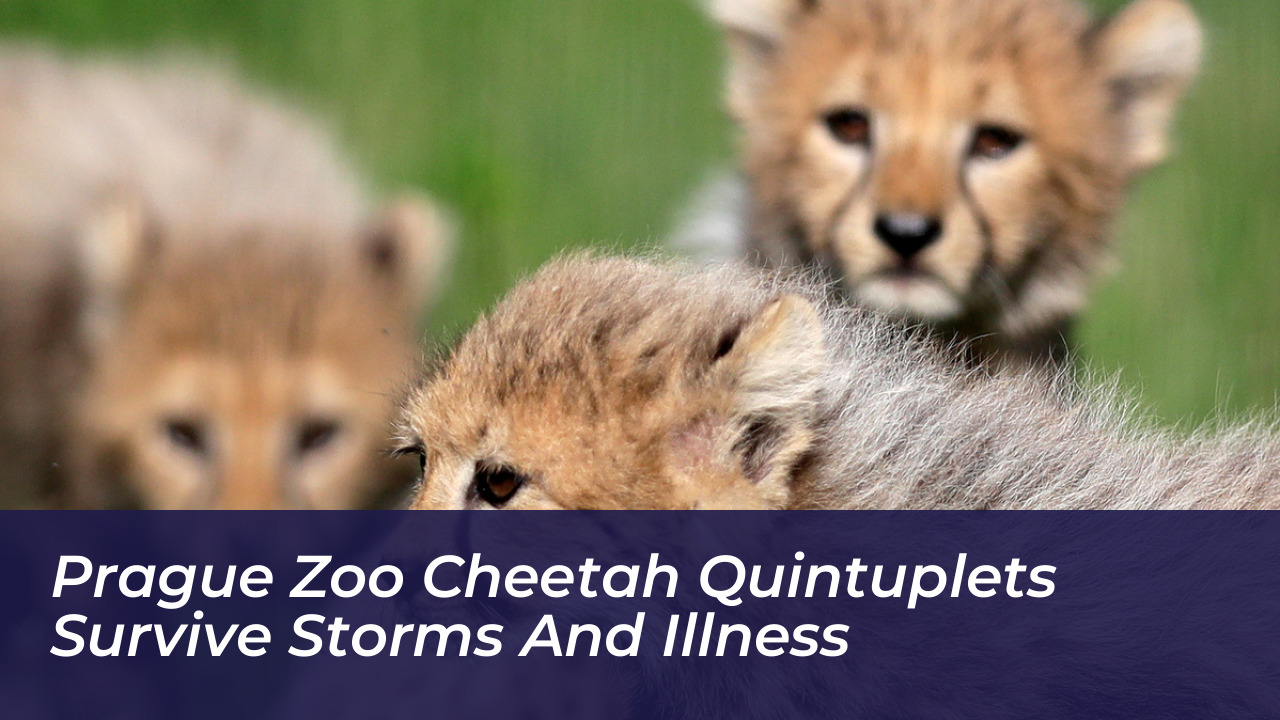
Five rare cheetah cubs born at the Prague Zoo on June 18, 2026, are thriving after overcoming severe environmental and medical challenges. The Prague Zoo cheetah quintuplets, consisting of four males and one female, entered the world during a turbulent period that tested the limits of their first-time mother, Daenerys. Zoo officials announced that the young family successfully weathered torrential downpours and a scary maternal health crisis. This article explores the dramatic birth, veterinary interventions, and the broader conservation significance of this milestone for a vulnerable species.
- A Dramatic Arrival Amid Severe Prague Storms
- The Medical Crisis: Daenerys Fights Intestinal Infection
- From Rescue to Motherhood: The Backstory of Daenerys
- The High-Risk Window Ahead
- Global Conservation Context for Cheetah Populations
- Frequently Asked Questions
- How many cubs were born in the Prague Zoo litter?
- Why did the mother give birth in an outdoor enclosure?
- What medical issues did the family face?
- How do zoological breeding programs help wild cheetah populations?
- Conclusion
Specialized breeding programs require careful genetic matching and round-the-clock monitoring by expert wildlife biologists and veterinary staff. Modern zoological facilities employ advanced reproductive technologies to support struggling populations.
A Dramatic Arrival Amid Severe Prague Storms
First-time mother Daenerys made the unexpected decision to give birth in an outdoor enclosure rather than a secure indoor den. This unconventional choice exposed the newborns to the elements immediately. Cheetah reproduction in managed care usually relies on predictable indoor environments to shield fragile infants, but Daenerys followed raw instinct instead.
Heavy storms struck the Czech Republic shortly after the delivery, exposing the fragile newborns to harsh winds and torrential downpours. Infant mortality rates among cheetahs run exceptionally high due to hypothermia and respiratory infections. A sudden drop in body temperature often proves fatal for cubs just hours old.
Zoo curator Pavel Brandl praised the mother for displaying extraordinary instincts despite her lack of prior breeding experience. Daenerys shielded her offspring from heavy rainfall by constantly licking water from their coats. This grooming technique prevented moisture from penetrating their thick dorsal mantles, effectively stopping the onset of fatal pneumonia.
Wildlife caretakers monitored the unfolding drama closely through high-definition security cameras without causing any unnecessary human disruption. Protective mother cheetahs often react aggressively to perceived threats in their immediate environment.
The Medical Crisis: Daenerys Fights Intestinal Infection
The adversity did not end with the passing of the summer storms. In August, the family faced a second major threat when Daenerys contracted a severe intestinal infection. The sudden illness caused immense tension among the animal care staff, requiring an immediate response from the veterinary team.
Veterinarians intervened to treat the mother while closely monitoring the impact on her nursing litter. Balancing potent medications for a nursing mother requires extreme precision. The medical team had to ensure the treatments cleared the infection without affecting milk production or passing toxins to the vulnerable cubs.
Despite the physical toll on the mother, the five cubs continued to receive adequate nourishment and remained free from infection. Animal caretakers observed the litter daily, noting their steady growth and energetic behavior. By late September, all five juveniles displayed vibrant health and robust activity levels within their exhibit.
Blood panels and fecal samples provided continuous data streams to confirm the complete recovery of the adult female. Preventive treatments shielded the entire family unit from secondary bacterial outbreaks.
From Rescue to Motherhood: The Backstory of Daenerys
The remarkable survival of the Prague Zoo cheetah quintuplets carries even more weight when considering the mother’s past. Daenerys arrived at the Prague Zoo from France several years ago in poor physical and psychological condition. Years of neglect or poor handling left deep scars that required intensive behavioral rehabilitation.
Staff members initially doubted whether she would ever reproduce or adjust to social group dynamics. Her successful pregnancy and attentive mothering style exceeded all initial veterinary expectations. This remarkable transformation highlights the healing power of specialized zoological care and patience.
Behavioral enrichment programs and tailored dietary plans helped restore her physical strength and neurological confidence over a multi-year timeline. Animal trainers spent countless hours building trust before introducing her to compatible breeding partners.
The High-Risk Window Ahead
While current veterinary checks show positive results, zoo experts emphasize that the danger has not fully passed. Curator Pavel Brandl notes that the first year of life remains a high-risk window for captive cheetahs. Digestive sensitivities and sudden pediatric illnesses still pose threats to growing cats.
Staff members will continue routine observations for the next twelve months to ensure the cubs transition smoothly into independence. Daily weight checks and behavioral monitoring help keepers spot microscopic signs of trouble long before symptoms become severe.
Nutritional supplementation will soon shift toward solid meat diets to support their rapidly developing skeletal structures and muscle mass. Future vaccination schedules will protect them against common feline pathogens.
Global Conservation Context for Cheetah Populations
Wild cheetah populations face severe fragmentation across their historic ranges in Africa and small pockets of Iran. Scientists estimate that fewer than 7,000 mature cheetahs remain in their natural habitats. Habitat loss, human-wildlife conflict, and the illegal wildlife trade continue to depress wild numbers.
The situation in managed care mirrors these wild pressures. European zoo populations of cheetahs have experienced a twenty-five percent decline since 2020. Every successful birth represents a vital step toward maintaining genetic diversity across institutional populations.
The birth in Prague connects directly to international rescue operations, such as the confiscation of cheetah cubs from illegal trade networks in Somaliland. Breeding programs in accredited institutions act as a biological insurance policy against extinction, ensuring the species retains a genetic foothold if wild populations collapse further.
Conservation biologists coordinate across borders to share demographic data and prevent inbreeding depression within captive studs. Public education campaigns turn these individual birth stories into broader financial and political support for wild habitat protection.
Frequently Asked Questions
How many cubs were born in the Prague Zoo litter?
Daenerys gave birth to five healthy cheetah cubs, consisting of four males and one female.
Why did the mother give birth in an outdoor enclosure?
Daenerys followed her raw maternal instincts rather than using the secure indoor den prepared by zoo staff.
What medical issues did the family face?
The newborns survived severe summer storms, and later the mother battled a dangerous intestinal infection in August.
How do zoological breeding programs help wild cheetah populations?
Managed breeding serves as a genetic backup plan and raises global awareness about wild conservation crises.
Conclusion
The incredible survival story of the Prague Zoo cheetah quintuplets highlights the resilience of the species and the dedication of modern wildlife professionals. From battling torrential downpours in an open enclosure to nursing their mother through a severe intestinal infection, these five cubs beat staggering odds. Modern zoological institutions continue to prove their worth as essential safety nets for vulnerable species facing mounting pressures across the globe.