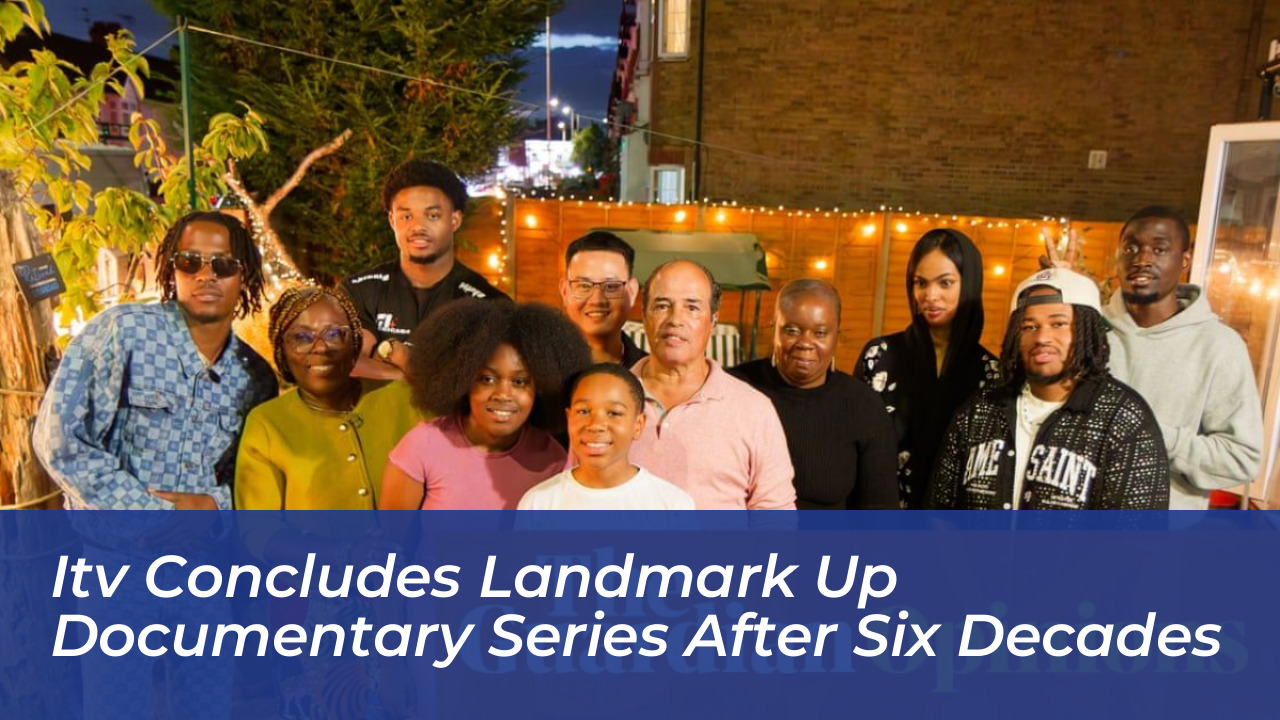
British commercial broadcaster ITV has officially concluded its seminal documentary project with the release of 70 Up, marking the tenth and final installment of a television experiment that spans 63 years. This comprehensive television event documents the participants as they reach age 70, synthesizing over six decades of archival footage with fresh interviews. Factual Controller at ITV, Jo Clinton-Davis, likened the complete series to a modern media equivalent of the Bayeux , preserving a continuous sociological record of post-war Britain.
- Introduction to the Conclusion of the Up Series
- The Origins and Premise of the Social Experiment
- Rooted in the Jesuit Maxim
- The Initial Selection of 14 Children
- Chronological Evolution Across Six Decades
- From Seven Up! to 28 Up
- From 35 Up to 63 Up
- Structure and Content of 70 Up
- The Two-Part Feature Broadcast
- Companion Programs and Archival Context
- The Catalyst for the Final Chapter: Nick Hitchon’s Legacy
- Participant Trajectories and the Reality of Class Mobility
- Examining the Complex Intersection of Environment and Choice
- Overview of Key Participants
- Conclusion: The Bayeux of British Television
- Frequently Asked Questions
- What is the Up series?
- How many installments are in the Up series?
- Who directed most of the Up series?
- Where can I watch 70 Up?
Introduction to the Conclusion of the Up Series
The final release of 70 Up on ITV1 and ITVX marks the end of a remarkable 63-year television project. This milestone brings closure to one of the most ambitious broadcasting endeavors in media history. Generations of viewers watched these individuals grow from curious seven-year-olds into senior citizens.
The scale of this longitudinal study is unprecedented, tracking 14 British children from diverse socioeconomic backgrounds every seven years. Researchers, sociologists, and television enthusiasts followed the cohort through every major life stage. The project captured the mundane realities and profound tragedies of ordinary human existence.
The cultural significance of the series extends far beyond standard television programming. It serves as a living sociological record of post-war Britain, charting the evolution of social attitudes, economic realities, and family structures. The conclusion of this journey offers a poignant reflection on time, aging, and the passage of generations.
The Origins and Premise of the Social Experiment
Rooted in the Jesuit Maxim
The philosophical foundation of the project drew inspiration from the ancient Jesuit maxim stating, give me the child until he is seven and I will show you the man. This concept of early childhood development and immutable destiny drove the initial inquiries of the production team.
Granada Television commissioned Seven Up! in May 1964 as part of the World in Action current affairs series. Producers intended to create a one-off sociological broadcast to test whether early environment truly dictates a person’s entire trajectory.
The Initial Selection of 14 Children
The production crew deliberately juxtaposed elite private school pupils with children from working-class neighborhoods and orphanages. This stark contrast aimed to highlight the rigid class divisions defining British society during the mid-20th century.
By selecting children from various socioeconomic strata, the creators tested the hypothesis of whether social class dictates a child’s future in British society. The experiment sought to uncover if systemic barriers could be overcome through individual grit or if background remained an inescapable ceiling.
Chronological Evolution Across Six Decades
From Seven Up! to 28 Up
The unexpected success of the initial broadcast transformed a one-off sociological experiment into a fixed seven-year production cycle. Subsequent installments captured the subjects navigating comprehensive school rollouts, early career entries, and the turbulent economic shifts of the 1980s.
As the participants entered their twenties and late twenties, the rigid predictions of the original thesis began to fracture. Viewers witnessed some participants breaking through class barriers while others faced unforeseen economic hurdles and shifting personal ambitions.
From 35 Up to 63 Up
The middle chapters of the series documented middle age, personal setbacks, career peaks, divorce, and the slow march toward retirement. These decades revealed the true resilience of the cohort as they dealt with the complexities of adult responsibilities.
Longtime director Michael Apted steered the project through these decades with immense empathy and journalistic rigor. His steady hand ensured the integrity of the project remained intact even as the participants grew weary of the relentless public scrutiny.
Structure and Content of 70 Up
The Two-Part Feature Broadcast
The final release features two 90-minute episodes focusing on the surviving core participants as they evaluate life trajectories, health, and mortality. These extended runtimes allow for deep, contemplative discussions about what it means to age in the modern world.
The premiere on ITV1 and the streaming platform ITVX brought millions of viewers back to a television tradition that spanned generations. Audiences tuned in to witness the final reflections of a group of people who had become surrogate family members to the British public.
Companion Programs and Archival Context
To provide adequate framing, ITV produced 7 Up: The Story, which examines the political and cultural atmosphere of 1960s Britain. This retrospective analyzes the original selection process and the social climate that birthed the experiment.
Another special feature, 70 Up: The Victorians, presents rare 1964 archival interviews with septuagenarians born during the Victorian era. This fascinating comparison highlights how the concept of old age shifted dramatically over the course of a single century.
The Catalyst for the Final Chapter: Nick Hitchon’s Legacy
The uncertainty of continuing the project following the death of director Michael Apted in 2021 cast a heavy shadow over the future of the series. Many wondered if the experiment would quietly fade away without its guiding creative force.
Participant Nick Hitchon reached out to producer Claire Lewis after receiving a terminal cancer diagnosis, expressing a desire to share his final thoughts. Hitchon, who grew up as a farm boy in the Yorkshire Dales before becoming a professor of nuclear engineering in the United States, wanted closure.
The emotional weight of Hitchon’s final interview and his subsequent passing cemented the decision to produce a formal conclusion. His final contribution ensured that the series ended with intention rather than an abrupt silence.
Participant Trajectories and the Reality of Class Mobility
Examining the Complex Intersection of Environment and Choice
Six decades of filming challenged the original deterministic thesis of the project, proving that human lives defy simple categorization. The comprehensive footage highlights the interplay of individual resilience, unexpected luck, and deeply personal decisions across the entire cohort.
While class structures undoubtedly influenced opportunities, individual agency played a massive role in shaping outcomes. Some participants born into privilege faced severe personal struggles, while others from modest beginnings built stable, fulfilling lives.
Overview of Key Participants
Participants such as Bruce Balden, Sue Davis, Tony Walker, and Neil Hughes shared vulnerable updates on their adult lives and retirement years. Their willingness to bare their souls to the camera for over half a century remains a remarkable act of public service.
The final episodes also honor those who passed away during the course of production, including Lynn Johnson. Remembering these departed individuals ensures their stories remain part of the permanent historical record.
Conclusion: The Bayeux of British Television
Reflecting on the unique achievement of recording human aging and social change in real time reveals the unmatched value of the Up series. Capturing the same individuals every seven years created a psychological depth that scripted drama can never replicate.
The enduring legacy of the Up series in television history and sociological research will inspire documentary filmmakers for generations. It stands as a monument to the power of long-term observation and the shared human experience.
Frequently Asked Questions
What is the Up series?
The Up series is a groundbreaking longitudinal documentary project that began in 1964, tracking the lives of 14 British children from diverse backgrounds every seven years.
How many installments are in the Up series?
The series consists of ten installments, beginning with Seven Up! in 1964 and concluding with 70 Up in September 2026.
Who directed most of the Up series?
British filmmaker Michael Apted directed the majority of the series from 1970 until his passing in 2021.
Where can I watch 70 Up?
The final two-part feature premiered on ITV1 and is available for streaming on ITVX.