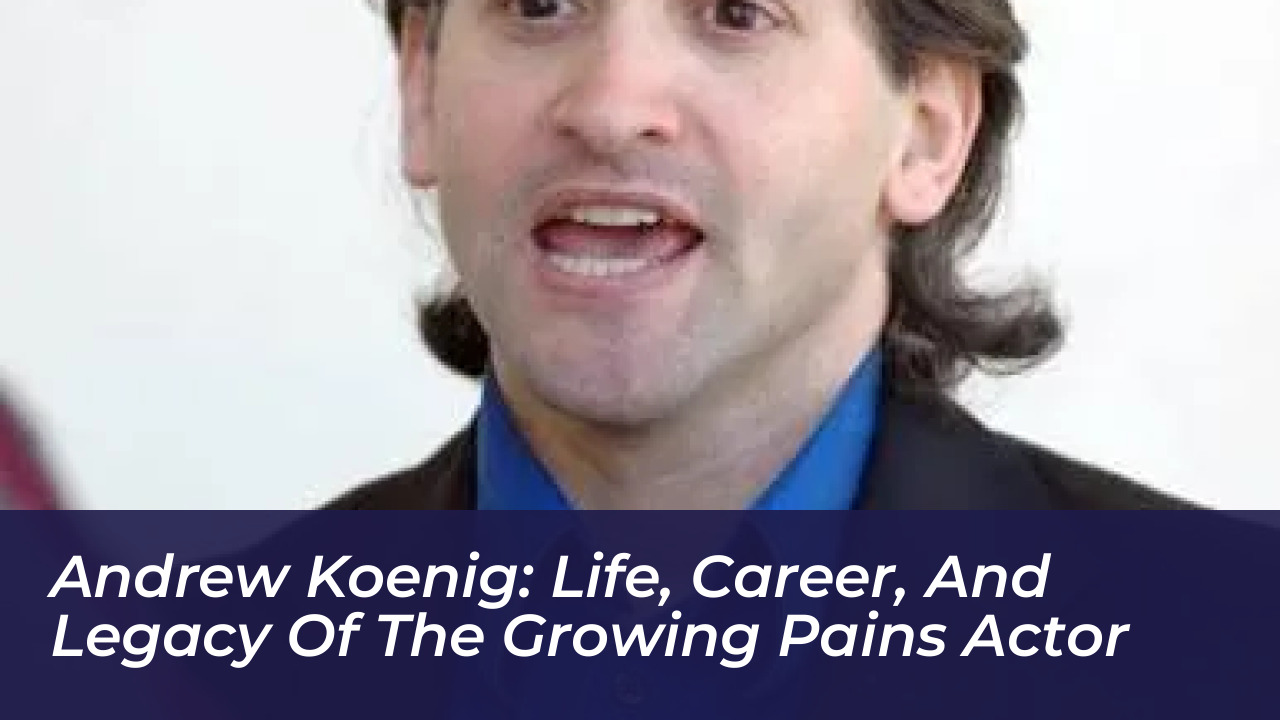
Andrew Koenig was more than just a face on 1980s television. While millions knew him as Richard Boner Stabone from the hit sitcom Growing Pains, his life spanned a diverse range of creative pursuits, from independent film editing to dedicated human rights activism. This overview examines his career trajectory, his personal commitments, and the lasting impact he left on those who knew his work.
- Early Life and Family Roots
- A Childhood in Hollywood
- Literary Inspiration
- Acting Career and Notable Performances
- The Growing Pains Years
- Diverse Roles in Film and Television
- The Cult Success of Batman: Dead End
- Creative Evolution: Directing and Editing
- Shifting Focus Behind the Camera
- Professional Contributions to Comedy
- Activism and Social Advocacy
- Commitment to Human Rights
- The Fight for Burma
- Personal Life and Mental Health Struggles
- Family Dynamics
- Addressing Depression
- Death and Enduring Legacy
- The Search and Discovery in Stanley Park
- Honoring His Memory
- Frequently Asked Questions
- What was Andrew Koenig’s height and ethnicity?
- What was Andrew Koenig’s net worth at the time of his death?
- How did Andrew Koenig influence independent cinema?
- Where can I find resources for mental health support?
Early Life and Family Roots
A Childhood in Hollywood
Born on August 17, 1968, in Los Angeles, California, Andrew Koenig grew up surrounded by the inner workings of the entertainment industry. He was the son of actor Walter Koenig, best known for his iconic role as Pavel Chekov in the Star Trek series, and Judy Levitt. This environment naturally fostered a deep appreciation for storytelling and artistic expression from a very young age.
Growing up in a Jewish household alongside his younger sister, Danielle, Andrew was exposed to the realities of show business early on. His upbringing was not limited to the glitz of Hollywood, as his family prioritized intellectual curiosity and creative depth. This foundation helped him develop a unique perspective that would later define his professional and personal choices.

Literary Inspiration
One of the most unique aspects of his early life was his connection to the renowned science-fiction author Harlan Ellison. The two families were close, and Andrew actually served as the real-life inspiration for the protagonist in Ellison’s award-winning short story, Jeffty Is Five. This literary connection underscored his early immersion in creative circles and helped shape his identity as an artist who valued substance over surface-level fame.
Acting Career and Notable Performances
The Growing Pains Years
Koenig achieved widespread recognition in the mid-1980s when he landed the role of Richard Boner Stabone on the ABC sitcom Growing Pains. As the loyal best friend to the character Mike Seaver, played by Kirk Cameron, he became a familiar fixture in living rooms across America. His portrayal captured the essence of teenage friendship and helped cement the show as a staple of 1980s television culture.
While the character provided him with mainstream visibility, Koenig was always looking for ways to grow beyond the sitcom archetype. He successfully transitioned from a child actor into a versatile performer who could handle both comedic timing and more nuanced, dramatic requirements as he matured in the industry.
Diverse Roles in Film and Television
Throughout his career, Koenig explored various facets of the entertainment world. He appeared in early series such as Adam-12 and 21 Jump Street, showcasing his range as an actor. He also contributed his voice to the G.I. Joe franchise, demonstrating his ability to adapt to different media formats. Later, he made a guest appearance in Star Trek: Deep Space Nine, which served as a respectful nod to his father’s legacy in the science-fiction genre.
The Cult Success of Batman: Dead End
Perhaps one of his most celebrated performances occurred in 2003 when he took on the role of the Joker in the fan-made short film Batman: Dead End. Critics and fans alike praised his interpretation of the iconic villain, often citing it as one of the most chilling and accurate portrayals in the history of the character. This performance highlighted his ability to dive deep into complex, dark roles, proving that his talent extended far beyond his earlier sitcom work.
Creative Evolution: Directing and Editing
Shifting Focus Behind the Camera
After finding success in front of the lens, Koenig pursued formal training at the University of Southern California to refine his technical skills. He became increasingly interested in the mechanics of filmmaking, specifically editing and directing. This shift allowed him to exert more creative control over his projects, leading him to collaborate on independent films, including work alongside his father on the project InAlienable.
Professional Contributions to Comedy
Koenig also made significant contributions to the burgeoning world of digital media and podcasting. He served as the original video producer for the popular podcast Never Not Funny, working closely with his brother-in-law, Jimmy Pardo. This partnership showcased his ability to thrive in collaborative, creative environments while maintaining a professional standard that earned him respect among his peers.
Activism and Social Advocacy
Commitment to Human Rights
Beyond his professional life, Koenig was a man of strong convictions. He was a dedicated vegan and an active proponent of animal rights, often participating in grassroots environmental protests in the Venice Beach area during the 1990s. His desire to make a tangible difference in the world was a defining characteristic of his personality.
The Fight for Burma
His advocacy reached an international level when he became deeply involved in the plight of the people of Burma. In 2007, he traveled to Thailand to observe conditions in refugee camps firsthand. His commitment was further demonstrated in 2008 during the Tournament of Roses Parade, where he engaged in civil disobedience to protest the Chinese government’s support for the Burmese military. He was willing to risk his own safety to bring attention to international injustices, a to his moral character.
Personal Life and Mental Health Struggles
Family Dynamics
Andrew Koenig was never married and had no children. His life was defined by his close-knit family, including his parents and his sister, Danielle. He maintained a strong support system throughout his life, which made his eventual struggles even more difficult for those who knew him best. He was known for his compassionate nature and his ability to form deep, lasting bonds with those in his inner circle.
Addressing Depression
For much of his adult life, Koenig battled severe clinical depression. Following his passing, his family chose to be transparent about these challenges. By speaking openly about his mental health, they aimed to destigmatize the condition, encouraging others in the entertainment industry and beyond to seek help. Their honesty remains a vital part of his legacy, highlighting the importance of mental health awareness.
Death and Enduring Legacy
The Search and Discovery in Stanley Park
In February 2010, Koenig traveled to Vancouver, British Columbia. When he did not return home as planned, his family reported him missing. After an extensive search by local authorities and volunteers, his body was discovered in Stanley Park on February 25, 2010. His father, Walter Koenig, confirmed that he had died by suicide at the age of 41.
Honoring His Memory
The entertainment community and activists alike mourned his loss. To ensure his impact continued, a memorial fund was established to benefit the American Foundation for Suicide Prevention. Today, he is remembered not just for his acting, but for his versatility, his ethical convictions, and his compassionate spirit.
Frequently Asked Questions
What was Andrew Koenig’s height and ethnicity?
Andrew Koenig stood at approximately 168 cm (5 feet 6 inches) and was of Ashkenazi Jewish descent.
What was Andrew Koenig’s net worth at the time of his death?
At the time of his passing, his net worth was estimated at approximately $1 million, earned through his multi-faceted career in entertainment.
How did Andrew Koenig influence independent cinema?
Beyond his acting, his technical skills in editing and his willingness to participate in high-quality fan-driven projects like Batman: Dead End helped bridge the gap between amateur fan films and professional production standards.
Where can I find resources for mental health support?
If you or someone you know is struggling, organizations like the American Foundation for Suicide Prevention provide critical resources and support networks for those in need.