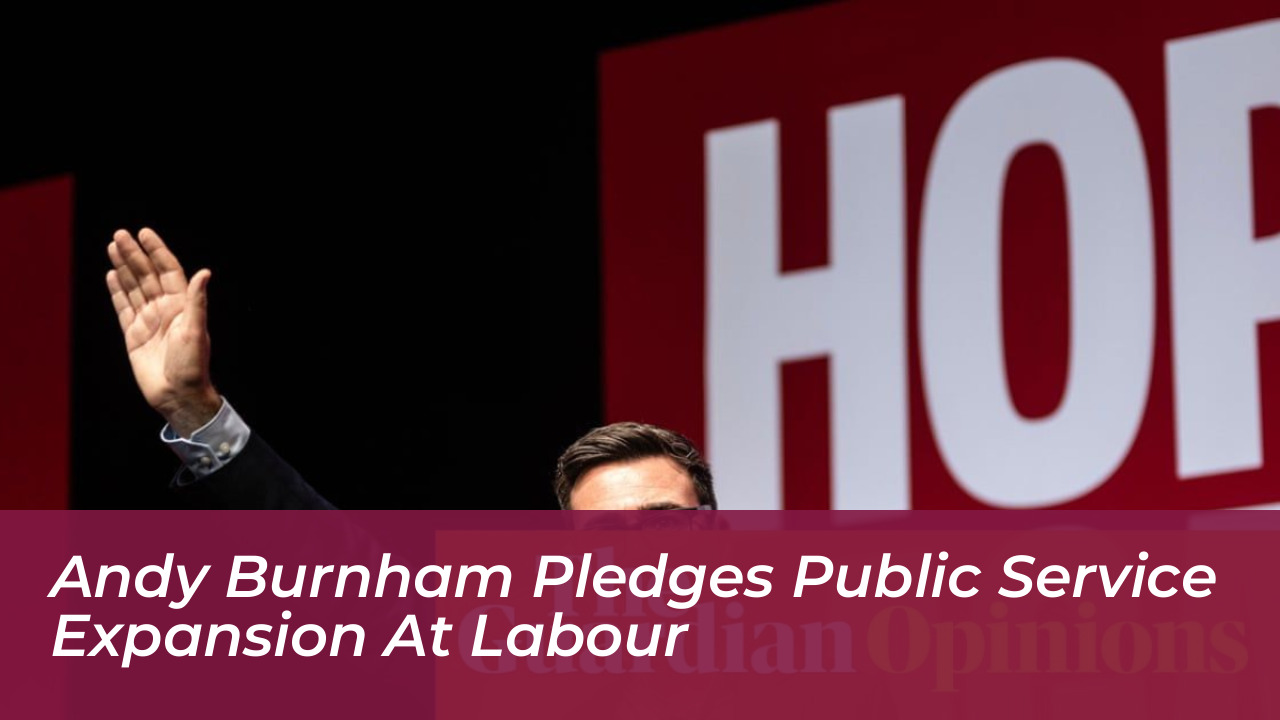
British Prime Minister Andy Burnham delivered a defining address at the Labour Party conference in Liverpool on September 29, 2026. He pledged a sweeping overhaul of the United Kingdom’s economy and public services. Stepping onto the stage tieless and without a traditional podium, Burnham signaled a break from four decades of economic policy. He announced ambitious plans to introduce a free National Care Service, reform the pension system, and return vital utilities like water and energy to public control.
The conference speech marks a major milestone for Burnham, who replaced Keir Starmer as prime minister in July 2026. Addressing an enthusiastic hall of delegates, trade unions, and business leaders, Burnham argued that the country had drifted onto an unsustainable track. “Britain has been on the wrong path for a long time,” Burnham stated. He emphasized his readiness to implement structural reforms that previous national leaders avoided, adding, “I will make a break with the direction of the past 40 years and put Britain on a new path, build a new economy and a new politics.”
A New National Care Service and Pension Adjustments
A core pillar of Burnham’s address focused on social reforms. This centered around the creation of a National Care Service that will be free at the point of use. Describing it as a policy as significant as the founding of the NHS, Burnham promised a person-centered system funded properly without relying on debt or eroding personal savings. To fund these expansive reforms, Burnham confirmed plans to adjust the state pension triple lock beginning in April 2030. The new system will increase by inflation or 2.5 percent, while protecting low-income pensioners from income tax.
“I accept I may pay a political price,” Burnham acknowledged regarding the pension changes. “But someone has to go through the pain barrier and rip the plaster off.” He noted that his lifelong commitment to fixing social care stemmed from personal family experiences, including the challenges faced by his late father, Roy, and his grandparents.
Public Ownership of Water and the Great British Grid
In a direct challenge to historical economic models, Burnham announced upcoming legislation to repeal Margaret Thatcher’s long-standing ban on public ownership of water companies. He criticized private water providers over pollution issues and soaring shareholder payouts. He stated that the new water bill would give local mayors and the public greater oversight and control.
On energy, Burnham confirmed the launch of a publicly-owned Great British Grid. This grid is designed to compete directly with private operators, accelerate connection speeds, and drive down household bills. This follows his administration’s early moves to remove VAT from household electricity bills.
Electoral Reform and Foreign Policy Stances
Addressing political structures, Burnham announced that Labour will contest the next general election with a manifesto commitment to alter Westminster’s first-past-the-post voting system. A national commission will be established to explore electoral alternatives to ensure every vote counts.
On the international stage, Burnham vowed to pursue a closer, long-term relationship with the European Union. He admitted openly that Brexit has acted as a handbrake on national economic growth. He also maintained a firm stance on foreign policy, pledging continued support for Ukraine and a united front against geopolitical threats from Russia and Iran, alongside a principled push for a two-state solution in the Middle East.
As the new government prepares for its upcoming budget announcement at the end of October, economists and policy analysts note that the success of Burnham’s vision will depend heavily on the administration’s ability to raise and manage resources sustainably amidst tight national finances.