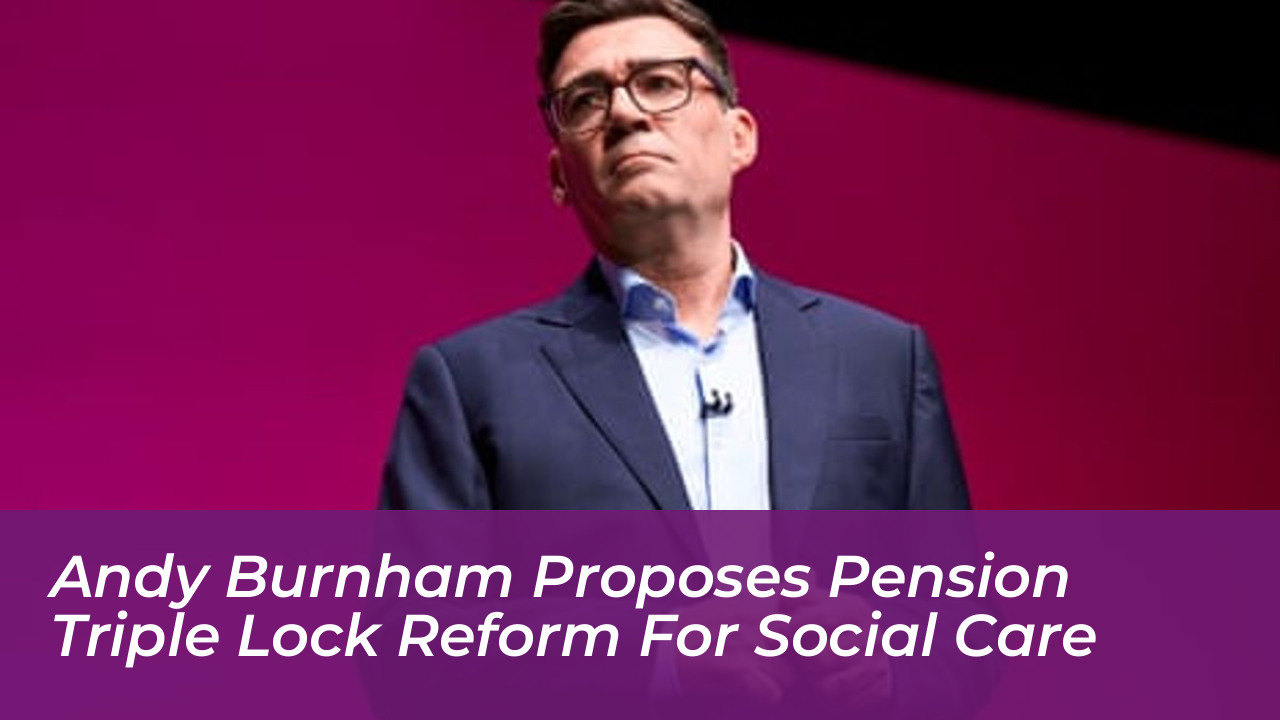
Prime Minister Andy Burnham announced plans on September 29, 2026, to replace the UK’s traditional pension triple lock with an adjusted model. This model is designed to fund a brand-new National Care Service. Speaking at the party conference, Burnham proposed linking future state pension increases to either inflation or a flat 2.5% rate to establish a sustainable mechanism for social care financing.
Under this proposed overhaul, the annual earnings-growth link that typically dictates pension adjustments will be removed. Instead, the government aims to maintain the state pension as a fixed share of national earnings relative to levels anticipated in 2030. Financial projections indicate this shift could save an estimated $19.5 billion (£15 billion) annually by 2040.
The Mechanics of the Proposed Pension Reform
The core of Burnham’s proposal targets the long-term sustainability of the state pension system while addressing the country’s social care crisis. By decoupling the pension from average earnings growth during periods of rapid wage increases, the administration hopes to manage public expenditures.
Key elements of the proposed adjusted model include:
- Linking annual state pension increases strictly to inflation or a minimum 2.5% baseline.
- Removing the yearly automatic link to average earnings growth.
- Locking the state pension value to a fixed share of national earnings benchmarked to 2030 forecasts.
- Channeling all resulting fiscal savings directly into a newly established National Care Service.
Institute for Fiscal Studies Analysis
Independent analysis from the Institute for Fiscal Studies (IFS) highlights the potential financial impact of these adjustments. According to the research group, applying this adjusted model retroactively since 2011 would have reduced the annual $20.8 billion (£16 billion) cost of the traditional triple lock by more than half.
This reduction would have generated annual savings of roughly $11.7 billion (£9 billion) over the past decade and a half. Economists suggest that applying similar logic moving forward will provide the fiscal headroom to fund eldercare and community support programs without imposing immediate tax hikes on working-age citizens.
Public and Political Reaction
The announcement has sparked debate among lawmakers, pensioner advocacy groups, and economic analysts across the United Kingdom. Supporters praise the pragmatic approach to securing long-term funding for vulnerable adults and social care workers. However, critics argue that altering the triple lock breaks a promise to retirees who rely on predictable, inflation-beating income increases.
As the debate moves forward in Parliament, the administration faces the challenge of convincing the public and skeptical lawmakers that the proposed pension reform is a fair and necessary compromise for the future of the nation’s welfare state.