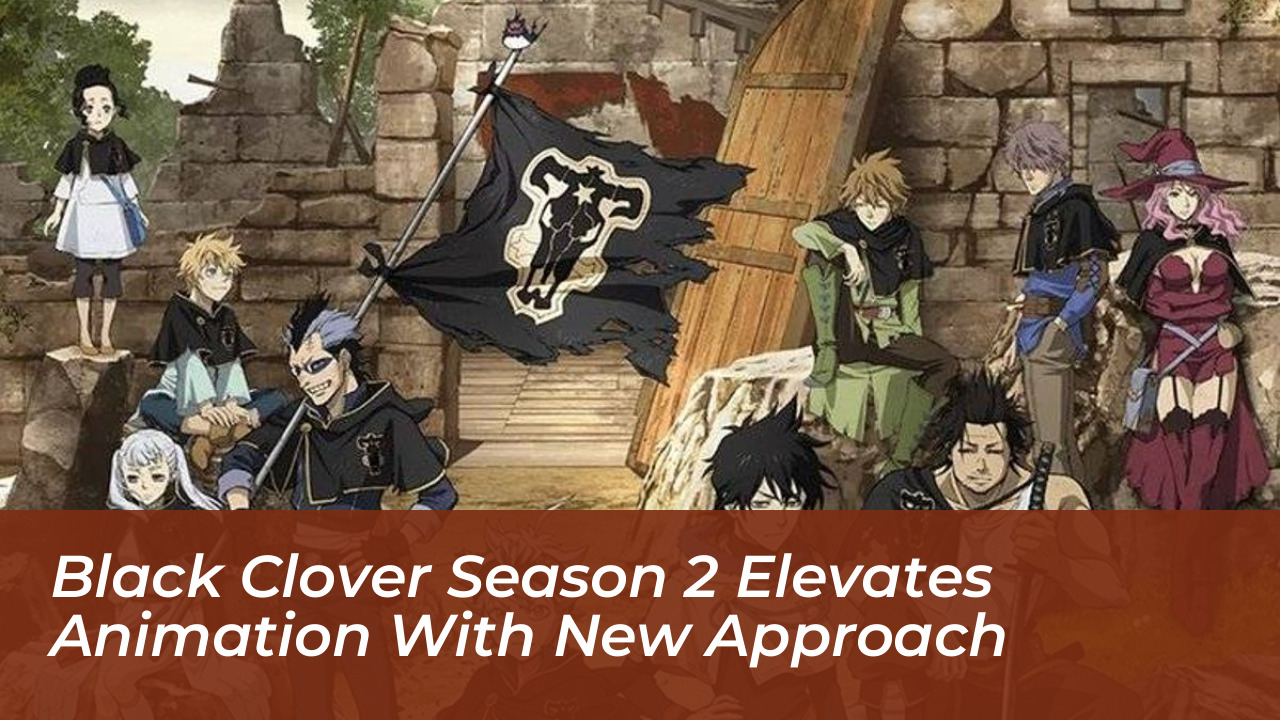

The return of Black Clover has brought a dramatic shift in how the beloved fantasy franchise is produced. Following a hiatus of more than five years, Black Clover Season 2 premiered on October 3, 2026, aiming to deliver stronger battles and performances than the original 170-episode television series. Voice actors Gakuto Kajiwara and Nobuhiko Okamoto have shed light on the creative efforts behind the sequel, highlighting how a refined production schedule has transformed the anime’s visual quality.
Shifting Away from Continuous Weekly Production
During the original run of the Black Clover anime, Studio Pierrot relied on a continuous weekly broadcast schedule. While this allowed the series to air uninterrupted for 170 episodes, it placed immense pressure on the animation staff. The demanding pace frequently led to tight deadlines, inconsistent character models, and a heavy reliance on rapid cuts and impact frames.
In a recent interview with Mantan Web, Gakuto Kajiwara-who voices the protagonist Asta-contrasted the production of the new season with the original run. According to Kajiwara, discussing the process with the director revealed a stark difference in how much time the team could dedicate to individual sequences:
“I spoke with the director about this, and while we produced all 170 episodes of Season 1 back-to-back in one go, this time we’ve been able to take our time with the production, so I feel like even more effort has gone into it,” Kajiwara explained.
By moving to a seasonal format similar to the production structure used for Bleach: Thousand-Year Blood War, Studio Pierrot has given its animators the breathing room required to maintain high artistic standards.
Enhanced Visuals and Cinematic Polish
The benefits of this deliberate production schedule are immediately visible in promotional footage and the initial episodes of Season 2. Nobuhiko Okamoto, the voice of Liebe the anti-magic devil, noted that reviewing the finished footage revealed standout battle sequences that significantly exceeded prior standards.
Visual improvements extend beyond clean character designs. The updated animation incorporates richer lighting, dynamic shading, and advanced compositing. When Asta swings his anti-magic swords, the glow reacts naturally with surrounding environments, illuminating faces and adding depth to darker scenes. This meticulous approach addresses major criticisms from the original series, where flat lighting and awkward motion sometimes detracted from the gripping narrative.
Tackling the Spade Kingdom Raid Arc
The timing of this technical upgrade aligns perfectly with the narrative trajectory of Yuki Tabata’s manga. Season 2 adapts the intense Spade Kingdom Raid arc, which features some of the most complex, high-stakes battles in the entire franchise. Villains such as Dante, Vanica, and Zenon possess reality-distorting powers that require intricate effects animation and fluid camera choreography.
Studio Pierrot staff member Isuta Meister confirmed that the production team approached these sequences with a mindset of “no compromises,” adding original material and expanding key manga battles to give major confrontations more room to breathe. Director Ayaka Tanemura, who previously directed episodes 153-170 and the Black Clover: Sword of the Wizard King film, has steered the project toward a cinematic aesthetic that honors Tabata’s original artwork.
Teamwork and Raising the Bar
The dedication behind the scenes is shared across the entire voice cast and production crew. Okamoto emphasized that the cast felt a collective drive to push past previous limitations:
“There is a shared feeling that we should ‘surpass our limits’ not just individually, but through ‘teamwork.’ In order to create something even more entertaining than Season 1, everyone is tackling this with the resolve to ‘aim even higher,'” Okamoto stated.
With a healthier production schedule, elevated animation quality, and a faithful yet expanded adaptation of the source material, Black Clover Season 2 is successfully redefining its place in modern shonen anime.