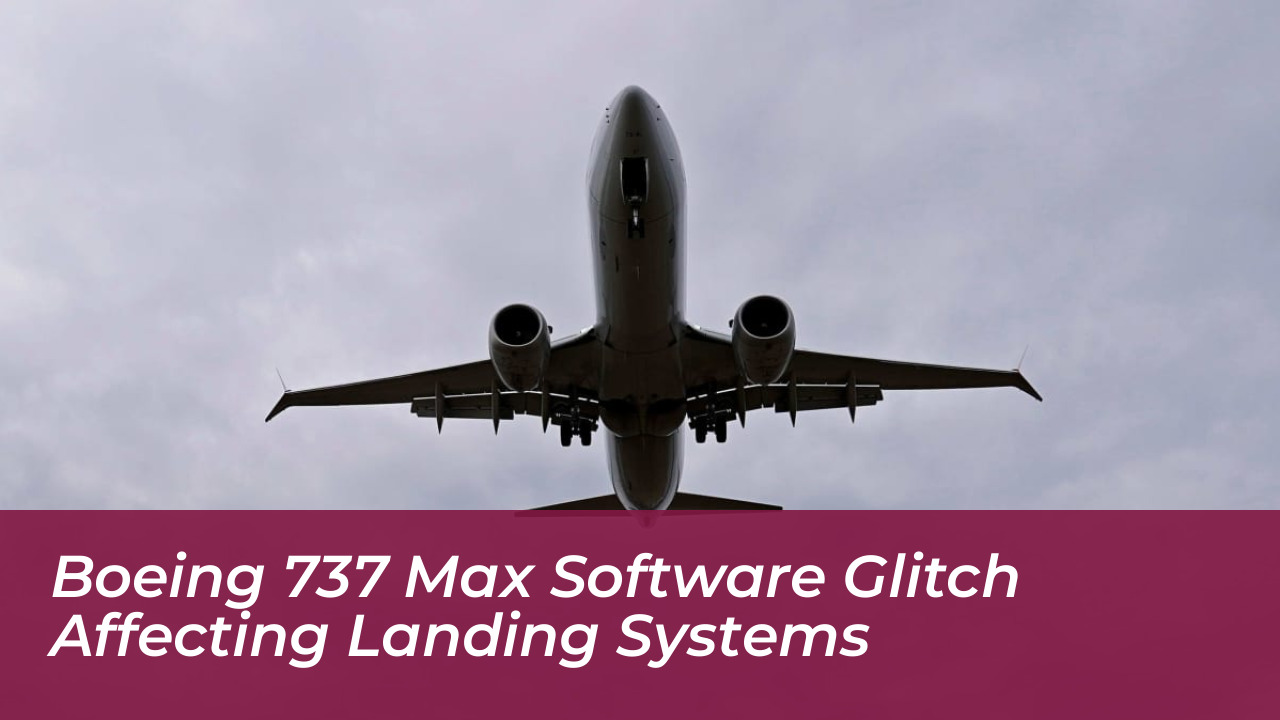
Boeing recently disclosed a technical software glitch affecting automated landing functions on specific variants of its 737 Max aircraft family. The manufacturer discovered the issue last month during internal evaluations of upcoming software iterations. The system malfunction centers on automated vertical guidance and flight path adjustments during complex arrival sequences. As Boeing seeks final regulatory certifications for remaining models in the lineup, this discovery brings fresh scrutiny to its software validation processes.
- How the Landing System Malfunction Occurs
- Trigger Conditions and Flight Path Modifications
- System Impact and Pilot Workarounds
- Airline Fleet Impact and Operational Mitigations
- Fleet Status Across Major Carriers
- Technical Rollbacks and Fleet Safety Measures
- Regulatory Oversight and Certification Timelines
- Impact on Max 7 and Max 10 Certifications
- Manufacturer Response and Executive Oversight
- Advanced Engineering Protocols in Modern Aviation
- Software Validation and Testing Standards
- Continuous Improvement in Flight Control Architecture
- Frequently Asked Questions
- Does the software glitch pose an immediate safety risk to passengers?
- How is Boeing fixing the navigation software problem?
- Which specific 737 Max variants are affected by this issue?
Context plays a vital role in understanding this development. The timing coincides with active regulatory evaluations by the Federal Aviation Administration for newer models in the single-aisle aircraft family. Federal regulators responded promptly to the disclosure, reviewing proposed software patches and assessing operational risk profiles across commercial carriers globally.
How the Landing System Malfunction Occurs
The software anomaly is highly specific and occurs under precise operational conditions during flight maneuvers. According to technical documents and manufacturer disclosures, the glitch surfaces primarily after a missed approach procedure. When flight crews execute a missed approach and subsequently alter a preprogrammed flight path manually, automated landing navigation tools may fail to reengage seamlessly on subsequent attempts.
Under normal flight conditions, onboard flight computers manage complex vertical guidance during final descent stages. With this specific software version installed, however, pilots experience a temporary disruption in automated vertical navigation tools. This requires flight crews to execute additional manual steps or rely on standard manual flight procedures to restore full system capabilities.
Trigger Conditions and Flight Path Modifications
- Execution of a missed approach procedure during standard arrival sequences.
- Subsequent manual alteration of a preprogrammed flight management path by the flight crew.
- Failure of automated vertical navigation tools to reengage seamlessly on follow-up landing attempts.
System Impact and Pilot Workarounds
- Temporary loss of automated vertical guidance tools during critical descent phases.
- Requirement for pilots to execute standard manual flight procedures or specific re-enablement steps.
Airline Fleet Impact and Operational Mitigations
Major commercial operators moved quickly to evaluate their active fleets and delivery schedules upon receiving the manufacturer bulletin. Many domestic carriers confirmed that their current operational fleets do not carry the specific software iteration linked to the glitch. Southwest Airlines, a major operator of the aircraft family, verified that none of its active fleet or incoming deliveries run the affected software version.
Similarly, United Airlines stated that it is not taking aircraft deliveries equipped with the flagged software iteration. Airlines maintain the operational flexibility to revert aircraft flight computers to older, verified software versions. This technical rollback prevents the navigation glitch from manifesting on active commercial routes while engineering teams develop a permanent software correction.
Fleet Status Across Major Carriers
- Southwest Airlines confirmation regarding the absence of the flagged software version in active and incoming aircraft.
- United Airlines statements on delivery schedules and current software iteration status.
Technical Rollbacks and Fleet Safety Measures
Airlines protect operational continuity by reverting aircraft flight computers to older, verified software versions. Maintenance teams apply these patches during scheduled ground downtime. This proactive strategy ensures that commercial flight operations continue smoothly without unexpected navigation disruptions.
Regulatory Oversight and Certification Timelines
The discovery arrives at a sensitive juncture for the manufacturer. Boeing is progressing through the final phases of federal certification for the 737 Max 10, the largest variant in the jet family, alongside the Max 7 variant. Regulatory officials previously certified variants with the newest software architecture already installed, creating questions regarding delivery schedules and required software modifications.
Chief Executive Officer Kelly Ortberg recently informed investors that certification for the Max 10 remains anticipated soon. However, the Corrective Action Review Board established by the Federal Aviation Administration will thoroughly evaluate the navigation anomaly before granting final approvals for uncertified variants. This careful oversight ensures that all software logic meets strict commercial aviation safety standards.
Impact on Max 7 and Max 10 Certifications
Engineers are working closely with federal regulators to address the software logic in uncertified models. The evaluation process includes rigorous simulator testing and flight deck assessments. These steps ensure that the final production software delivers robust performance across all operational profiles.
Manufacturer Response and Executive Oversight
Executive leadership emphasizes transparent communication with investors, airline customers, and regulatory bodies. Engineering teams are prioritizing permanent software corrections to eliminate the root cause of the navigation glitch. This commitment to quality remains central to restoring full confidence in the flight control ecosystem.
Advanced Engineering Protocols in Modern Aviation
Modern commercial airliners rely on millions of lines of complex code to manage flight dynamics and safety systems. Aerospace engineers test these digital systems rigorously before deployment to commercial fleets worldwide. Despite these extensive checks, rare anomalies can still appear during specific edge-case operational scenarios.
Manufacturers now utilize advanced simulation environments to replicate extreme flight conditions. These testing facilities help catch potential software faults early in the development cycle. Continuous improvement in coding standards prevents future operational interruptions for airlines.
Software Validation and Testing Standards
Engineers subject flight control software to millions of virtual flight hours in advanced simulators. This rigorous stress testing isolates flaws in vertical navigation logic before physical installation on aircraft. Comprehensive validation cycles guarantee compliance with international airworthiness directives.
Continuous Improvement in Flight Control Architecture
Aircraft manufacturers invest heavily in upgrading their internal software engineering pipelines and verification protocols. Enhanced oversight frameworks ensure that every code update meets strict reliability benchmarks. These measures reinforce safety across the entire global commercial aviation network.
Frequently Asked Questions
Does the software glitch pose an immediate safety risk to passengers?
Boeing and regulatory authorities emphasize that the issue does not present an immediate catastrophic safety risk. Commercial pilots receive rigorous training to execute safe landings manually without relying on automated navigation systems.
How is Boeing fixing the navigation software problem?
Engineering teams are developing a permanent software update to correct the flight computer logic. In the interim, operators are utilizing established pilot procedures and working with the manufacturer to formalize steps for re-enabling automated vertical navigation.
Which specific 737 Max variants are affected by this issue?
The software issue impacts aircraft running the specific updated flight computer software version associated with recent deliveries and newer model certifications, including variants awaiting final regulatory clearance.