
Canada has rapidly climbed the ranks of major foreign holders of United States government debt, with holdings recorded in Canadian accounts reaching US$426 billion. Recent reporting published by The Globe and Mail and Bloomberg highlights an intensifying debate across Wall Street regarding whether Chinese investors are utilizing Canadian-domiciled accounts to hold American bonds, while domestic Canadian institutional investors simultaneously pursue higher yields.
According to figures published by The Globe and Mail, Canadian-account holdings of U.S. treasury securities have surged by more than 300 percent, rising from US$106 billion in 2021. Meanwhile, separate analysis from Bloomberg indicates that Canada’s combined holdings of U.S. Treasuries and federal housing agency-backed mortgage bonds have approached US$600 billion, marking a more than fourfold increase over a five-year period.
Custodial Bias in Global Bond Data
Financial analysts emphasize that these figures measure distinct categories of securities and should not be treated as interchangeable. Treasury holdings attributed to Canada encompass all assets held within Canadian-domiciled accounts, regardless of the nationality of the ultimate owner. This administrative reality is central to the growing international scrutiny.
Officially, China’s direct holdings of U.S. Treasuries have dropped by roughly 40 percent, falling to approximately US$618 billion from over US$1 trillion in 2021. However, market experts point out that Beijing has a history of utilizing intermediaries in other jurisdictions-such as Belgium-to hold U.S. debt. Tiffany Wilding, an economist at Pacific Investment Management Co. (Pimco), noted that background conditions certainly leave room for an intermediary to establish a treasury position in Canada.
“There is a background there that could suggest China certainly could have an intermediary take a treasury position in Canada,” Ms. Wilding stated. Because international data suffers from custodial bias-recording assets where they are held rather than where the ultimate owner is based-confirming definitive links remains challenging.
Yield Spreads and Domestic Canadian Demand
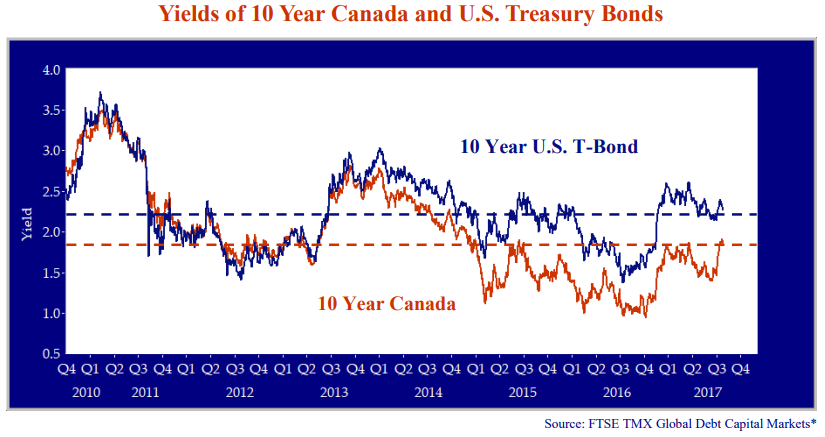
While external redirection remains a primary theory among market strategists, several economists argue that domestic factors play a substantial role in Canada’s ascent. Derek Holt, head of capital markets economics at the Bank of Nova Scotia, suggested that the growing yield spread between U.S. treasuries and Canadian government bonds offers a more straightforward explanation.
The yield on a 10-year Canadian government bond trades significantly lower than 10-year U.S. Treasury notes, creating an attractive return incentive for Canadian institutional investors. A portion of the capital influx has been tied to Canada’s largest pension funds, collectively known as the Maple 8. For instance, data from the Caisse de dépôt et placement du Québec shows its U.S. treasury holdings doubled to nearly $28 billion by the end of 2025.
Why China Might Obscure U.S. Debt Holdings
If Chinese entities are indeed routing investments through Canadian custodian banks, analysts suggest several potential motivations. Politically, maintaining the appearance of a reduced reliance on U.S. assets helps Beijing navigate ongoing trade tensions and tariff conflicts. Additionally, Chinese law classifies the composition and adjustment of foreign exchange reserves as a strict state secret, giving authorities a clear incentive to prevent foreign entities from tracking their exact treasury transactions.
Doug Porter, chief economist at the Bank of Montreal, noted that while some fundamental investment by Canadian buyers is occurring, the scale points to broader underlying shifts. “China is still investing in treasuries, just through other avenues,” Mr. Porter said. “I think a lot of people had long suspected that. What is interesting is that some of that is being done through Canada.”
As global bond markets navigate persistent inflation pressures and high borrowing expenses, investors continue to monitor monthly U.S. Treasury international capital (TIC) data for further anomalies in custodial centers. Without official confirmation from regulatory bodies in Beijing, Ottawa, or Washington, the true driving force behind Canada’s swelling creditor status remains an open question.