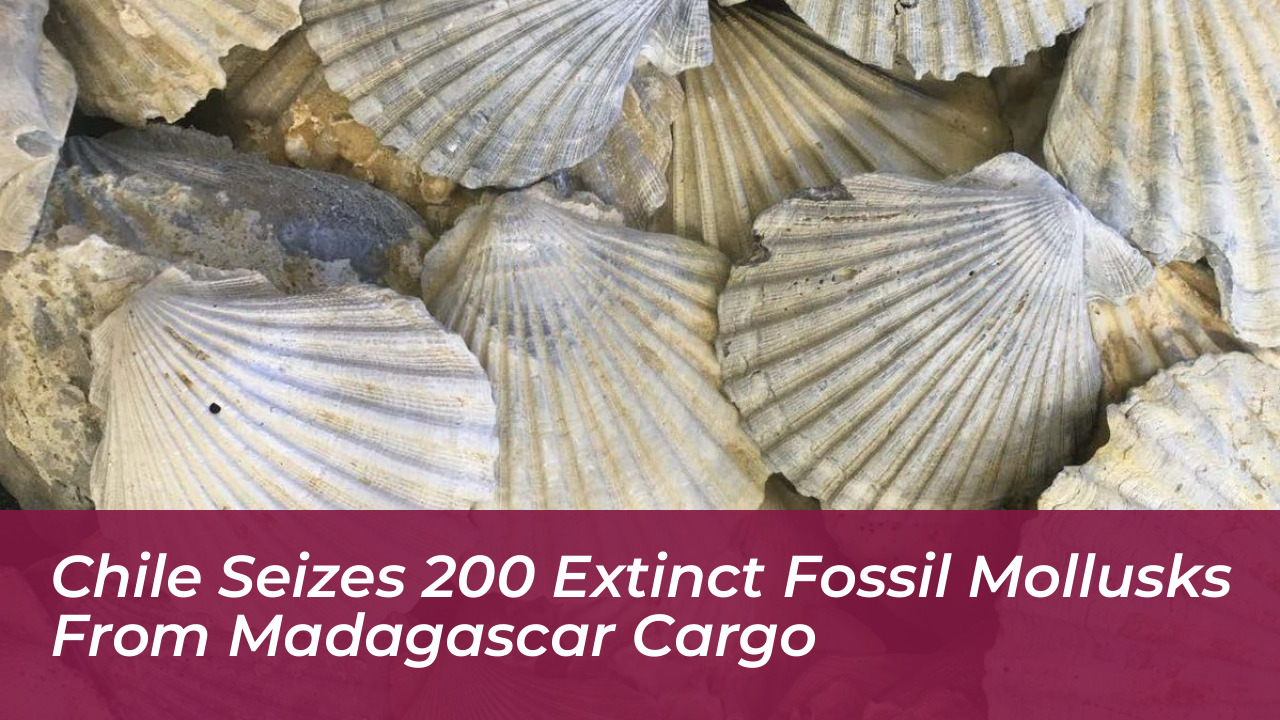
Chilean customs authorities recently intercepted a major shipment of illegal natural history assets at the busy port city of San Antonio. This operation revealed a sophisticated smuggling network moving protected geological specimens across international borders. The illicit cargo contained over 200 extinct ammonite fossils originating from the rich fossil beds of Madagascar and routed through manufacturing hubs in Asia. Examining this seizure highlights the ongoing vulnerabilities in maritime trade routes, the mechanics of fossil smuggling, and the growing international efforts to repatriate looted heritage items.
The San Antonio Port Seizure
Chilean customs inspectors uncovered the contraband inside a standard commercial shipping container during a routine inspection. The interception occurred on Friday, September 25, 2026, at the major maritime gateway of San Antonio. Border protection officers utilize intelligence-led targeting to isolate suspicious containers moving through high-volume shipping corridors. This discovery underscores the constant pressure border agencies face as transnational criminal networks attempt to move illegal goods disguised as legitimate freight.
Smugglers attempted to evade detection by relying on deceptive manifests and false paperwork. The shipping documents falsely declared the contents as ordinary household merchandise, including glass ornaments, decorative pendants, and chains. Traffickers routinely use these mundane descriptions to deter physical inspections and blend illicit cargo with mass-market consumer goods. When inspectors opened the wooden crates, they found prehistoric marine specimens instead of glassware, exposing the fraudulent paperwork immediately.
Traffickers constantly exploit the sheer scale of international maritime shipping to move illegal assets undetected. Global supply chains process millions of containers daily, leaving customs agencies reliant on profiling anomalies, weight discrepancies, and targeted scans. By routing natural history contraband through multiple intermediary nations, smugglers obscure the original source of the cargo. This logistical strategy complicates enforcement efforts and allows traffickers to test different entry points until a shipment slips through undetected.
Port authorities coordinate daily with global intelligence databases to cross-reference vessel manifests against known smuggling routes. This proactive monitoring helps identify high-risk containers long before they dock at regional terminals. Advanced risk-assessment software evaluates factors such as port of origin, transit stops, and shipper history to flag anomalies automatically. Through these layered security protocols, customs teams intercept numerous contraband shipments each month, protecting national borders from transnational smuggling organizations.
Scientific Authentication and Museum Involvement
Following the interception, customs authorities transferred the confiscated crates to the San Antonio Museum of Natural History for professional evaluation. Regional paleontologists performed detailed physical examinations to determine the nature and authenticity of the contents. This partnership between law enforcement and academic institutions provides the necessary scientific backing required for legal proceedings and future repatriation claims.
Museum experts confirmed that the seized items are genuine prehistoric marine specimens dating back approximately 110 million years. Forensic paleontology plays a critical role in these investigations by analyzing matrix rock composition, fossil preservation types, and microfossils embedded in the surrounding stone. This scientific data establishes the precise geographic origin of the fossils, proving conclusively that the specimens came from foreign sedimentary deposits rather than local Chilean geological formations.
Laboratory analysis involves sophisticated techniques, including X-ray fluorescence spectroscopy and micro-computed tomography scanning. These non-destructive methods allow researchers to examine internal chamber structures and mineral replacements without damaging fragile specimens. Documenting these physical characteristics builds an undeniable evidentiary record for prosecutors handling international trafficking cases. , this meticulous cataloging ensures that researchers preserve vital context about the fossilization environment for future academic studies.
Understanding Ammonites and the Cretaceous Extinction
Ammonites are extinct marine mollusks that share a common ancestry with modern cephalopods like octopuses, squid, and cuttlefish. These creatures inhabited ancient global oceans for hundreds of millions of years, leaving behind a rich fossil record. They feature distinct coiled shells and complex internal chamber structures that allowed them to control their buoyancy in the water column.
These fascinating organisms vanished roughly 66 million years ago during the cataclysmic Cretaceous-Paleogene extinction event. This massive impact and environmental upheaval wiped out approximately 75 percent of all plant and animal species on Earth, including the non-avian dinosaurs. The fossils recovered by Chilean authorities preserve a pristine snapshot of mid-Cretaceous marine biodiversity, making them valuable both to science and to illicit collectors.
Evolutionary biologists study ammonite lineages to track how marine ecosystems adapted to historical climate shifts and ocean acidification. Their rapid evolution and distinct shell markers make ammonites exceptional index fossils for dating sedimentary rock layers worldwide. Losing these pristine specimens to private black market collections deprives the scientific community of crucial data regarding ancient marine ecosystems and evolutionary biology.
The preservation quality of Madagascar ammonites is exceptionally high due to unique mineralization processes in regional sediment beds. Many specimens feature iridescent mother-of-pearl layers that shimmer with vibrant greens, reds, and golds when polished. This striking aesthetic appeal drives high demand among interior designers and affluent collectors, fueling the illicit extraction economy in impoverished rural communities.
The Illicit Fossil Trade Network
The illegal trade in fossils operates through complex, clandestine networks spanning multiple continents. Poachers extract fragile geological specimens from remote sites in developing nations with lax oversight or poor enforcement resources. Local diggers often use crude tools, destroying surrounding geological strata and damaging the very specimens they seek to sell.
Intermediary nations play a vital role in laundering these extracted artifacts before they reach end buyers. Traffickers frequently route shipments through manufacturing hubs like China to obscure the original source of the cargo. Once the goods arrive in an intermediary country, new paperwork is generated, transforming illicitly harvested natural history assets into legal commercial merchandise.
A lucrative global black market drives this destructive trade. High-grade ammonites with pristine mother-of-pearl preservation command thousands of dollars among private collectors and commercial dealers. This high financial return motivates organized smuggling rings to bypass legal export channels, ignoring national sovereignty and conservation laws.
Smugglers often rely on digital platforms and encrypted messaging apps to market high-value fossils directly to international buyers. Online auction sites and social media marketplaces make it easy for illicit dealers to operate anonymously across international borders. Law enforcement cyber units now monitor these digital channels continuously to identify rogue dealers and dismantle underground online trading networks.
Madagascar Heritage Laws and International Regulations
Madagascar maintains strict national heritage laws governing the export of fossilized remains and geological treasures. The government classifies these prehistoric specimens as part of the nation’s irreplaceable natural and cultural heritage. Unauthorized excavation and export constitute a direct violation of domestic statutes designed to protect scientific resources from commercial exploitation.
International legal frameworks provide the mechanisms necessary to combat this cross-border trade. Treaties such as the 1970 UNESCO Convention on the Means of Prohibiting and Preventing the Illicit Import, Export and Transfer of Ownership of Cultural Property offer a legal basis for returning looted specimens. Border protection agencies work alongside foreign embassies to execute formal repatriation protocols, ensuring that confiscated natural heritage returns to its country of origin.
Diplomatic channels facilitate seamless cooperation between Malagasy authorities and foreign law enforcement agencies during complex multi-jurisdictional investigations. When border agents seize protected geological assets, they immediately notify embassy attachés to verify export license authenticity. This international solidarity prevents looted antiquities and fossils from disappearing permanently into private collections.
Strengthening domestic enforcement in source nations requires sustained financial investment and community-based conservation initiatives. Providing local populations with sustainable economic alternatives helps reduce reliance on illegal fossil poaching and mineral extraction. Educating rural communities about the scientific value of their local geological heritage fosters a culture of stewardship and protection.
Border Security and Future Prevention
Protecting national borders from illicit natural history shipments requires advanced technology and continuous training. Customs agencies increasingly rely on advanced container scanning systems and data analytics to flag routing anomalies and suspicious declarations. Equipping port inspectors with specialized knowledge regarding fossil preservation helps agents identify concealed geological specimens during physical checks.
Public reporting and industry vigilance also play a major role in disrupting transnational smuggling rings. Border protection authorities manage tip lines encouraging whistleblowers and industry workers to report suspicious cargo or fraudulent shipping manifests. Reducing the demand for unprovenanced fossils among private buyers remains an essential step in starving the black market of profit.
Port security personnel undergo regular specialized training seminars conducted by paleontologists and cultural heritage protection officers. These educational workshops teach inspectors how to distinguish between common industrial rocks and rare scientifically significant fossils. Enhancing frontline detection capabilities ensures that smugglers cannot easily bypass port security checkpoints.
Global supply chain transparency initiatives continue to evolve as international trade organizations demand stricter documentation standards for all shipped goods. Implementing blockchain technology and digital certificates of origin for mineral and fossil shipments will drastically reduce document fraud. These modern verification tools empower customs inspectors to authenticate cargo origins instantly before releasing shipments into domestic markets.
Frequently Asked Questions
What are ammonites?
Ammonites are extinct marine mollusks related to modern squid, octopuses, and cuttlefish. They lived in ancient oceans and are easily recognized by their distinctive spiral shell structure.
How old are the seized fossils in Chile?
Experts from the San Antonio Museum of Natural History examined the specimens and confirmed they date back approximately 110 million years to the mid-Cretaceous period.
Why were the fossils routed through China?
Smugglers route illegal shipments through major manufacturing hubs to obscure the original source of the cargo, generate false paperwork, and bypass strict customs scrutiny.
What laws govern fossil exports from Madagascar?
Madagascar classifies fossils as part of its protected natural heritage. National laws strictly prohibit the unauthorized export of these paleontological specimens without government permits.
Where will the confiscated fossils go next?
Authorities typically transfer seized natural history specimens to official state repositories or return them to Madagascar through formal international repatriation agreements.