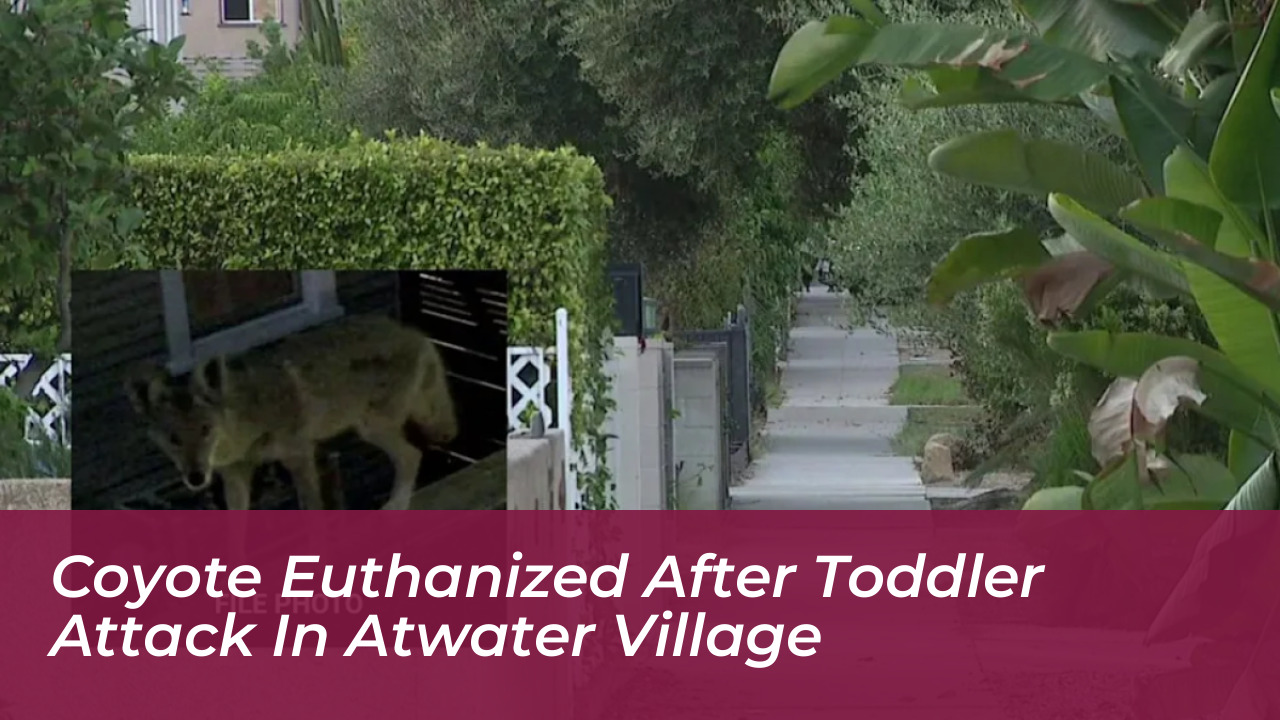

A coyote was captured and euthanized in the Atwater Village neighborhood of Los Angeles following a reported attack on a 16-month-old child on October 16. The incident has ignited intense scrutiny over how local and state authorities handled months of persistent complaints from residents regarding the animal’s increasingly aggressive and unnaturally comfortable behavior.
Officers with the California Department of Fish and Wildlife (CDFW) responded to the 3300 block of Glenhurst Avenue on Friday after receiving emergency reports that a toddler had been bitten. The injured child received medical treatment at a local hospital and was subsequently released. Later that same evening, wildlife officers located a coyote in the immediate vicinity of the attack, trapping and euthanizing the animal.
To confirm whether the euthanized animal was directly responsible for the bite, officials collected DNA samples from both the child and the captured coyote for laboratory analysis.
Months of Unheeded Warnings From Residents
Local residents expressed little surprise when the attack occurred, noting that they had been warning city and state agencies about the dangerous situation since January. According to neighbors, the problems began when a local resident allegedly started intentionally feeding a coyote, which members of the community had colloquially named “Wylie.”
Over the following months, the animal reportedly lost its natural fear of humans, encroaching upon residential properties during both day and night. Neighbors described incidents of the coyote following people, scratching at screen doors like a domestic dog, and forcing families to abandon outdoor activities.
Despite numerous phone calls and email warnings sent to Los Angeles Animal Services and the CDFW since June, residents reported that little action was taken prior to the attack. Concerned neighbor Richard Dean wrote a stark warning to animal control officials on June 19, stating, "If you continue this course of inaction someone is going to get seriously hurt."
Agency Responses and Challenges of Enforcement
City and state officials defended their prior handling of the situation, explaining the strict legal hurdles required to intervene with urban wildlife before an attack occurs.
Los Angeles Animal Services spokesperson Agnes Sibal-von Debschitz stated that an officer visited the property of the accused resident on May 20. However, the resident denied feeding wildlife and allowed the officer to inspect the property, yielding no visible violations. Agency representatives noted that while feeding non-domesticated mammalian predators is illegal under California law, taking legal or enforcement action requires concrete, documented evidence that animal control personnel were unable to establish during initial checks.
Cort Klopping, a spokesperson for the CDFW, confirmed that the agency received multiple tips regarding illegal feeding in Atwater Village. While wildlife officers followed up on the complaints, standard protocol dictated that trapping or euthanizing a coyote was generally avoided unless an actual physical attack or severe safety incident had taken place.
Community Fallout and Expert Reactions
Wildlife experts and local community advocates argued that the tragedy was entirely preventable. Rebecca Dmytryk, chief executive of Humane Wildlife Control Inc., stated that the coyote had clearly been human-conditioned through repeated handouts, creating a dangerous dynamic that ultimately led to the child’s injury and the animal’s death.
Residents planned a community meeting to address the systemic failures in urban wildlife management and to demand clearer protocols for handling residents who illegally feed wild predators. Meanwhile, wildlife agencies continue to urge the public to secure outdoor trash, remove attractants, and never feed coyotes.
What to Do If You Encounter a Coyote
The California Department of Fish and Wildlife recommends the following safety measures during coyote encounters:
- Keep a safe distance and back away slowly without turning your back on the animal.
- Keep small children and pets close to you at all times.
- Make loud noises and attempt to appear physically larger by raising your arms or opening jackets.
- Allow the animal a clear escape route so it can leave the area on its own.
- If a coyote actively attacks, fight back aggressively using sticks, rocks, or any available objects, and immediately call 911 or local animal control.