Monthly habit trackers are good for habits you already have. Daily ones are for habits you are still building. When a habit is new, a month is too long to wait for feedback: you need to know by bedtime whether today worked. This free printable daily habit tracker is built for that first fragile stage. One habit, one day, one page. You write the habit at the top in the morning, check in on it through the day, and by the evening you know, honestly, whether it happened.
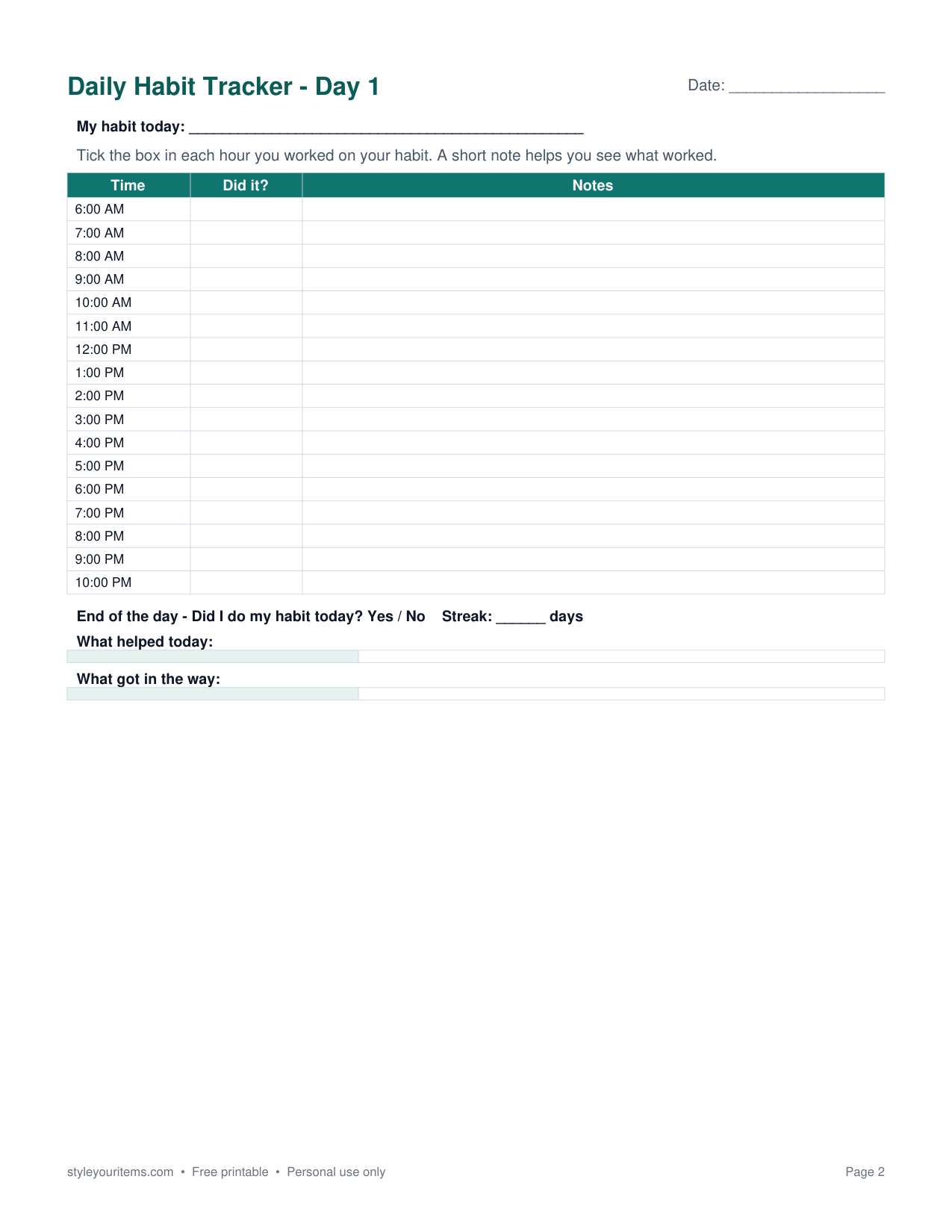
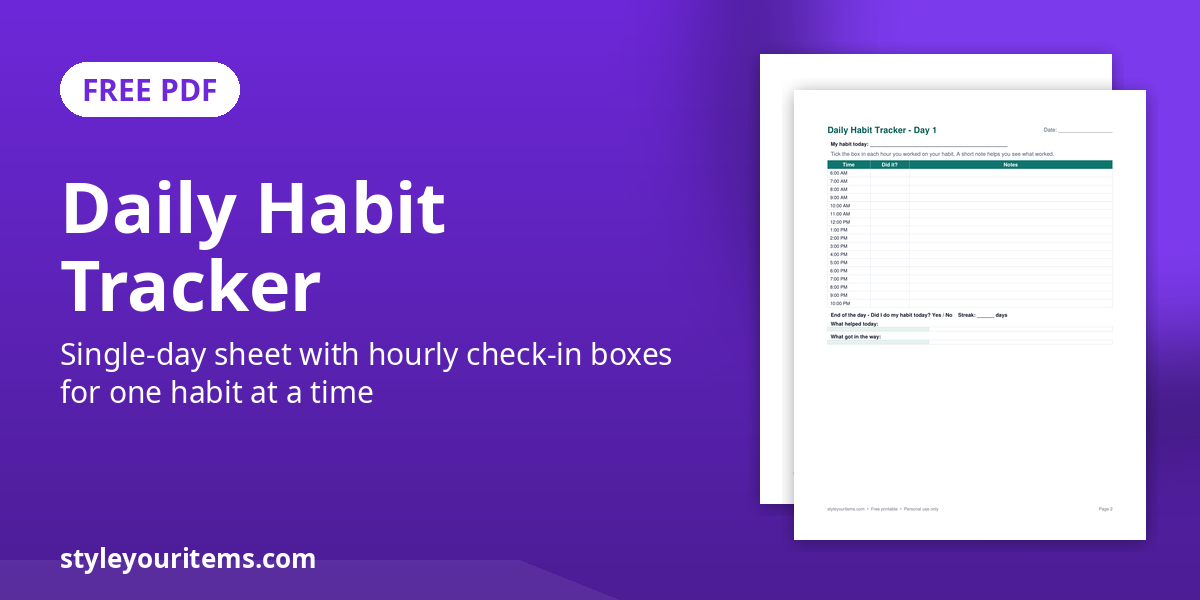
The PDF has eight pages: a cover, seven daily sheets, and a weekly review. Each daily sheet runs from 6:00 AM to 10:00 PM, with a tick box for every hour and a notes column beside it. The idea is not to fill every box. Most hours will stay empty, and that is correct. The boxes are there so that whenever you do the habit, you have a place to record it, and so that at the end of the day you can see when it happened, not just whether it happened. That timing is the useful part: it tells you the hour your habit actually fits into, which is usually not the hour you planned it for.
How the sheet works
Pick one habit and write it on the “My habit today” line before the day starts. One habit, not three. A daily tracker fails the moment it tries to track a whole new life at once. Then, each time you do the habit, tick the box in that hour and write a short note: what you did, and anything that made it easier or harder. At the end of the day, answer the two lines at the bottom: did you do it today, and what is your streak now? A streak of three days is a real achievement for a new habit, and seeing it written down is what makes day four happen.
The hourly boxes work for two kinds of habit. The first is the kind that happens once, at a set time: a morning walk, a chapter read before bed, a stretch after lunch. For those, you will tick one box and the rest stay empty. The second is the kind that repeats through the day: a glass of water every hour, five minutes of stretching every hour at your desk, a deep breath before every meeting. For those, the boxes fill up through the day, and the sheet becomes a count. Both kinds work on the same page, which is why the notes column matters: it is where the habit stops being a tick and starts being a record.
A filled-in day: one glass of water every hour
Here is what a finished sheet looks like for a simple habit: a glass of water every hour, from the first coffee of the morning to the last glass before bed. Notice how the notes stay short, and how the missed hours are left blank without apology. A blank box is information, not a failure.
| Time | Did it? | Notes |
|---|---|---|
| 7:00 AM | Yes | Glass with breakfast, easy |
| 8:00 AM | Yes | Kept the bottle on my desk |
| 9:00 AM | Yes | Finished during the team call |
| 10:00 AM | – | Back-to-back meetings, forgot |
| 12:00 PM | Yes | Glass with lunch, refilled the bottle |
| 2:00 PM | Yes | Afternoon slump, water helped more than coffee |
| 4:00 PM | Yes | Last work glass, felt less tired than usual |
| 6:00 PM | Yes | Glass while cooking dinner |
Seven glasses out of nine chances, and the note at 10:00 AM tells the whole story: meetings are the weak hour. Tomorrow, the bottle goes into the meeting room too. That is the tracker doing its job. A month of days like this one shows a pattern, and the pattern shows the fix. If you want to track a habit over a whole month once it is established, the monthly habit tracker is the next sheet, and the yearly habit tracker is the one for habits that have already survived a year.
Five ways to keep the streak alive
- Make the first day embarrassingly easy. If the habit is a morning walk, day one is a walk to the end of the street and back. The streak starts on day one, and a streak that starts is worth more than a plan that waits for the perfect morning. The daily journal template works the same way: a small page, filled honestly, beats a grand plan left blank.
- Tie the habit to something that already happens. After breakfast, after the school run, when the kettle boils. A habit with no anchor drifts, and a drifting habit is a forgotten habit. Write the anchor in the notes column on the first day, so you remember what you tied it to.
- Never miss twice. One missed day is life. Two missed days is the start of a new pattern, and the new pattern is not doing it. If you miss a day, the only job tomorrow is to do the habit once, however small, and tick the box.
- Use the weekly review page. After seven days, the review page asks three questions: how many days you did it, your best time of day, and what you will change next week. Answer them before you print the next seven sheets. The review is where a week of ticks turns into a habit that fits your actual day.
- Reward the streak, not the habit. Seven days in a row earns something small and pleasant: a favourite meal, an afternoon off, a book you wanted. Write the reward on the review page before the week starts, so it is a promise rather than an afterthought. A gratitude journal entry about the week is a quieter reward that works just as well.
You will find this tracker in the Health, Habits and Wellness collection, next to the monthly and yearly habit trackers. Print seven sheets, pick one habit, and start tomorrow morning. By next week you will know more about your own day than any plan could have told you.
Frequently asked questions
Can I track more than one habit on the same sheet?
The sheet is built for one habit, because one habit is what a new routine needs. If you have two habits, print two sheets. Two sheets with one habit each will survive the month; one sheet with two habits usually survives the week.
What if my habit happens at the same time every day?
Then most of the hourly boxes will stay empty, and that is fine. Tick the box in the hour it happened and use the notes column to write how it went. The sheet is still doing its job: it is the record, not the schedule.
How long should I use the daily sheet?
Until the habit feels automatic, usually three to four weeks. After that, move to the monthly tracker, which is lighter work for a habit that no longer needs an hourly check-in. If the habit slips, come back to the daily sheet for a week.
What counts as doing the habit?
The smallest honest version of it. A five-minute walk counts as a walk. One glass counts as a glass. The day you count the small version is the day the streak survives, and a surviving streak is the whole point.