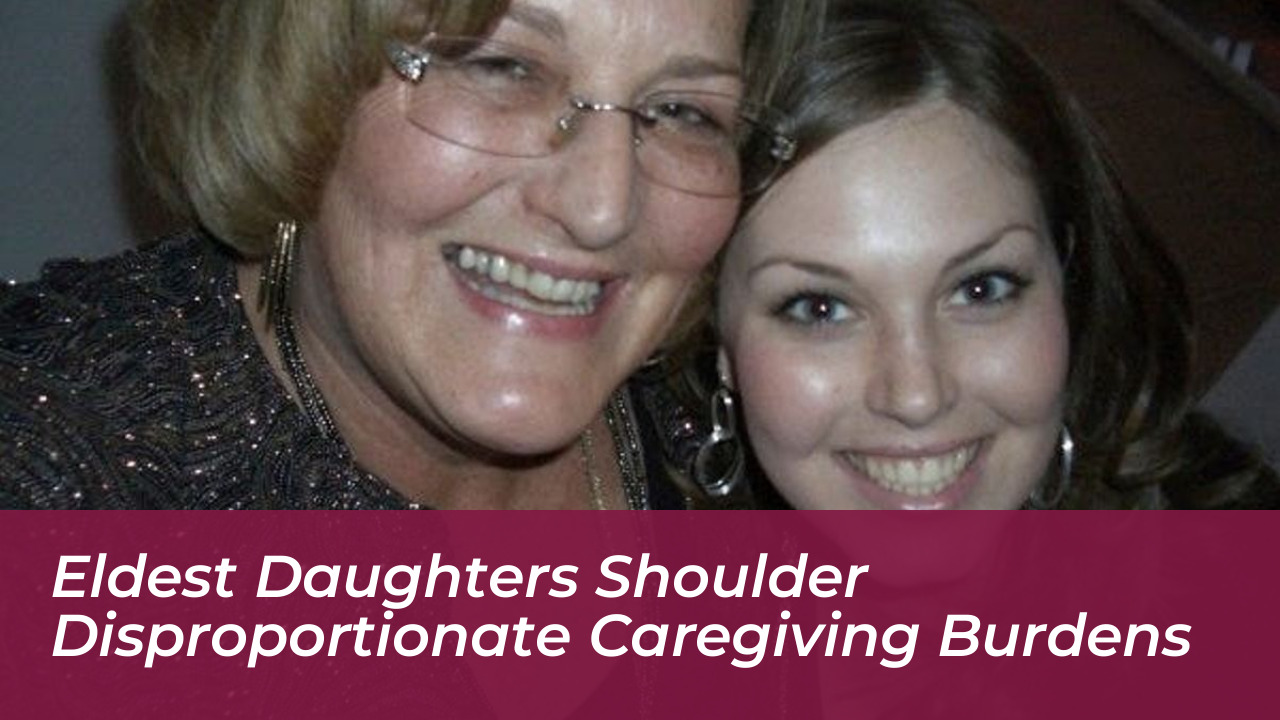

Adult daughters, particularly the eldest, frequently take on a disproportionate share of family caregiving. This ranges from supporting aging parents through severe illness to managing complex finances and estates after a death. Research cited by USA TODAY and echoed by financial leaders highlights how these deep-seated responsibilities create profound emotional exhaustion, guilt, and resentment among siblings, often leaving women responsible for tasks they never explicitly agreed to undertake.
Genevieve Lobos, 43, became the primary hands-on caregiver for her mother after her cancer returned in 2022. Although she had long considered herself the more responsible sibling, she later questioned whether her role reflected a genuine personal choice or the heavy unwritten expectations historically associated with being the oldest daughter. Lobos routinely assumed responsibility for family matters, recognizing a striking pattern among other eldest daughters in her social circle who carried identical loads.
The Elder Daughter Phenomenon and the Great Wealth Transfer
This dynamic, often referred to by experts as the “elder daughter phenomenon,” intersects directly with massive macroeconomic shifts. Penny Pennington, managing partner of financial services giant Edward Jones, noted in October 2026 that the economy is heavily propped up by eldest daughters keeping families financially and logistically organized.
“The elder daughter phenomenon has to do with caregiving, and often has to do with becoming the executor on an estate,” Pennington told Fortune. “Making decisions that extend across this family for more members of the family.”
Pennington emphasized that this responsibility is becoming increasingly critical as trillions of dollars move between generations during the “Great Wealth Transfer.” According to Cerulli Associates, roughly $124 trillion will be transferred to heirs and charities between 2024 and 2048, with about $105 trillion going directly to heirs. Women are set to receive substantial amounts of this wealth, including roughly $40 trillion in spousal transfers and $47 trillion in transfers to younger women. Yet, the logistical and emotional groundwork required to handle these estates falls disproportionately on daughters long before any assets are formally distributed.
The Hidden Costs of Unpaid Family Care
Across income levels, women bear the overwhelming majority of unpaid elder care in the United States. Data from the National Alliance for Caregiving and AARP indicates that approximately 61 percent of family caregivers are women. Female caregivers spend significantly more hours per week providing direct care than men and are much more likely to manage personal care tasks such as bathing, dressing, and medication management.
Sociologist Dr. Emily Abel notes that even in affluent households with access to paid home health aides or assisted living facilities, women remain the default managers of aging parents’ needs. Wealth may change the tools available, but it rarely changes deeply ingrained family expectations.
Financial and Career Consequences
The economic impact of stepping into a primary caregiving role is severe:
- Female caregivers lose an estimated $324,000 in lifetime wages and retirement benefits due to time out of the workforce.
- The U.S. Department of Labor estimates that unpaid family caregiving can carry lifetime employment costs averaging $295,000 for mothers.
- Women reduce work hours, take extended family leave, or retire early to meet growing care demands, leading to reduced Social Security benefits and lower employer retirement contributions.
- Mid-career caregiving coincides with peak earning years, leading to missed executive promotions, unvested equity compensation, and lost professional partnerships.
The Sibling Dynamic and the Guilt Gap
Research consistently shows that caregiving duties are distributed unevenly even within the same sibling group. A landmark 2014 study published in the American Sociological Review by Princeton University doctoral candidate Angelina Grigoryeva found that daughters provide significantly more care to elderly parents than sons. The study observed that sons reduce their relative caregiving efforts when they have a sister, while daughters increase theirs when they have a brother, demonstrating a systemic passing of parental care responsibilities onto female siblings.
This imbalance fosters the “guilt gap,” a term describing the internal conflict women experience when balancing personal needs, careers, and family obligations. Unresolved past family issues, societal expectations of self-sacrifice, and the psychological weight of role reversal-where daughters suddenly become the primary decision-makers for their aging parents-contribute to clinically significant rates of anxiety and depression among caregivers.
Societal Impact and Valuing Care Work
According to a 2026 AARP Public Policy Institute report, 59 million Americans caring for adults in 2024 provided roughly 49.5 billion hours of care. If valued at an average hourly rate of $20.41, that unpaid labor is worth an astonishing $1.01 trillion. Without structural policy changes, such as paid family leave and expanded legal protections, the burden on eldest daughters will only intensify as America’s population ages.
Frequently Asked Questions About Caregiving and Eldest Daughters
What is the “elder daughter phenomenon”?
The elder daughter phenomenon describes the cultural and practical expectation for eldest daughters to shoulder disproportionate amounts of family caregiving, emotional labor, and estate execution responsibilities for aging parents.
Why do eldest daughters take on more caregiving than brothers?
Sociological studies show that traditional gender roles assign caregiving duties to women. Research indicates that male siblings often reduce their caregiving efforts when a sister is available, leaving female siblings to step in as default coordinators.
What are the financial impacts on female caregivers?
Female caregivers face reduced lifetime earnings, missed career advancements, lower employer retirement contributions, and diminished Social Security benefits, with total lifetime losses often exceeding $300,000.
How does the Great Wealth Transfer relate to caregiving?
As older generations pass down an estimated $105 trillion to heirs over the coming decades, eldest daughters are frequently tasked with managing the complex emotional and logistical work of estate execution long before assets are distributed.
What can families do to reduce caregiver burnout?
Families can mitigate burnout by establishing explicit role definitions, having open conversations about care expectations before crises occur, utilizing professional care resources, and ensuring fair financial or estate adjustments to compensate primary caregivers.