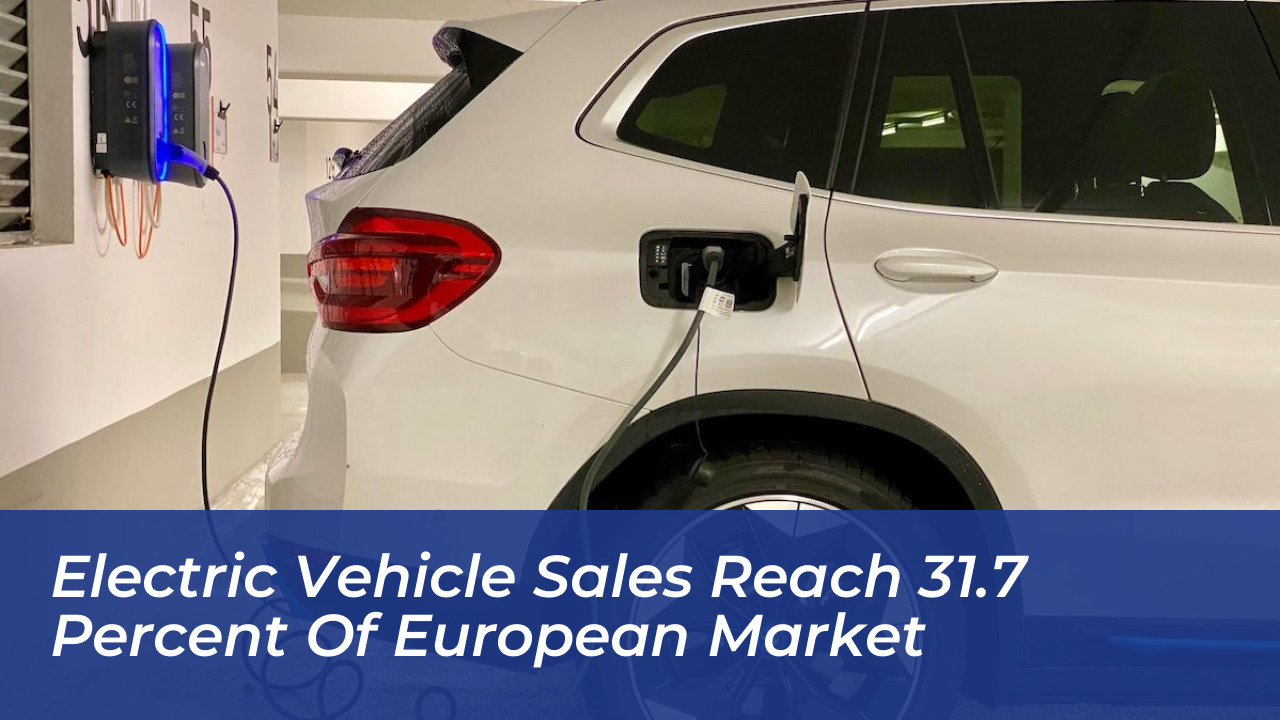
Plug-in electric vehicles captured 31.7 percent of new car registrations across the European Union during the first eight months of 2026, marking a major turning point for the automotive industry. Fresh market data shows that battery-electric models accounted for 21.7 percent of sales. Pure gasoline cars fell to an identical 21.7 percent share.
Registration figures reveal that gasoline-fueled vehicle sales dropped nearly 8 percent compared to the same period in 2025, when they represented 28 percent of the European market. Meanwhile, diesel vehicles accounted for just 7 percent of registrations, down from 9 percent the previous year. This shift means that electric models have officially outsold traditional gasoline and diesel cars combined across the 27 member nations of the European Union.
Hybrid Vehicles and Market Leadership
Hybrid-electric vehicles remained the most popular car category overall. These cars charge using an internal gasoline engine and regenerative braking without plugging into an external power source. Non-plug-in hybrids secured a dominant 36.6 percent market share across the bloc.
Major national markets heavily support this transition toward electrification. Germany, the United Kingdom, and France continue to drive the vast majority of volume. In Germany, battery-electric vehicle sales grew 48.0 percent year-on-year in the first half of 2026, pushing market share from 17.7 percent to 24.8 percent. The UK saw registrations rise 26.6 percent to reach a 25.0 percent market share, bolstered by ongoing mandates and incentive grants. France recorded an impressive 62.9 percent growth rate, lifting its electric share to 28.2 percent following the relaunch of national ecological bonuses and social leasing programs.
Nordic Frontrunners and Regional Growth
Nordic countries continue to lead the adoption curve by a wide margin. Norway reached a staggering 97.6 percent battery-electric market share in early 2026, leaving non-electric vehicle sales as a small fraction of total volume. Denmark followed closely, with fully electric cars capturing 79.9 percent of new registrations. Finland and Sweden also recorded high adoption rates at 47.8 percent and 41.5 percent, respectively.
Smaller markets also experienced massive percentage gains. Croatia recorded a 349.7 percent surge in electric vehicle registrations, driven primarily by business and taxi fleet investments backed by national environmental funds. Slovenia and Bulgaria nearly doubled their electric vehicle sales volumes compared to the previous year. This proves that adoption is broadening beyond Western Europe’s traditional automotive hubs.
Regulatory Pressures and Manufacturer Compliance
The rapid acceleration of electric vehicle adoption is closely tied to strict European Union carbon dioxide emission standards for car manufacturers. Automakers face stringent fleet-wide targets running through 2027. Compliance is calculated over a multi-year averaging period. Expanding battery-electric and plug-in hybrid portfolios remains the primary strategy for manufacturers to avoid hefty regulatory penalties.
Companies like Tesla, BYD, and BMW continue to outpace their fleet targets through strong zero-emission vehicle sales. Other legacy manufacturers maintain wider compliance gaps. Analysts note that as more affordable used electric vehicles enter secondary markets-such as Germany, where used battery-electric registrations jumped significantly-broader consumer accessibility will continue to accelerate the continent-wide transition away from internal combustion engines.