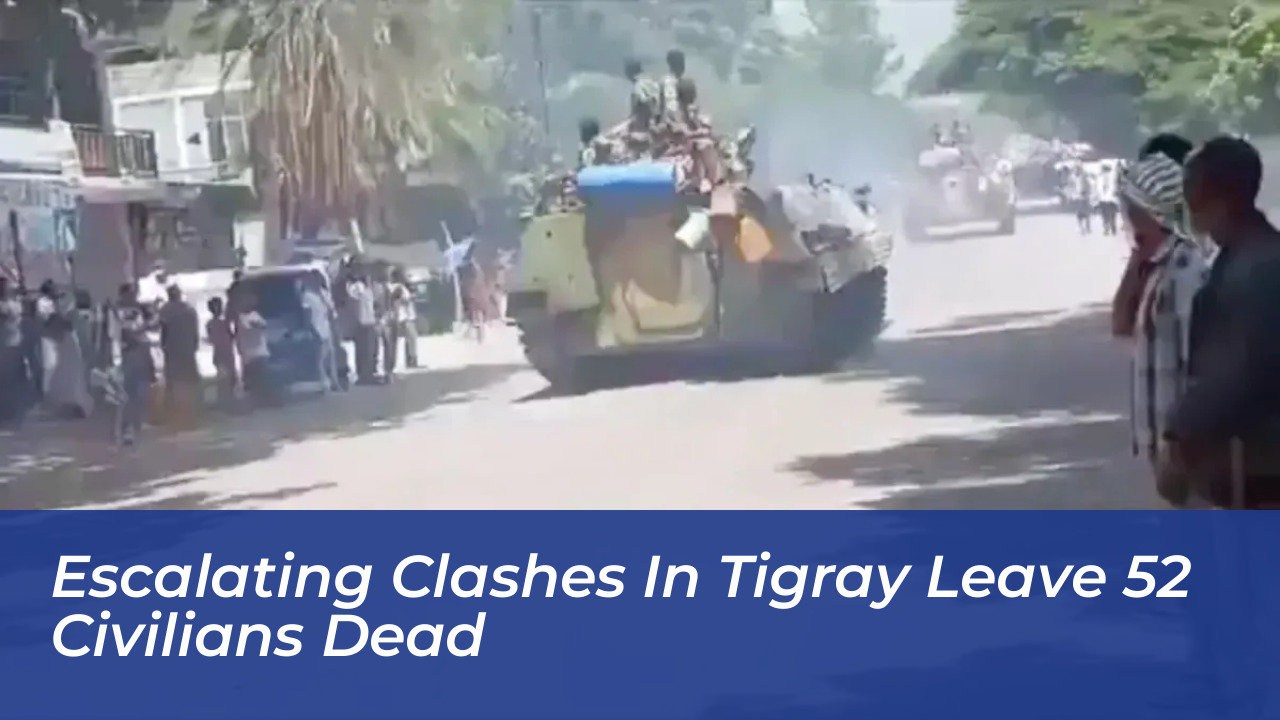
Heavy fighting between Ethiopian federal forces and Tigrayan fighters around the northern town of Alamata has killed at least 52 civilians, hospital sources reported on September 30. The escalation marks a devastating breakdown in the region as army units take control of the area and continue their advance northward, shattering the fragile peace established just years prior.
Hospital officials at Alamata General Hospital confirmed that three days of intense artillery and explosive bombardment struck densely populated residential neighborhoods between Saturday and Monday. The violent strikes claimed the lives of numerous civilians, including infant children and mothers. Medical personnel reported that 12 individuals perished in a single, catastrophic hit on a local marketplace.
The humanitarian toll of the renewed conflict continues to mount rapidly across the entire northern region. Medical charity Doctors Without Borders (MSF) reported that over 700 wounded patients were admitted to supported hospitals across Tigray between September 22 and September 25. Facilities such as Korem and Alamata hospitals saw patient numbers surge exponentially within a standard 48-hour window.
Origins of the Renewed Military Escalation
The intense clashes broke out following months of heightened political tensions over alleged violations of the Pretoria Agreement, the November 2022 peace accord that formally concluded a brutal two-year civil war. In that previous conflict, hundreds of thousands of people lost their lives and millions more were displaced from their homes.
Fighting intensified after Tigrayan rebel forces launched a major military offensive, seizing three regional airports and pushing aggressively into neighboring Afar and Amhara regions. While the Tigray People’s Liberation Front (TPLF) maintained it was fighting a defensive war against federal drone strikes and heavy artillery, government forces and their regional allies quickly launched a counteroffensive.
Strategic Importance of Alamata and Regional Spillovers
The capture of Alamata represents a critical turning point in the current military campaign. Situated approximately 120 kilometers (75 miles) south of Tigray’s capital, Mekelle, the town serves as a vital supply hub for troops, fuel, and food along the border with Amhara. Military analysts note that federal control of Alamata paves the way for further advances toward Mekelle.
Simultaneously, the conflict has widened across multiple fronts, drawing in newly formed coalitions and raising international fears of regional destabilization. The formation of the Ethiopian Peoples’ Forces Alliance for Survival-which unites the TPLF with other armed movements including the Amhara Fano National Movement and the Oromo Liberation Army-has fundamentally altered the domestic political landscape.
Humanitarian Crisis and Relief Challenges
Aid organizations are struggling to respond to the massive influx of displaced persons and injured non-combatants. Valerie Browning, cofounder of the Afar Pastoralist Development Association, estimated that approximately 150,000 people have been displaced since the latest round of hostilities began. Widespread disruptions to internet and phone networks across Tigray have severely hampered communication and humanitarian coordination efforts.
Regional and international bodies, including the East African bloc IGAD and the United Nations, have urgently called for an immediate cessation of hostilities and a swift return to direct political dialogue. However, with combatants entrenched on multiple fronts and regional rivalries deepening, the path toward lasting stability in the Horn of Africa remains highly uncertain.