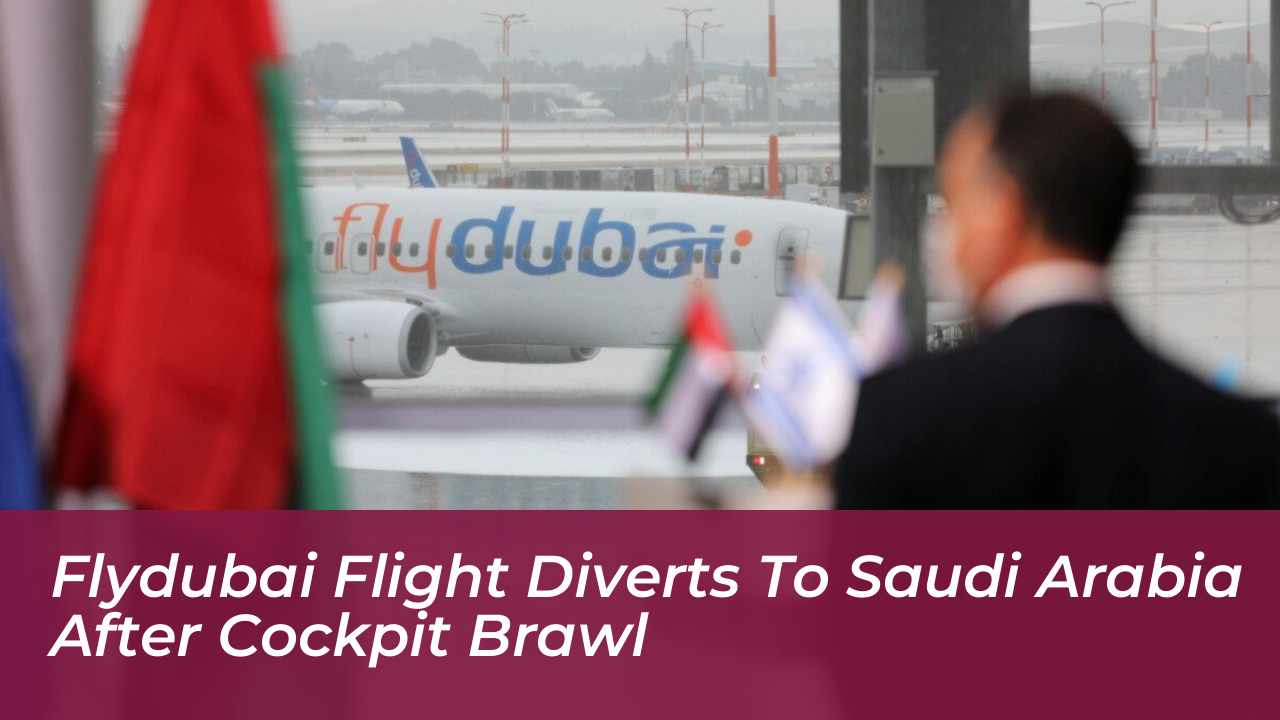
A Flydubai flight traveling from Dubai to Tel Aviv made an emergency landing in Tabuk, Saudi Arabia, on Wednesday after a physical dispute broke out between the aircraft’s two pilots. The mid-air altercation triggered security concerns, potential hijacking alarms, and a direct military response from Israeli authorities.
The aircraft, a Boeing 737 operating as flight FZ1073, carried approximately 180 passengers-many of whom were Israeli nationals-when the incident unfolded. Flight tracking data from Flightradar24 shows the plane transmitted a general emergency signal shortly after takeoff. This was followed by squawks indicating possible unlawful interference as the aircraft diverted through Jordanian airspace toward Saudi Arabia.
Cockpit Dispute Triggers International Security Response
Regional officials confirmed a physical altercation occurred inside the cockpit between the two pilots. The precise catalyst for the fight remains under investigation. Investigators are also working to determine whether either pilot intentionally transmitted the distress signals that alerted aviation authorities across the region.
As the Boeing 737 changed course, the unusual transponder codes and flight path raised immediate fears of a hijacking. In response, the Israeli military scrambled warplanes to monitor the situation as the aircraft navigated toward Saudi airspace. Israel maintains strict airport security protocols and treats any potential unlawful interference involving flights carrying its citizens with extreme urgency.
Three Israeli security officials reported that Prime Minister Benjamin Netanyahu immediately consulted on the unfolding crisis. Simultaneously, Israeli military chief Eyal Zamir held a high-level situational assessment with air force commanders and other senior defense officials.
Safe Landing in Tabuk and Passenger Accounts
Despite the severe in-flight disruption, the aircraft landed safely at Tabuk Airport in northwestern Saudi Arabia. A Flydubai spokesperson confirmed that flight FZ1073 experienced an unnamed incident en route and successfully diverted, adding that all passengers were safe and accounted for.
Eyewitness accounts from passengers onboard revealed moments of intense panic. Yasmin Abu Kasis, whose daughter Miriam was traveling on the flight, shared harrowing details relayed from the cabin. According to her daughter, passengers heard severe screaming, and a physical struggle ensued before the plane ultimately diverted.
Because Israel and Saudi Arabia do not maintain official diplomatic relations, coordination efforts were swiftly launched to secure the return of the Israeli passengers. Prime Minister Netanyahu’s office later released a statement assuring the public that the situation was under control and that active measures were being taken to bring the travelers back to Israel.
Flydubai Operations and Regional Context
Flydubai operates regular daily passenger flights between Dubai and Tel Aviv, a route that remains popular among travelers despite shifting regional tensions. Aviation analysts note that while emergency diversions due to medical issues or mechanical faults are standard occurrences in commercial aviation, cockpit altercations of this magnitude are exceptionally rare.
The incident highlights the complex security protocols governing Middle Eastern airspace, particularly for routes connecting the United Arab Emirates and Israel. Authorities in Saudi Arabia, the UAE, and Israel continue to review flight data and communication logs to establish the full sequence of events that led to the pilot dispute.