Evenings fall apart in the same small ways. The kitchen is still messy, tomorrow’s bag is not packed, the alarm is not set, and the phone is still in your hand at midnight. Nothing here is a big problem on its own, but together they make the morning a rush and the night too short. This free printable evening routine checklist fixes the evening by making it a list you can tick off, in three small groups, instead of a feeling you carry to bed.
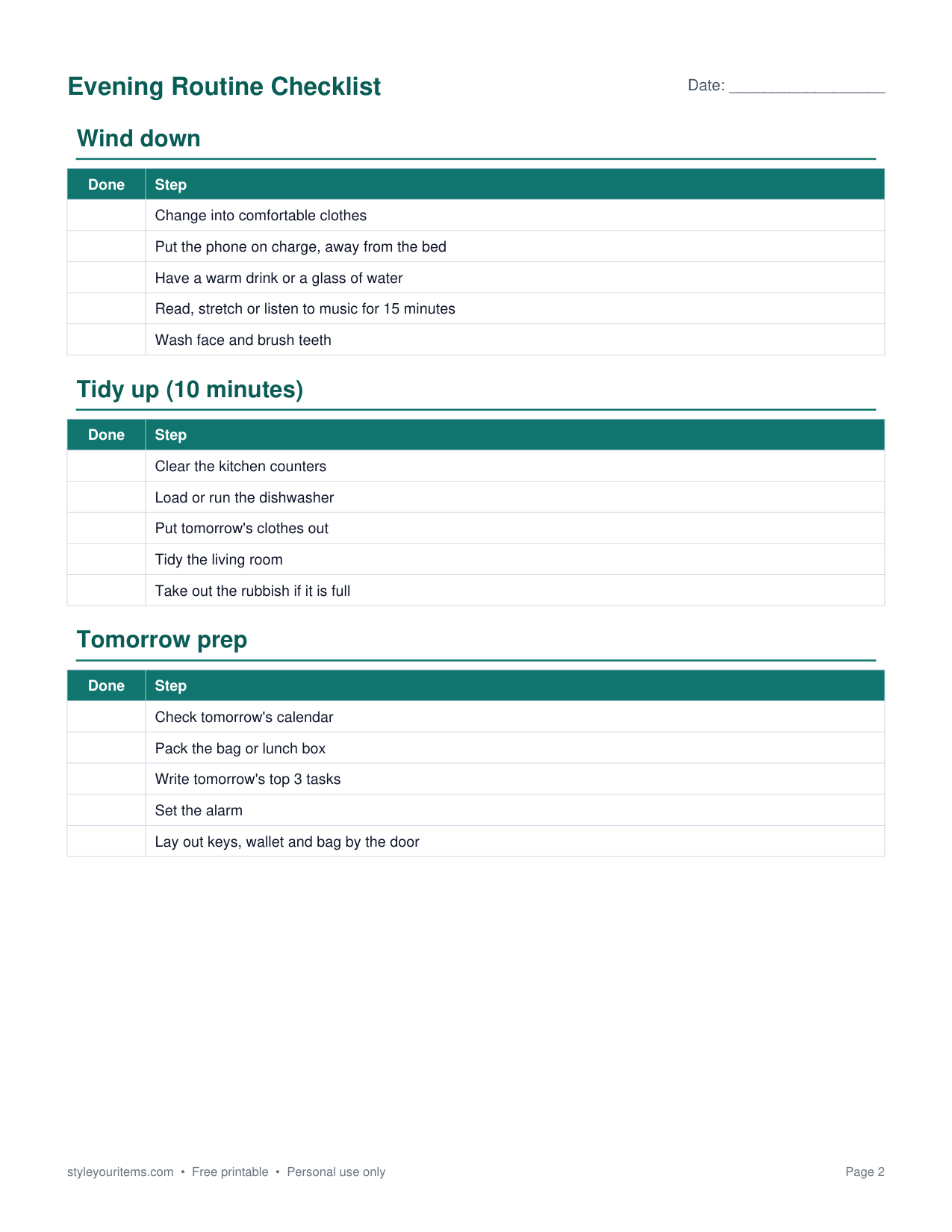
The PDF has three pages: a cover, the checklist itself, and a make-it-yours page. The checklist page has fifteen steps in three groups: five to wind down, five to tidy up in ten minutes, and five to get tomorrow ready. The third page has blank lines for your own steps and a seven-day tick grid, so the routine becomes yours after the first week instead of staying a printed list. Print it, stick it on the fridge or the bedroom door, and let the ticks do the remembering. If mornings are the other half of the problem, our daily routine planner holds the morning in the same way.
The fifteen steps, in three small groups
Fifteen steps sounds like a lot until you see them grouped. Each group takes about ten minutes, and each step is small enough to do half asleep. Here is what is on the sheet, and why each group is where it is.
- Wind down. Change into comfortable clothes, put the phone on charge away from the bed, have a warm drink or a glass of water, read, stretch or listen to music for fifteen minutes, then wash your face and brush your teeth. This group is first because an evening that starts with winding down actually ends. One that starts with chores feels like a second shift.
- Tidy up, ten minutes only. Clear the kitchen counters, load or run the dishwasher, put tomorrow’s clothes out, tidy the living room, and take out the rubbish if it is full. Ten minutes is the rule, not a suggestion. A tidy-up without a time limit becomes a cleaning session, and a cleaning session at 9 pm is how evenings disappear.
- Tomorrow prep. Check tomorrow’s calendar, pack the bag or lunch box, write tomorrow’s top three tasks, set the alarm, and lay out keys, wallet and bag by the door. This is the group that pays for the whole routine, because every minute spent here is two minutes saved in the morning. Our weekly to-do list is the place to keep the top three tasks once the habit is set.
The order matters more than the steps. Wind down first, so the evening feels like rest. Tidy second, while you still have energy. Prep last, so the final thing you do tonight is the first thing tomorrow thanks you for. If you only have ten minutes, do the tomorrow prep group and skip the rest. That one group alone changes the morning.
How to use the checklist
- Print the three pages on Letter or A4 and put the checklist page where you will see it in the evening, on the fridge, the bedroom door, or the bathroom mirror.
- Pick a start time and write it at the top of the page. Most people start about an hour before bed. The checklist works at any hour, but it only works if it starts at the same hour.
- Work down the groups in order, ticking each step as you finish it. Do not skip ahead to the tidy-up while the phone is still in your hand.
- When a step does not fit your life, cross it out and write your own in its place on the third page. A checklist with a crossed-out step you never do is an honest checklist. One you pretend to follow is not.
- Use the seven-day tick grid on the third page for one week. Tick the five habits each evening: wind down, tidy up, tomorrow prep, phone away, in bed on time. At the end of the week, the grid shows you which group keeps failing, and that is the group to fix first.
- After a month, the routine should need the paper less. Keep the sheet up anyway. Routines fade quietly, and a sheet on the door catches the fade before the mornings go back to being a rush.
The same evening habit supports the rest of your routines. Our monthly habit tracker is the place to record the streak once the checklist is working, and you will find both in the Planners and Calendars collection.
Make it yours
The third page is the most important page in the PDF, and it is blank on purpose. Six empty lines wait for the steps that belong to your evening and nobody else’s: the medication to take, the lunch to prep for a child, the dog to let out, the prayer, the skincare, the five minutes of writing. Write them in, in your own words, and they become part of the routine instead of things you remember at midnight. A printed routine that fits everyone fits nobody. Yours should look a little different from the printed one by the end of the first week, and that is the sign it is working. Our daily planner is the companion sheet for the next morning, if you want the whole day on paper.
Frequently asked questions
How long does the whole routine take?
About thirty minutes from the first step to the last, with ten minutes for each group. On a busy night, the tomorrow prep group alone takes ten minutes and is worth doing on its own.
What if I miss an evening?
Nothing breaks. Tick nothing, go to bed, and start again tomorrow. A routine that survives a missed day is a routine. One that falls apart after a single miss was a streak, and streaks always end.
Can children use this checklist?
Yes, and it works well for them, because the steps are concrete and the groups are short. For younger children, pair it with our chore chart for kids, which turns the tidy-up group into a game with a reward box.
Do I have to do the steps in order?
The order is the recommendation, not a rule. Wind down, tidy, prep is the order that works for most people, but if your evenings run better another way, change the order and write it on the sheet. The sheet serves the evening, not the other way round.