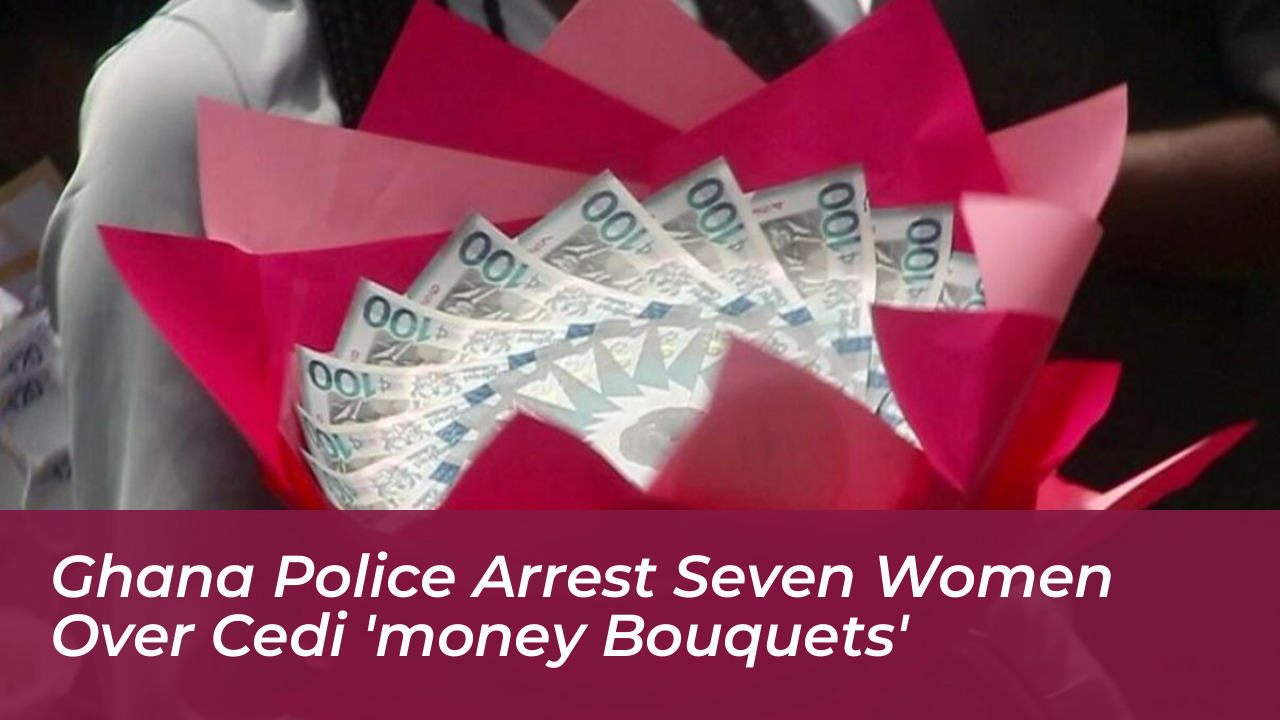


Law enforcement officers and Bank of Ghana officials arrested seven women across Accra for allegedly using national cedi banknotes to assemble commercial money bouquets and custom decorative cakes, authorities confirmed. The joint operation by the Ghana Police Service and central bank representatives followed a targeted tip-off regarding the illicit commercial crafting and sale of currency arrangements across multiple locations in the capital city.
This enforcement marks the largest crackdown against currency abuse following a formal warning directive issued by the central bank in July against acts that impair or depreciate the national tender. Bouquets made of banknotes and cakes decorated with real currency have grown increasingly popular in Ghana as gifts for weddings, birthdays, graduations, and other major social celebrations.
Crackdown Targets Commercial Currency Abuse
According to Dinah Bonzi, Head of the Statistics Office at the Bank of Ghana’s Currency Management Department, authorities apprehended the suspects at various locations in Accra after tracking individuals producing and selling the currency arrangements.
“The Bank of Ghana wishes to issue a warning to the general public for using banknotes and coins to create money bouquets, money cakes for weddings, for birthdays, for graduations, and other similar events, which constitutes the misuse and abuse of the currency and is illegal and unlawful,” Bonzi told journalists during a briefing.
Authorities emphasized that the crackdown is not limited to those who directly assemble the items. Anyone found aiding, promoting, or facilitating the commercial use of legal tender for decorations will also face aggressive legal action.
Legal Consequences and Central Bank Warnings
Following their arrest, authorities are processing the seven women for court prosecution. Under the laws governing Ghana’s monetary system, individuals convicted of defacing, altering, or unlawfully handling legal tender can face severe penalties, including substantial fines or custodial prison sentences determined by the court.

The central bank has repeatedly cautioned the public against several prohibited practices that degrade the integrity of the cedi. These violations include:
- Spraying or throwing money at social events and parties
- Assembling money bouquets, floral currency designs, and money cakes
- Scattering, walking, or stepping on banknotes
- Writing on, staining, crumpling, or tearing currency notes
“The Ghana cedi is a legal tender of the Republic of Ghana and must be treated with respect. The misuse or abuse of the currency is an offence and may attract sanctions under the law,” Bonzi stated. “Today’s arrest should serve as a clear warning to the public. Let us all handle the Ghana cedi with dignity.”
Regional Trend of Currency Protection Laws
The strict enforcement in Ghana mirrors a broader regulatory push across sub-Saharan Africa to protect national currencies from physical degradation and commercial exploitation. In recent years, central banks in countries such as Kenya, Nigeria, South Africa, and Botswana have issued stringent warnings or launched similar crackdowns against the practice of transforming legal tender into decorative event gifts.
Bank of Ghana officials confirmed that surveillance and enforcement operations will continue across Accra and other regional capitals to root out businesses and individuals engaging in the unauthorized handling of cedi notes and coins.