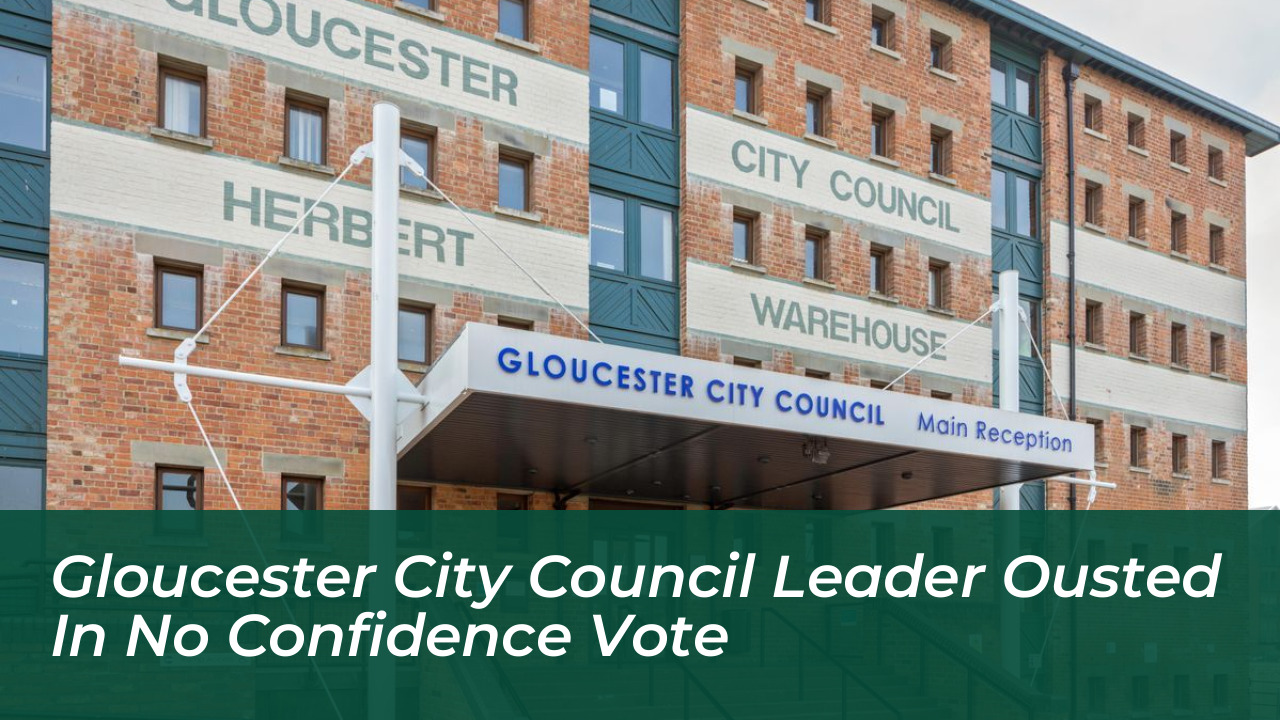
Gloucester City Council faces an unprecedented governance crisis following the ousting of its leader, Jeremy Hilton. Councillors voted 21 to 18 to pass a motion of no confidence during a tense full council session. This historic vote stripped the local administration of its executive leadership entirely. The municipal authority now operates without a designated leader or cabinet. This leadership vacuum arrives at the worst possible moment as the city remains locked in a fragile financial recovery process after experiencing severe budgetary distress.
- Introduction to the Gloucester City Council Crisis
- The Mechanics of the No Confidence Vote
- Submitting the Motion
- Chamber Debate and Political Repercussions
- The Resignation of the Cabinet
- Financial Instability and Government Bailouts
- Current Financial Pressures
- Government and Regulatory Findings
- Political Fallout and Inter-Party Recriminations
- The Governance Vacuum and Operational Risks
- Pathways Forward for Gloucester
- Frequently Asked Questions
- Why was Jeremy Hilton ousted from Gloucester City Council?
- Who governs Gloucester City Council now?
- What is the financial status of Gloucester City Council?
- What happens next for the local authority?
- How does the leadership vacuum affect local services?
Introduction to the Gloucester City Council Crisis
Municipal stability depends heavily on clear lines of accountability and functioning executive boards. When those structures collapse, day-to-day operations grind to a halt. The recent developments in Gloucester highlight the volatile nature of minority administrations and fractured local politics.
The events leading up to the vote reflect months of mounting tension between the ruling Liberal Democrat group and opposition parties. Accusations of poor communication and financial opacity eroded the little trust remaining in the chamber. Local residents now watch anxiously as the council struggles to find a path forward.
The Mechanics of the No Confidence Vote
Submitting the Motion
Independent councillor Alastair Chambers submitted the initial motion of no confidence. He cited persistent claims of financial mismanagement and an acute lack of transparency under Hilton. The submission forced a showdown that many observers saw coming for weeks.
Chambers argued that the previous administration ignored critical warnings from financial officers. The growing disconnect between leadership decisions and council scrutiny committees created an untenable working environment.
Without adequate oversight, financial audits routinely exposed deep gaps in municipal accounting. Opposition leaders stated that intervention became the only viable path to protect public funds.
Chamber Debate and Political Repercussions
Debate inside the council chamber quickly intensified as party lines hardened. Conservative group leader Stephanie Chambers argued that Hilton lost his way and operated in an isolated silo. Labour group leader Terry Pullen added that public trust had evaporated entirely.
Despite impassioned defenses from Liberal Democrat colleagues who labeled the proceeding a political game, the numbers favored the opposition. The chamber remained divided as members prepared to cast their ballots.
Political calculations ultimately dictated the outcome as independent blocs joined forces. Observers noted that the polarization reached a boiling point months prior.
The Resignation of the Cabinet
Following the initial defeat, the Liberal Democrat group attempted a bold tactical maneuver. They renominated Jeremy Hilton for the leadership position. Opposition members immediately rejected the attempt, describing the move as detached from reality.
The second vote failed by an identical margin of 18 to 21. Realizing the impasse, all seven members of the council cabinet resigned en-masse. Several senior figures walked out of the chamber before the meeting concluded.
This coordinated walkout left administrative offices scrambling to reassign basic supervisory duties. Civil servants now manage day-to-day operations under emergency statutory protocols.
Financial Instability and Government Bailouts
Current Financial Pressures
The leadership collapse compounds deep-seated financial vulnerabilities at Gloucester City Council. Earlier in the year, the authority secured £15.5m in exceptional financial support from the government after effectively declaring bankruptcy. Local administrators are now attempting to secure an additional £8m bailout to stabilize basic services.
Without stable leadership, securing these vital funds becomes significantly harder. Central government departments expect local authorities to demonstrate robust governance before releasing emergency cash reserves.
Auditors warned that any prolonged administrative standstill could trigger stricter central interventions. Taxpayers face potential service reductions if municipal leaders fail to restore fiscal discipline quickly.
Government and Regulatory Findings
Recent independent reviews conducted by the Ministry of Housing, Communities and Local Government identified a toxic breakdown of mutual trust between the political leadership and opposition parties. Critics point to this financial backdrop as the primary catalyst for the rebellion.
Independent and opposition figures argued that unchecked spending decisions and opaque reporting standards left them no choice. Financial regulators previously mandated tighter budgetary controls. The removal of the entire executive cabinet leaves no designated authority to negotiate these terms with central government agencies.
Bureaucrats note that central oversight bodies view local political infighting with extreme skepticism. Restoring open communication channels remains an urgent priority for municipal department heads.
Political Fallout and Inter-Party Recriminations
The fallout from the vote triggered fierce verbal exchanges across party lines. Jeremy Hilton condemned the opposition, labeling them a collective group of chickens unwilling to shoulder the burden of governance. He argued that removing executive leadership without a contingency plan amounts to political recklessness.
Liberal Democrat representatives echoed these sentiments, accusing rival parties of prioritizing short-term point-scoring over administrative stability. Conversely, opposition figures defended their actions as a necessary intervention. Alastair Chambers argued that change was overdue, comparing the previous administration to a dangerous driver requiring immediate intervention.
The political composition of the council comprises 17 Liberal Democrats, 10 Conservatives, 7 Labour members, 4 Community Independents, and 1 Independent Conservative. This fragmentation makes coalition-building exceptionally difficult. No single party holds an absolute majority, heightening the risk of prolonged paralysis.
Party whips are currently holding behind-the-scenes meetings to forge tentative working arrangements. Public statements from all factions indicate deep-seated reluctance to compromise on key policy platforms.
The Governance Vacuum and Operational Risks
Leaving a local authority without a leader creates immediate operational risks. Statutory duties, housing services, and waste management depend on executive oversight. Without a cabinet, routine planning applications, audit submissions, and budgetary reviews face indefinite delays.
Central government oversight bodies look unfavorably on internal municipal chaos. Further administrative stalling could jeopardize the pending £8m financial rescue package. Municipal workers and department heads now find themselves navigating a leadership vacuum.
Senior civil servants hold emergency powers for basic operations, but long-term strategic decisions remain frozen. Local taxpayers bear the direct cost of this political paralysis. Essential regeneration projects around Gloucester Docks and local infrastructure developments risk stagnation while councillors debate future power-sharing arrangements.
Community groups have voiced deep frustration over the halt in vital urban renewal initiatives. Local business owners worry that prolonged uncertainty will deter prospective commercial investments.
Pathways Forward for Gloucester
Restoring stability requires rapid negotiation between the fractured political groups. Opposition councillors must determine whether to form a formal coalition or govern through ad-hoc agreements. Neither option offers guaranteed longevity given the deep ideological divisions within the chamber.
The Liberal Democrats confirmed they will not put forward alternative candidates for the immediate future, complicating the search for a new leader. Civic leaders face mounting pressure from residents to prioritize public interest over political friction.
Establishing a cross-party steering committee represents the most viable path to manage the immediate financial recovery. External mediators from the Local Government Association may need to intervene to bridge the gap. Gloucester requires decisive, unified leadership to navigate its current fiscal emergency and restore public confidence.
Time is running out for councillors to present a cohesive strategy to national regulators. Local stakeholders demand transparent leadership that can steer the city safely through this unprecedented municipal crisis.
Frequently Asked Questions
Why was Jeremy Hilton ousted from Gloucester City Council?
Councillors passed a motion of no confidence by a 21-18 vote following persistent allegations of financial mismanagement, poor transparency, and an inability to work collaboratively across political parties.
Who governs Gloucester City Council now?
Currently, the council has no leader and no cabinet. All seven cabinet members resigned en-masse immediately following the failed reinstatement vote, leaving the authority without formal executive leadership.
What is the financial status of Gloucester City Council?
The authority received £15.5m in government bailout funding earlier in the year after effectively declaring bankruptcy. Officials are currently seeking an additional £8m in financial support.
What happens next for the local authority?
Opposition councillors must negotiate to determine how the council will operate moving forward, potentially through a formal coalition or temporary cross-party agreements.
How does the leadership vacuum affect local services?
Routine planning applications, statutory duties, and major regeneration projects face indefinite delays while senior civil servants manage basic operations under emergency powers.