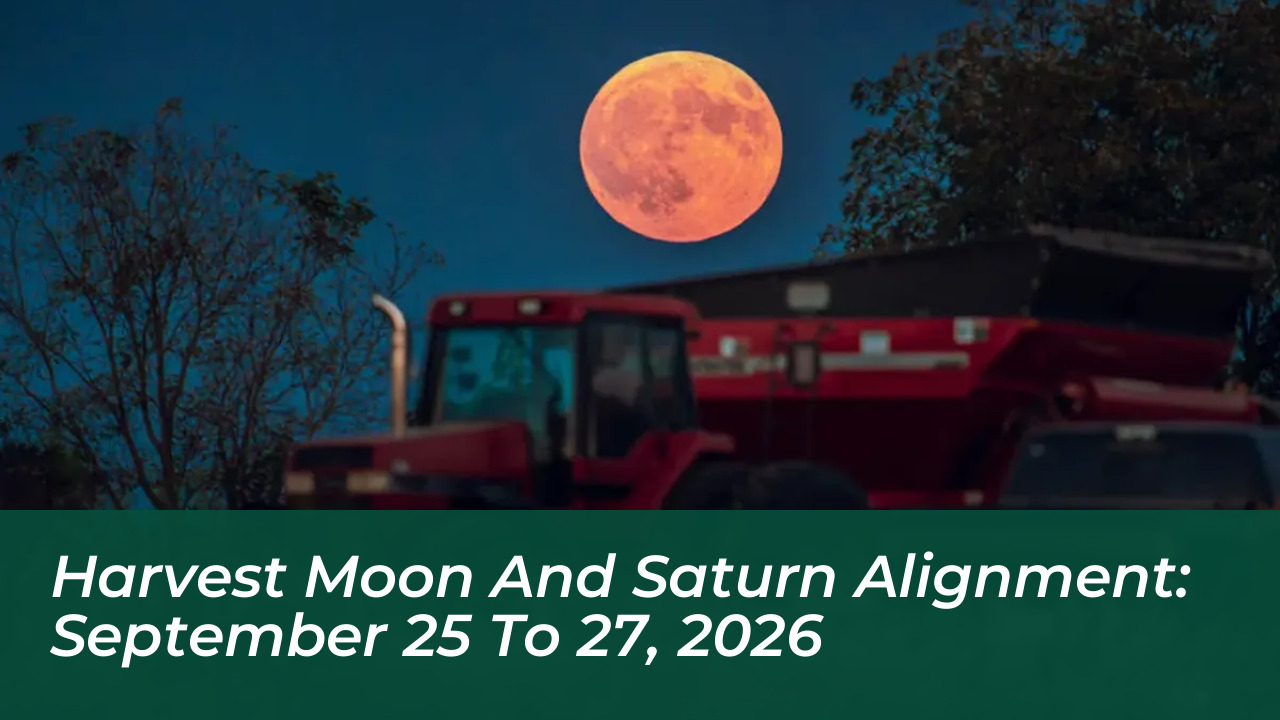
Skywatchers around the globe are preparing for a striking celestial alignment as the annual Harvest Moon rises shortly after sunset from Friday through Sunday, September 25 to 27, 2026. This full moon earns its historic designation because it occurs closest to the September equinox. Beyond its cultural significance, the orbital mechanics of this specific lunar event create a rare multi-night spectacle, accompanied closely by the ringed planet Saturn as it approaches its yearly opposition point.
- Introduction to the 2026 Harvest Moon and Saturn Alignment
- Astronomical Mechanics Behind the Harvest Moon
- How the Shallow Angle Shortens Moonrise Delays
- Agricultural Origins of the Name
- Global Timing and Peak Illumination Schedule
- Regional Viewing Guide
- Saturn Joins the Lunar Display
- The October 4 Opposition Context
- Using Binoculars and Telescopes
- Visual Phenomena: The Moon Illusion and Rayleigh Scattering
- Understanding the Moon Illusion
- The Physics of Rayleigh Scattering
- Global Cultural Traditions and Observances
- Mid-Autumn Festival and Pitru Paksha
- Indigenous North American Nomenclature
- Optimal Viewing Strategies for September 25 to 27
- Equipment and Location Checklist
- Quick Reference Data for the 2026 Alignment
Introduction to the 2026 Harvest Moon and Saturn Alignment
The global celestial event happening from September 25 to 27, 2026, brings together two of the most rewarding targets for backyard astronomers. As dusk settles across different continents, the brilliant lunar disk ascends into the eastern sky alongside a gleaming Saturn. This conjunction provides an accessible opportunity for anyone stepping outside with binoculars or just their naked eyes.
Planetary pairings happen regularly throughout the year, but catching a brilliant full moon directly adjacent to a major gas giant remains a memorable experience. Weather forecasts across North America and Europe suggest mostly favorable skies for the weekend peak. Observers only need a clear line of sight toward the eastern horizon to catch the action.
Astronomical Mechanics Behind the Harvest Moon
Unlike standard full moons that typically rise roughly fifty minutes later each successive evening, the Harvest Moon breaks this predictable pattern. Around the autumn equinox, the moon’s orbital path intersects the eastern horizon at an unusually shallow angle for mid-northern latitudes. This geometry dramatically shortens the delay between moonrises on consecutive nights.
For observers situated in New York, the moon rises at 6:34 p.m. EDT on Saturday and just twenty-four minutes later at 6:58 p.m. EDT on Sunday. This narrow window provides an extended period of evening illumination across multiple nights. The celestial geometry creates a visual impression of consecutive giant moons appearing right at dusk.
How the Shallow Angle Shortens Moonrise Delays
The physics behind consecutive moonrises depend entirely on latitude and orbital inclination. As Earth rotates through a twenty-four-hour cycle, the moon moves eastward along its orbit by roughly thirteen degrees each day. In most months, that orbital shift pushes the moonrise time significantly later because of the steep angle of the horizon.
During the autumn equinox, the tilt of Earth’s axis aligns favorably with the lunar orbit. Instead of dipping sharply below the horizon, the moon’s path runs nearly parallel to it. Northern latitude cities experience minimal time gaps between successive moonrises, compressing the schedule down to twenty or twenty-five minutes instead of the usual fifty.
Agricultural Origins of the Name
Historical farming communities relied heavily on this extra evening moonlight before the advent of modern machinery and artificial lighting. Traditional harvesters worked late into the night under the bright lunar glow to bring in staple crops before autumn frosts set in. This practical benefit cemented the title Harvest Moon across centuries of agricultural tradition.
While industrial farming has reduced our reliance on lunar schedules, the name persists as a marker of seasonal change. The bright evening illumination offers a direct connection to how earlier generations synchronized their daily lives with planetary movements and seasonal transitions.
Global Timing and Peak Illumination Schedule
The moon reaches its exact phase of full illumination on Saturday, September 26, at 12:49 p.m. EDT (16:49 GMT). Because this peak occurs during daylight hours for North American and European time zones, the absolute best viewing window happens during dusk on Saturday and Sunday evenings when the lunar disk clears the eastern horizon.
Observer experiences vary significantly based on geographic coordinates and local time zones. Planning ahead ensures that backyard astronomers and casual skywatchers do not miss the prime viewing slots during twilight.
Regional Viewing Guide
- North America: Clear view of the moon rising near sunset on both Saturday and Sunday, accompanied by a shallow delay in rise times.
- Europe: Peak illumination occurs late afternoon or early evening on September 26, with prime moonrise viewing unfolding during twilight hours in cities like London.
- Asia and Australia: Time zone differences push the official full phase into September 27, delivering vibrant weekend moonrises.
- Southern Hemisphere: The equinox marks the arrival of spring rather than autumn. Consequently, moonrise times move farther apart rather than bunching together, and the moon tracks across the northern sky instead of the southern sky.
Saturn Joins the Lunar Display
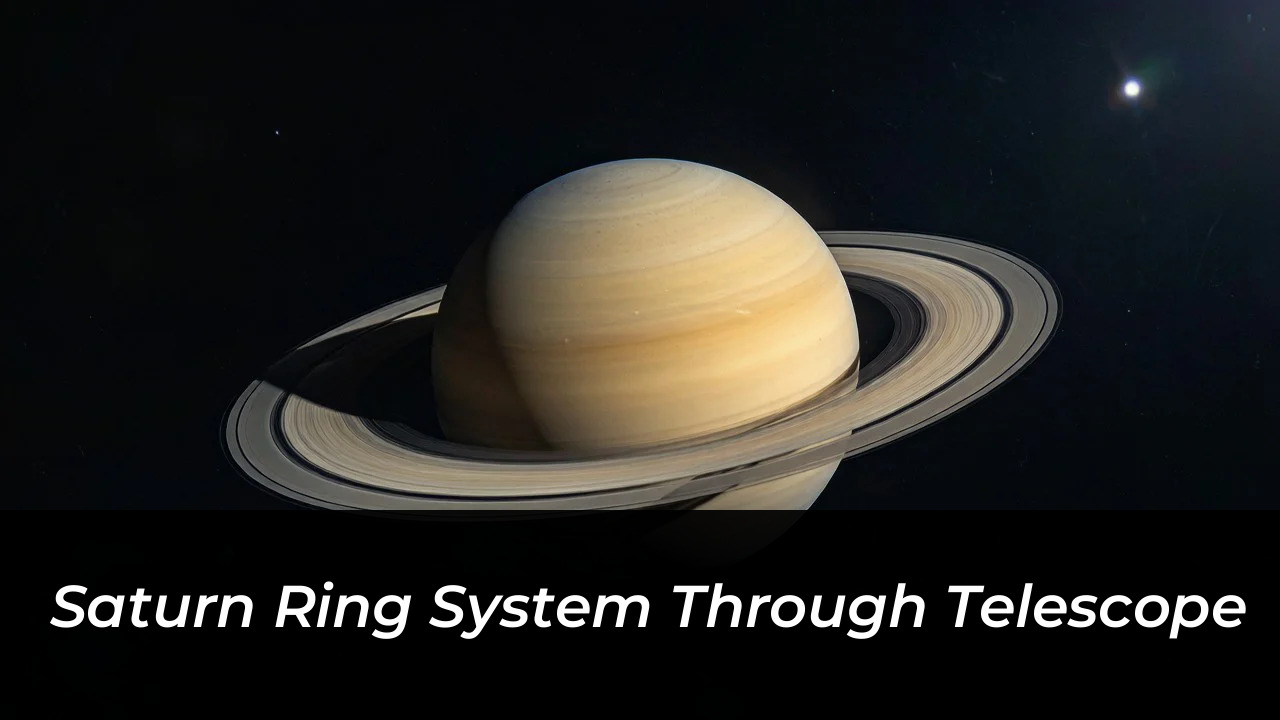
The 2026 Harvest Moon shares the night sky with a prominent planetary companion. Saturn shines brightly less than ten degrees below the lunar disk shortly after moonrise, creating an effortless naked-eye pairing for casual stargazers. This planetary encounter offers an immediate point of interest for anyone scanning the eastern evening sky.
Spotting Saturn is straightforward because the bright ringed planet requires no specialized equipment to find. It appears as a steady, golden point of light situated just a short distance from the brilliant white lunar sphere. The contrast between the illuminated moon and the distant planet highlights the scale of our solar system.
The October 4 Opposition Context
This planetary encounter coincides with Saturn approaching its opposition on October 4, when planet Earth positions itself directly between the gas giant and the sun. This orbital alignment renders Saturn exceptionally bright and visible for the entirety of the night, peaking in angular size for the year.
Opposition periods offer ideal conditions for planetary studies. Sunlight illuminates Saturn’s cloud tops and ring system from a direct angle, minimizing shadows and maximizing overall surface brightness for observers tracking the planet throughout September and October.
Using Binoculars and Telescopes
Observers utilizing binoculars or a modest telescope with a six-inch aperture can resolve Saturn’s signature ring system alongside several of its largest natural satellites, including Titan, Rhea, Tethys, and Dione. Steady mounting for optics is essential to separate the planet from the overwhelming glare of the nearby full moon.
Meanwhile, the ice giant Neptune lingers nearby in the same sector of the sky. Requiring optical aid due to its magnitude 8 brightness, Neptune forms a broad, faint triangle with the moon and Saturn, rewarding patient stargazers who map out the surrounding background stars.
Visual Phenomena: The Moon Illusion and Rayleigh Scattering
Observers watching the moon crest the horizon this weekend witness two distinct optical effects that alter the perceived appearance of Earth’s satellite. These everyday atmospheric and psychological quirks make low-hanging full moons look dramatically different from high-sky moons.
Understanding these phenomena helps separate physical reality from optical trickery, offering a deeper appreciation of how our atmosphere and brain interact with incoming light.
Understanding the Moon Illusion
When the Harvest Moon hangs low over trees, buildings, or mountain ridges, it often appears enormous. This psychological phenomenon, known as the moon illusion, originates from how the human brain processes scale when foreground objects provide visual context.
Photographic evidence confirms that the physical dimensions of the lunar disk remain identical whether it sits low on the horizon or high overhead. The brain simply compares the moon to terrestrial landmarks, mistakenly expanding its perceived size.
The Physics of Rayleigh Scattering
The rich amber and orange hues visible during moonrise stem from atmospheric physics. As moonlight travels horizontally through the densest layers of Earth’s atmosphere, shorter blue wavelengths scatter away due to Rayleigh scattering.
Longer red and yellow wavelengths pierce through the particulate matter, painting the lunar surface in warm autumnal tones before it ascends into the darker upper sky. This filtering effect vanishes once the moon climbs high above the horizon.
Global Cultural Traditions and Observances
September’s full moon holds deep cultural resonance across diverse global communities. In China, the event coincides with the Mid-Autumn Festival, an ancient tradition centered on family gatherings, decorative lanterns, and mooncakes.
In India, the lunar timing aligns with the commencement of Pitru Paksha, a sacred period dedicated to honoring ancestors through traditional prayers and offerings.
Mid-Autumn Festival and Pitru Paksha
Family reunions form the core of the Mid-Autumn Festival, where participants share round pastries symbolizing completeness and unity. Lighting paper lanterns and admiring the bright autumn moon remain central customs across East Asian households.
Simultaneously, millions observe Pitru Paksha by offering food and prayers to departed souls. The steady rhythm of the lunar calendar ties these reflective community gatherings directly to astronomical cycles.
Indigenous North American Nomenclature
Indigenous groups across North America maintain historical nomenclature for this lunation. The Ojibwe Tribe refers to it as the Falling Leaves Moon, the Anishinaabe people recognize it as the Turning Leaves Moon, and the Assiniboine community calls it the Yellow Leaf Moon.
These traditional names reflect the ecological transition into colder months, marking the shift in flora and fauna as summer gives way to autumn.
Optimal Viewing Strategies for September 25 to 27
Securing an optimal view of the Harvest Moon and Saturn requires minimal preparation. Simple planning steps turn a casual glimpse into a memorable observing session.
Finding a dark location away from blinding streetlights enhances contrast, though the intense brightness of a full moon easily cuts through minor urban light pollution.
Equipment and Location Checklist
- Find an unobstructed eastern horizon free from tall skyscrapers or dense forest canopies.
- Arrive fifteen minutes before sunset to catch the deep amber coloration during moonrise.
- Deploy appropriate optics for planetary rings and faint companions like Neptune.
Quick Reference Data for the 2026 Alignment
| Parameter | Detail |
|---|---|
| Peak Illumination Date | Saturday, September 26, 2026 |
| Exact Peak Time | 12:49 p.m. EDT (16:49 GMT) |
| Primary Viewing Nights | September 25, 26, and 27, 2026 |
| Key Planetary Companion | Saturn |