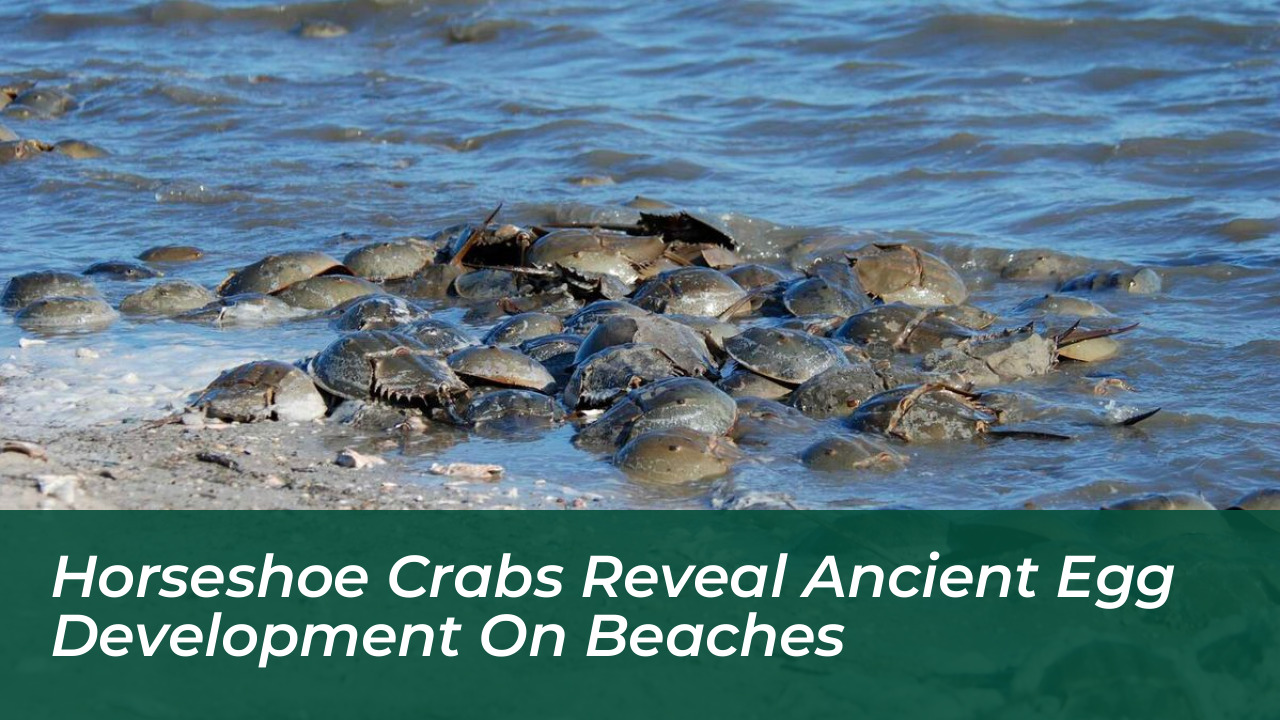

Each spring, a rare coastal spectacle unfolds along the Mid-Atlantic Coast, Delaware Bay, and Maryland shores as Atlantic horseshoe crabs emerge from the deep ocean. Under the glow of full and new moons, these ancient creatures use higher tides to reach sandy beaches for their annual spawning ritual, an evolutionary process that has persisted for roughly 350 to 450 million years.
According to Sheila Eyler, project leader of the Mid-Atlantic Fish and Wildlife Conservation Office for the U.S. Fish and Wildlife Service, female horseshoe crabs migrate toward sandy shorelines in mass movements. Once ashore, the females dig shallow nests and deposit thousands of small, green, pellet-like eggs during repeated visits over several weeks.
The Remarkable Transformation of Horseshoe Crab Eggs
A single female horseshoe crab can lay up to 100,000 eggs over the course of a single reproductive season, typically grouping them in nests containing around 4,000 eggs each. While these eggs initially resemble tiny green pellets, a mesmerizing transformation occurs as they grow and develop.
Over a two- to four-week incubation period, the eggs become increasingly translucent. By the final stages, they turn completely crystal-clear, allowing beachgoers and researchers to clearly see tiny baby horseshoe crabs turning around inside before they hatch. Because horseshoe crabs do not provide parental care, the newly hatched juveniles immediately fend for themselves in the intertidal zone, eventually taking about a decade to reach reproductive maturity.
Vital Link in the Coastal Food Web
The vast abundance of nutrient-rich horseshoe crab eggs serves a critical ecological purpose far beyond the continuation of the crab species itself. During spring and early summer migrations, millions of shorebirds-including threatened red knots, ruddy turnstones, sanderlings, and American oystercatchers-rely heavily on these eggs as an essential refueling stop along the Atlantic flyway.
Despite surviving multiple mass extinctions over hundreds of millions of years, horseshoe crab populations faced severe pressures in the 1990s due to overharvesting for bait and collection by biomedical companies utilizing their blue blood for Limulus Amebocyte Lysate (LAL) testing. Thanks to decades of conservation frameworks, strict quotas, and dedicated state monitoring programs by agencies such as the Maryland Department of Natural Resources, regional populations have experienced a steady and encouraging rebound.
Frequently Asked Questions About Horseshoe Crabs
Are horseshoe crabs true crabs?
No, horseshoe crabs are not true crabs. They belong to an ancient group of arthropods known as Xiphosura, making them more closely related to spiders, scorpions, and trilobites than to modern crustaceans.
How long do horseshoe crabs live and take to mature?
Horseshoe crabs take approximately 10 years for females and 9 years for males to reach sexual maturity. They have an exceptionally long evolutionary history, remaining largely unchanged for roughly 350 to 450 million years.
Why do horseshoe crab eggs become transparent?
During the two- to four-week incubation period in sandy beach nests, the eggs transition from solid green pellets into completely transparent orbs, making the developing baby horseshoe crabs visible inside.
What animals eat horseshoe crab eggs?
A wide variety of migratory shorebirds, such as red knots, ruddy turnstones, sanderlings, and plovers, gorge themselves on the nutrient-rich eggs during their northward migrations along the Atlantic coast.
How can you safely help an overturned horseshoe crab?
If you find an overturned horseshoe crab stranded on the beach, gently flip it over using its shell. Never lift or pull a horseshoe crab by its long, pointed tail (the telson), as this can cause permanent injury to the animal.