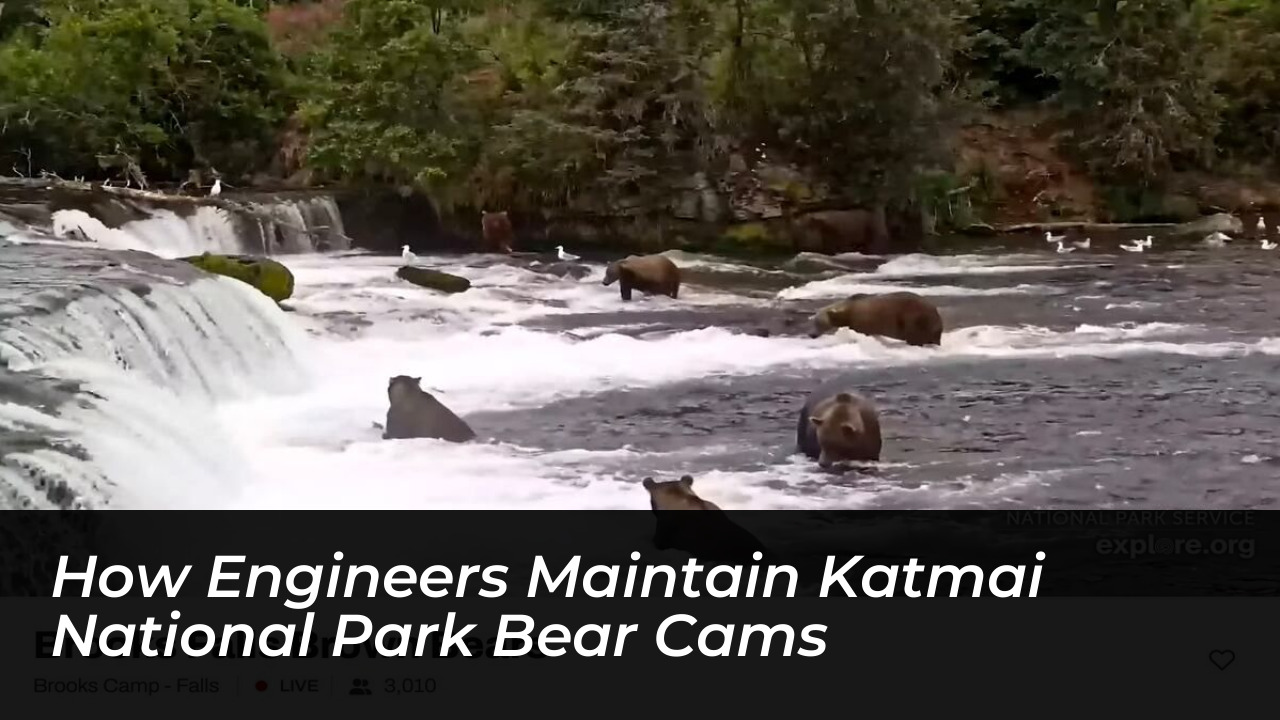
Deep in the remote expanse of the Alaska Peninsula, millions of wildlife enthusiasts watch brown bears roam, fish, and interact in real time. This digital window into Katmai National Park and Preserve exists only because specialized field engineers brave harsh wilderness conditions to maintain a complex network of off-grid power and internet systems. While viewers across the globe experience seamless livestreams of Brooks Falls and Dumpling Mountain, the infrastructure behind these broadcasts requires intensive, physical engineering. Maintaining remote camera feeds in a wilderness area with no roads demands specialized logistics, heavy-duty solar equipment, satellite links, and resilient field technicians who ensure that the streams of the brown bear webcams remain active.
- The Logistics of Remote Alaskan Field Engineering
- Transporting Heavy Equipment Across Four Million Acres
- Historical Access Challenges on Dumpling Mountain
- Powering the Unseen: Solar Arrays and Off-Grid Constraints
- Beating the Elements on Dumpling Mountain
- Katmai Camera Infrastructure and Power Sources
- Managing Seasonal Power Fluctuations
- Evolution of Connectivity: From Repeaters to Satellite Links
- Overcoming Terrain Obstacles
- Modern Satellite Infrastructure
- The Human Element: Remote Operation and Global Viewership
- Global Volunteer Camera Operators
- Unfiltered Ecological Reality
- Economic and Conservation Impacts of the Katmai Webcams
- Boosting Park Visitation and Global Education
- Frequently Asked Questions
- Who maintains the live webcams at Katmai National Park?
- How are the Katmai webcams powered during the winter?
- Can visitors access Katmai National Park by road?
- What is the primary wildlife focus of the Katmai live streams?
- Why do the park webcams occasionally go offline?
The contrast between a smooth digital video playing on a laptop and the grueling physical reality of the Alaska Peninsula is stark. While viewers click a play button in a comfortable home, technicians face howling winds, freezing temperatures, and unpredictable wildlife just to swap out a blown fuse or realign a satellite dish. Understanding this ecosystem means looking past the high-definition monitor and examining the nuts, bolts, and batteries that make virtual wildlife viewing possible.
A dedicated team of specialized field engineers handles the responsibility of keeping these cameras online year after year. These individuals combine skills in electrical engineering, satellite communication, and wilderness survival. Their work ensures that global audiences can witness the unfiltered behaviors of brown bears and other native wildlife without stepping foot in a grizzly-dense backcountry.
The Logistics of Remote Alaskan Field Engineering
Transporting Heavy Equipment Across Four Million Acres
Katmai National Park spans more than four million acres of rugged terrain, active volcanoes, and pristine river systems. Transporting equipment into this environment is a massive operational undertaking. Field engineers Joe Pifer and BJ Kirschhoffer, working alongside Explore.org support teams, coordinate their operations from Anchorage to King Salmon, the primary gateway community located roughly 280 miles southwest of Anchorage.
Before deploying into the backcountry, technicians meticulously organize hardware. Solar panels, electrical cables, power tools, and mounting brackets are cataloged and packed into heavy-duty transport bags. Because replacement parts cannot simply be sourced locally once work begins, teams carry miniature label machines and complete spares inventories to ensure every connection and fuse can be serviced on-site. From King Salmon, gear moves via floatplanes, powerboats, or helicopters to reach isolated installation points.
Historical Access Challenges on Dumpling Mountain
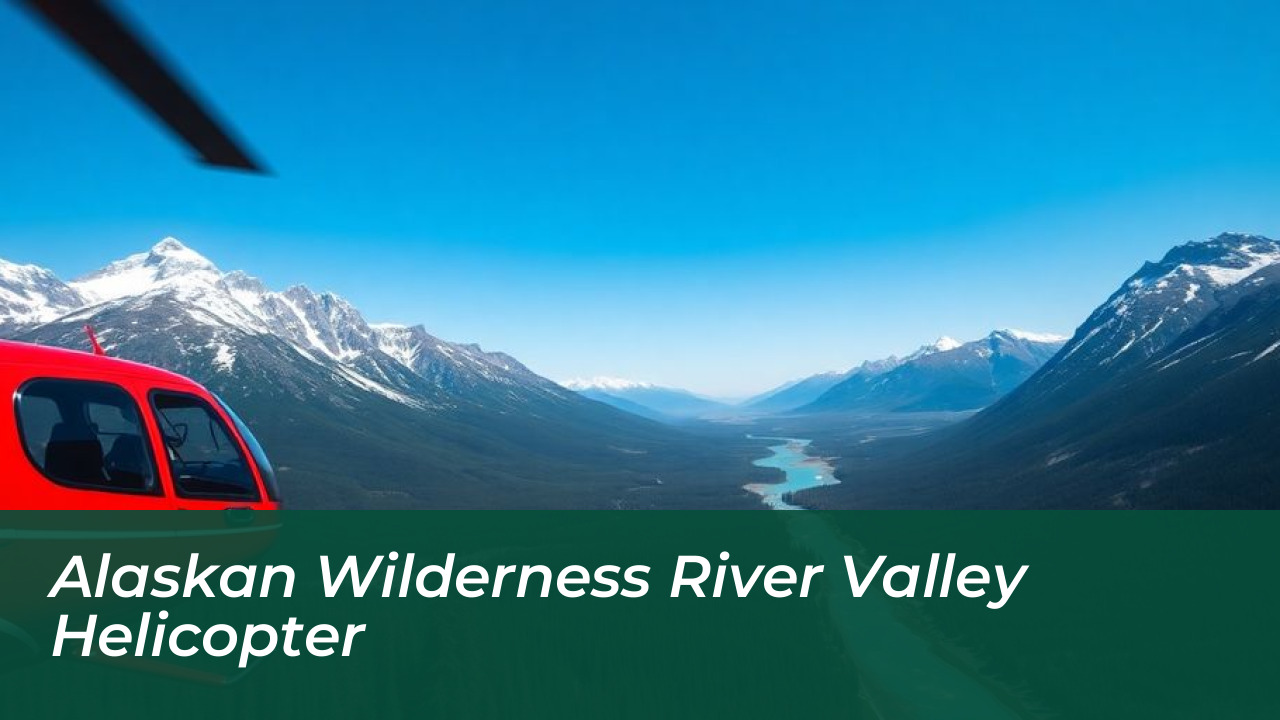
Historic access routes to high-altitude repeaters, such as those on Dumpling Mountain, historically required sling-loading supplies by helicopter and grueling hikes across rugged tundra carrying hundreds of pounds of equipment. Technicians battle shifting weather windows where a calm morning can turn into a gale-force storm in a matter of minutes. Every piece of gear must earn its place in the pack, balancing weight limits against the functional necessity of surviving isolation.
Navigating these treacherous paths requires immense physical endurance and precise timing. Field teams must haul batteries and heavy structural mounts up steep inclines where trails are nonexistent. The physical toll of these deployments highlights the dedication required to keep the monitoring equipment functioning smoothly.
Powering the Unseen: Solar Arrays and Off-Grid Constraints
Beating the Elements on Dumpling Mountain
Operating livestream cameras in an off-grid national park presents severe energy challenges. The camera network relies primarily on advanced solar arrays designed to capture maximum daylight during peak operating months. During the summer season, continuous daylight provides ample generation capacity. However, winter operations test the limits of off-grid hardware.
Winter conditions on Dumpling Mountain feature extreme winds, heavy icing, and sub-zero temperatures. Engineers have experimented with various auxiliary power sources, including wind generators, but the severity of the local climate often destroys exposed mechanical units. Solar panels must be reinforced with heavy-duty framing and secured against severe wind shear to survive the brutal off-season.
Katmai Camera Infrastructure and Power Sources
- Brooks Falls Cam: Solar arrays with camp generator backup and satellite internet link for views of brown bears catching sockeye salmon.
- Brooks Falls Low Camera: Close-up water-level perspective powered by solar systems and satellite links.
- River Watch Cam: Upriver views of mother bears and cubs powered by off-grid solar arrays.
- Dumpling Mountain Cam: Wide landscape views of Naknek Lake and volcanoes supported by remote repeater and satellite setups.
During active periods at Brooks Camp, systems draw supplemental power from camp generators. As autumn wanes and daylight hours diminish, the cameras power down or operate on minimal duty cycles until light returns in the spring. Engineers must balance power consumption against transmission bitrate to keep the live streams stable without draining battery banks prematurely.

Managing Seasonal Power Fluctuations
Power management is a year-round balancing act for the engineering crew. When cloud cover persists for days during the peak summer salmon run, power generation drops significantly. Technicians monitor voltage levels remotely and adjust encoding bitrates to reduce power draw without sacrificing video clarity for the global audience.
Battery maintenance is another critical aspect of off-grid engineering. Deep-cycle batteries must be housed in insulated enclosures to prevent freezing capacity loss. Regular diagnostic checks ensure these energy storage units can sustain the transmission hardware through sudden weather anomalies.
Evolution of Connectivity: From Repeaters to Satellite Links
Overcoming Terrain Obstacles
Reliable internet access in Katmai has transformed significantly over the past decade. When Explore.org first deployed cameras in 2012, server capacities supported only a fraction of today’s audience, and connectivity depended entirely on line-of-sight repeater stations. A primary repeater positioned on top of Dumpling Mountain relayed data across rough terrain over a distance of roughly 30 miles to park headquarters.
Maintaining those early relay stations required precarious climbs, cliffside assembly, and occasional boat journeys across turbulent waters. Technicians faced constant signal interruptions caused by moisture buildup, icing, and mechanical wear on tower guy wires. Every maintenance trip tested their technical problem-solving skills in high-pressure environments.
Modern Satellite Infrastructure
Today, modern satellite internet terminals provide more direct and reliable data backhauls. These advanced dishes bypass the complex intermediate relay chains that plagued earlier deployments. High-bandwidth satellite links allow crystal-clear high-definition video streaming directly from the remote wilderness to viewers around the world.
Despite satellite advancements, heavy vegetation, shifting terrain, and extreme weather events can still disrupt signals, requiring hands-on troubleshooting by visiting engineers. Heavy wet snow accumulation on satellite dishes can block signals instantly, requiring automated heating elements or manual clearing during routine site visits.
The Human Element: Remote Operation and Global Viewership
Global Volunteer Camera Operators
While the hardware is maintained on-site, the daily operation of the camera lenses involves a collaborative global network. Approximately 150 volunteer camera operators from around the world control the pan, tilt, and zoom functions of the cameras remotely through structured shift schedules. The brown bear monitoring shifts remain the most sought-after assignments among volunteers.
These operators work around the clock to follow bear movements, capture dramatic fishing moments, and provide smooth visual storytelling. Their dedication creates a shared viewing experience that unites millions of people. This human layer transforms static security-style feeds into dynamic wildlife documentaries.
Unfiltered Ecological Reality
The streams capture nature without human filtering or editorial dramatization. When wildlife conflicts or predatory events occur, such as brown bears hunting cubs, the cameras continue broadcasting unfiltered reality. Park naturalists emphasize that maintaining transparency is vital for public education, allowing viewers to witness authentic ecological dynamics rather than curated wildlife documentaries.
This unfiltered approach occasionally sparks intense debate among viewers online. However, conservationists view these raw moments as essential educational tools. Witnessing the harsh realities of the wild fosters a deeper appreciation for natural predator-prey relationships and the complex dynamics of protected ecosystems.
Economic and Conservation Impacts of the Katmai Webcams
Boosting Park Visitation and Global Education
The webcams serve as a powerful conservation and tourism driver. Naturalist Mike Fitz notes that park visitation has doubled since the mid-2000s, a surge heavily correlated with the global popularity of the livestreams. Peak viewership converges annually around Fat Bear Week, an online tournament celebrating the successful foraging habits of brown bears preparing for winter hibernation.
Last year, the Fat Bear Week platform recorded millions of visits, connecting audiences who face financial or geographical barriers to the wilderness. By bridging the gap between remote ecosystems and urban homes, the engineering efforts behind Katmai’s webcams foster global appreciation and stewardship for protected public lands.
This digital exposure translates into tangible support for national parks. Viewers who fall in love with individual bears often become vocal advocates for public land conservation, policy protection, and wildlife funding. The technical labor of maintaining the webcams directly fuels a worldwide movement for environmental preservation.
Frequently Asked Questions
Who maintains the live webcams at Katmai National Park?
Field engineers from Explore.org, including specialists like Joe Pifer and BJ Kirschhoffer, travel to remote locations in Katmai to service solar panels, power systems, and satellite equipment.
How are the Katmai webcams powered during the winter?
The cameras utilize robust solar power arrays. Because winter weather conditions in Alaska feature extreme wind and minimal daylight, systems often power down or operate on reduced schedules during the off-season.
Can visitors access Katmai National Park by road?
No roads connect Katmai National Park to the rest of Alaska. Access requires traveling by air taxi or boat, typically starting with a commercial flight from Anchorage to King Salmon.
What is the primary wildlife focus of the Katmai live streams?
The cameras focus heavily on the Alaskan brown bear population, particularly during the summer salmon runs, alongside regional landscapes and native bird species.
Why do the park webcams occasionally go offline?
Temporary outages stem from severe weather events, solar power deficits, satellite link interruptions, or routine maintenance performed by field engineering teams.