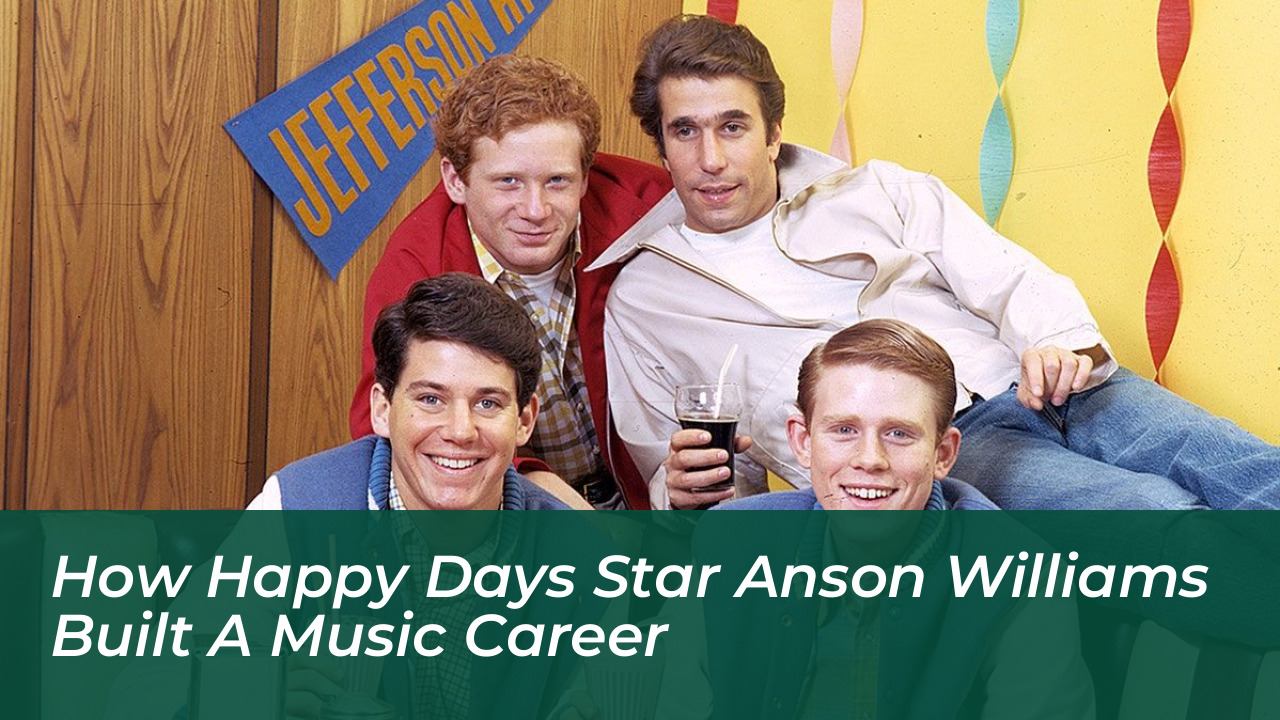

When actor Anson Williams landed the role of lovable, smooth-singing Potsie Weber on the mega-hit 1970s sitcom Happy Days, it felt like a dream come true. However, the economic reality of television acting during that era presented unexpected hurdles. Williams, now 77, recently revealed in a candid interview on the Still Here Hollywood Podcast that he had to develop a lucrative second career in music simply because his sitcom salary offered very little long-term financial security.
While the ABC series eventually became a cultural phenomenon and a massive ratings juggernaut, the cast’s initial paychecks were remarkably modest. Reflecting on the early days of production, Williams explained that earnings in the 1970s bore no resemblance to the massive multi-million-dollar contracts enjoyed by modern television stars.
The Financial Reality of 1970s Sitcom Salaries
During the initial seasons of Happy Days, Williams earned a relatively modest weekly wage. As he recalled, the compensation started out at just $900 an episode for half a season, bumping up to $1,200 an episode for the second season, and eventually reaching $1,800 an episode by the third season.
While that money covered daily living expenses back then, it did not translate into a lifetime of financial freedom. Recognizing that he needed to look beyond his weekly script to secure his future, Williams adopted an entrepreneurial mindset. Instead of complaining about industry pay structures, he looked around for hidden opportunities.
“On ‘Happy Days’ we didn’t have the same salaries they have today. Not even close,” Williams shared during his podcast appearance. “Nine hundred dollars an episode, $1,200 an episode. It was fine back then, but…it’s not a lifetime of earnings there.”
Pitching Garry Marshall and Singing to a Bulldog
Inspiration struck after Williams spoke with fellow television stars who were already capitalizing on their musical talents outside of their respective shows. Conversations with David Cassidy of The Partridge Family and Barry Williams of The Brady Bunch opened his eyes to the financial potential of taking a singing act on the road.
Determined to follow suit, Williams approached the show’s legendary creator and mentor, Garry Marshall. Armed with an elevator pitch, Williams pointed out that the hit retro sitcom featured classic cars and lively crowds, making a band at Arnold’s drive-in diner a natural fit.
Marshall agreed to give the idea a shot for an upcoming fraternity-themed episode, though he added a humorous caveat. He told Williams he could pick the song, but joked, “If you’re good, I get laughs. If you’re bad, I get laughs. You’re going to sing the bulldog.” Williams chose to cover Elvis Presley’s classic hit “All Shook Up,” performing directly to a canine co-star in a memorable television moment.
A Decade of State Fairs and Concert Success
The musical gamble paid off immediately. Fan mail poured into the studio, proving that viewers loved hearing Potsie croon. Marshall officially put Williams in charge of the musical segments, weaving songs into roughly every third episode.
That exposure caught the attention of Wes Farrell, head of David Cassidy’s label Chelsea Records, who signed Williams to a record deal. Soon, major amusement parks, state fairs, and entertainment venues across the country came calling. While Williams was pulling in $1,200 an episode on television, he was commanding up to $17,000 per night for live concert appearances-a schedule he maintained successfully for 10 years.
Marshall later expressed immense pride in Williams’ initiative, acknowledging that his entrepreneurial drive not only secured his livelihood but genuinely improved the show.
Transitioning to Directing and Beyond
After Happy Days concluded its 11-season run, Williams smoothly transitioned behind the camera, carving out a respected career as a television director. He helmed episodes for numerous hit programs, including Beverly Hills, 90210, Melrose Place, Sabrina the Teenage Witch, and Lizzie McGuire. He also spearheaded socially impactful television projects, such as the telefilm Skyward starring Bette Davis and the after-school special No Greater Gift, which famously helped double organ donor card registrations across the United States.
Today, Williams continues to innovate within the entertainment industry, balancing theater directing with new digital content platforms. His journey from a budget-conscious young actor singing to bulldogs on a Hollywood stage to a multifaceted entertainment entrepreneur remains a to hard work, adaptability, and seizing unexpected opportunities.
Frequently Asked Questions About Anson Williams
How much did Anson Williams make per episode on Happy Days?
During the early seasons of Happy Days, Anson Williams earned between $900 and $1,200 per episode, with his salary later increasing to $1,800 an episode by the third season.
What inspired Anson Williams to start singing on Happy Days?
Williams was inspired by conversations with fellow child and teen TV stars David Cassidy (The Partridge Family) and Barry Williams (The Brady Bunch), who successfully leveraged their show characters into lucrative musical careers and concert tours.
What was Anson Williams’ character name on Happy Days?
Anson Williams is best known for playing Warren “Potsie” Weber, the earnest, singing best friend of Richie Cunningham, who was played by Ron Howard.
How much did Anson Williams make from his live singing tours?
While earning a modest weekly television salary, Williams capitalized on his fame by booking state fairs, amusement parks, and live venues, earning up to $17,000 a night during a 10-year touring career.
What did Anson Williams do after Happy Days ended?
Following the conclusion of Happy Days, Williams built a successful career as a television director, helming episodes of popular 1990s and 2000s series like Beverly Hills, 90210, Melrose Place, and Charmed, while also producing socially conscious movies of the week.