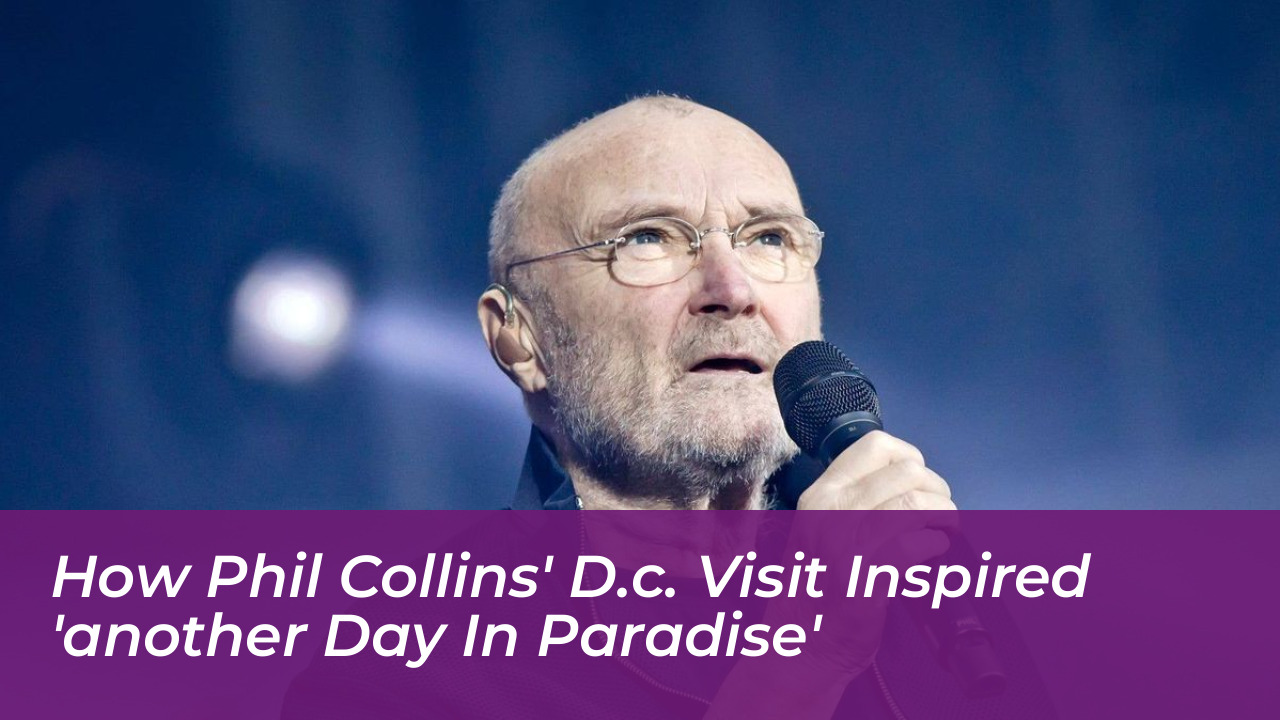
A transformative trip to Washington, D.C., prompted English musician Phil Collins to write his hit 1989 single “Another Day in Paradise.” Witnessing severe poverty and widespread homelessness against the backdrop of the nation’s capital heavily influenced the socially conscious track. This marked a distinct departure from the upbeat pop style of his previous blockbuster album, No Jacket Required.
From D.C. Poverty to a Global Anthem
Released on October 23, 1989, as the lead single from his fourth studio album, …But Seriously, “Another Day in Paradise” tackled an uncharacteristic theme for Collins: systemic poverty and social indifference. The song tells the story of a passerby ignoring a homeless woman on the street. It is written from a third-person perspective to highlight the glaring juxtaposition between wealthy society and unhoused individuals.
Collins later explained that the track essentially wrote itself. While experimenting at the piano, he recorded a chord progression onto a tape. Upon listening back to begin structuring lyrics, the opening line-“She calls out to the man on the street”-spontaneously emerged.
“I didn’t set out to write a song about the homeless,” Collins recalled. “Those were just the words I happened to sing. It was only then that I decided that was what the song would be about.”
Production and Musical Collaboration
Collins departed from the bright, synthesized pop sound that defined much of his mid-1980s output. Instead, he crafted a somber, reflective atmosphere for the track. To elevate the emotional weight of the recording, the single featured prominent backing vocals from folk-rock icon David Crosby. Crosby’s ethereal harmonies blended seamlessly with Collins’ lead delivery.
The single quickly resonated with a global audience. Climbing up the charts, “Another Day in Paradise” officially reached No. 1 on the U.S. Billboard Hot 100 on December 23, 1989. This secured its place as the final chart-topping single of both the year and the 1980s decade. It also peaked at No. 2 on the charts in Collins’ native United Kingdom.
Commercial Success and Accolades
The track’s cultural impact translated into massive commercial success. It ultimately sold an estimated 20 million copies worldwide. The accompanying album, …But Seriously, also dominated international music charts and mirrored the single’s success at No. 1 on the Billboard 200.
Critical recognition followed at the highest levels of the industry. At the 33rd Annual Grammy Awards in 1991, “Another Day in Paradise” earned the prestigious award for Record of the Year. Additionally, the track received a Brit Award for British Single, cementing its legacy as one of the defining socially conscious pop releases of the late 20th century.
Enduring Relevance
Despite facing occasional debates regarding its third-person framing of homelessness, the song has endured through decades as a powerful reminder of society’s persistent economic divides. Its message has inspired numerous covers and samples over the years. Most notably, a 2001 R&B rendition by Brandy and Ray J ensured that Phil Collins’ poignant commentary on urban poverty continues to reach new generations of listeners.