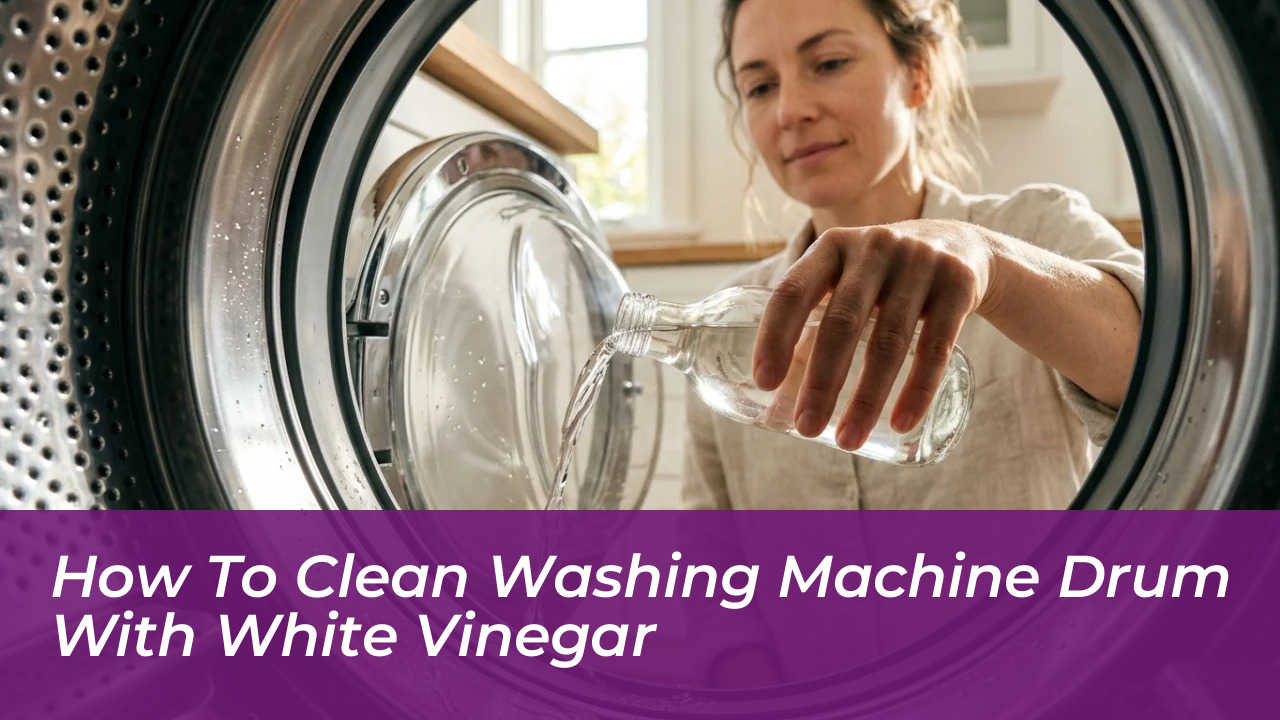

Running a maintenance wash with 500 millilitres of distilled white vinegar strips stubborn limescale, flushes detergent sludge, and removes bacterial dampness from your appliance drum. When water hardness and excess soap build up behind the outer drum, standard low-temperature laundry cycles fail to dissolve oily residues, creating an ideal breeding ground for musty smells. White vinegar acts as a mild acetic solution that breaks down calcium carbonate deposits and cuts through detergent scum without corroding internal components when used correctly. Taking control of internal drum hygiene prevents recurring laundry contamination and keeps clothing smelling fresh cycle after cycle.
Why Washing Machines Develop Foul Odours and Sludge
Modern laundry habits heavily favour 30°C and 40°C programmes alongside liquid detergents and fabric softeners. While low-temperature washes save energy, they lack the thermal energy required to dissolve fats and waxes completely. Over time, unrinsed compounds cling to the outer drum, rubber door seal, and drain hose, forming a gelatinous biofilm. Excess detergent accelerates this deterioration. Soap residues settle inside internal drainage pipes and water channels, trapping lint, skin cells, and microscopic dirt particles. This trapped organic matter decomposes in dark, humid environments, producing stale scents that transfer straight back onto freshly washed fabrics.
Excess detergent leaves residue behind in internal channels of laundry appliances, which can trap damp odours and encourage bacterial growth. Hard water areas intensify this complication. Calcium and magnesium ions precipitate out of water during heating, coating heating elements with hard mineral crusts that reduce machine efficiency and capture more grime.
How White Vinegar Targets Drum Grime and Limescale
Distilled white vinegar contains roughly 5 percent acetic , providing enough chemical acidity to neutralise alkaline soap films and dissolve mineral chalk. Unlike scented culinary vinegars, distilled white vinegar contains no residual sugars or artificial colourings that could stain fabrics or leave sticky surface films. When exposed to limescale, the reacts directly with calcium carbonate, transforming solid mineral scale into water-soluble calcium acetate and carbon dioxide gas. This reaction dissolves encrusted mineral deposits from hidden heating elements, restoring thermal conductivity and lowering power consumption during heat phases.
Vinegar Versus Commercial Cleaners
Household cleaning methods vary considerably in chemical action and overall material safety. Matching the correct cleaning agent to your machine’s maintenance needs avoids unnecessary wear on internal seals.
- Distilled White Vinegar: Dissolves limescale deposits, cuts soap scum, and neutralises alkaline odours.
- Soda Crystals: Emulsifies heavy grease, strips hardened fats, and clears drainage pipe clogs.
- Chlorine Bleach: Disinfects black mould and bacteria, but cannot dissolve mineral limescale.
- Commercial Descaler: Formulated with concentrated acids to clear severe hard water scaling.
Step-by-Step Guide: How to Clean Washing Machine with White Vinegar
Preparing the appliance correctly ensures that the cleaning solution reaches every internal contact point without getting trapped behind loose debris.
- Empty the drum: Confirm that the machine is entirely empty. Even a small stranded sock or microfibre cloth will absorb the cleaning liquid and prevent it from washing across the metal drum walls.
- Dose the detergent drawer: Pour 250 millilitres of distilled white vinegar directly into the main wash detergent compartment to flush out dried soap crusts in the dispensing tray.
- Add vinegar to the drum: Pour another 250 millilitres of distilled white vinegar directly onto the bottom of the stainless steel drum to tackle base-level mineral deposits immediately.
- Select the hottest cycle: Set the machine to a 60°C or 90°C cotton wash cycle. The combined thermal action and acetic dissolve greasy films and scale far faster than a standard wash.
- Pause the cycle mid-wash: If your machine allows mid-cycle pauses, stop the programme once the water has heated and agitated for 10 minutes. Allow the hot vinegar solution to soak the lower drum for 30 minutes before resuming.
- Run a final rinse: Allow the cycle to complete fully, followed by a short cold rinse programme to flush away any dissolved chalk, loosened lint, and residual vinegar scent.
Preventing Seal Damage and Component Wear
A frequent myth suggests that vinegar should be used in every wash cycle as a fabric conditioner substitute. However, continuous undiluted contact with acidic solutions can gradually degrade natural rubber door gaskets, hose joints, and pump seals over extended periods. Periodic maintenance washes carried out once a month provide thorough scale removal without risking damage to modern synthetic door seals and internal gaskets.
- After your maintenance cycle finishes, pull back folds of the rubber door seal using a damp microfibre cloth to remove dislodged limescale flakes and trapped hair.
- Always leave the door and the soap drawer cracked open between cycles, allowing fresh air to circulate and preventing moisture from pooling inside the drum.
- Check your appliance door seal regularly for accumulated hair and lint that vinegar cycles dislodge.
- Monitor your local water hardness to decide whether monthly or bi-monthly descaling fits your machine best.
- Keep the detergent drawer slightly ajar between regular laundry loads to stop dampness from returning.
Share your experiences with us and let us know your favourite methods for keeping household appliances running smoothly.