
Autumn potted chrysanthemums do not need to end up in the compost bin once October finishes. With proper post-bloom maintenance, these popular seasonal decorations can stay vibrant well past Thanksgiving and return year after year as hardy garden perennials. Gardeners can easily stop treating these flowers as disposable seasonal accents by regulating ambient temperatures, adjusting daily hydration levels, and initiating proper winter dormancy between 38 and 41 degrees Fahrenheit.
Most autumn porch displays decline prematurely not because chrysanthemums are annuals, but because container-bound roots face severe dehydration and rapid temperature fluctuations. Understanding the specific botanical requirements of these plants shifts them from short-lived decorations into sustainable garden investments that thrive across multiple seasons.
Sunlight, Hydration, and Active Temperature Rules
Maintaining peak foliage and extended blooms demands precise environmental control. Frankie Gniwodda, founder of Frankie’s Flower Farm, cultivates thousands of dahlias and mums each season and notes that moisture levels and direct light dictate overall flower longevity. Because potted root systems dry out significantly faster than nursery beds, daily moisture monitoring is essential for survival.
“Mums are thirsty plants, especially in pots. I check them daily and water once the top layer of soil feels dry, but I avoid letting them sit soggy. They also do best with plenty of sun at least half a day. If they’re too shaded, the blooms fade fast,” Gniwodda explains.
While bright light supports blooming vigor, ambient temperature controls how quickly petals fade. Maksim Kazakou, resident botany expert at Plantum, explains that chrysanthemums require cool conditions and a designated cold wintering period. Keeping flowering containers within an active indoor range of 61 to 65 degrees Fahrenheit prevents premature wilting while the plant sets secondary buds.
The Deadheading Method That Forces New Growth
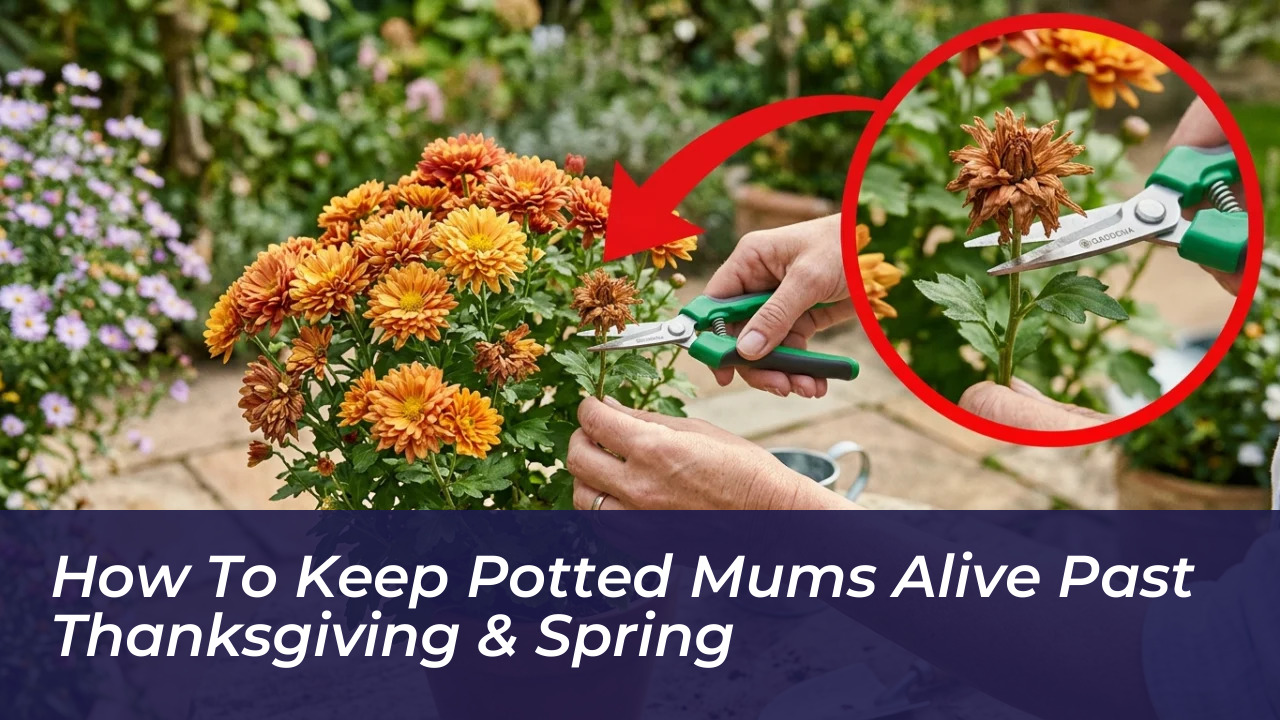
Regular deadheading redirects the botanical energy of potted mums away from seed production and channels it back into root defense and fresh growth buds. Allowing spent, brown blossoms to linger signals to the root crown that the active lifecycle has finished for the year.
Gniwodda waits until blooms turn brown and dry out before cutting them off directly above a set of healthy foliage. For cultivars that feature smaller blossoms, simple finger-pinching works efficiently to snap off dead stems without tearing underlying tissue. Once the full flowering cycle completes in late autumn, pruning practices shift entirely.
Kazakou advises cutting back all main stems across the pot, leaving behind short stubs approximately two inches tall. Trimming straight across just below the base of the flower head creates a clean dormant profile without damaging the crown.
Winter Dormancy and Cultivar Hardiness Comparison
The biggest myth surrounding chrysanthemums is that they cannot handle winter freezes in containers. While potted roots lack the thermal insulation of open earth, moving cut-back containers into unheated, frost-protected zones preserves them entirely until spring.
Containers must rest in a cool space hovering between 38 and 41 degrees Fahrenheit, such as an unheated basement, enclosed porch, cold balcony, or insulated garage. The storage temperature should never plunge below 32 degrees Fahrenheit, because container-bound root balls will freeze and desiccate without ground insulation.
| Cultivar Group | Cold Hardiness Baseline |
|---|---|
| Korean Mums | High winter hardiness; best for direct garden ground planting |
| Multiflora Mums | Moderate winter tolerance; suited for sheltered wintering |
| Indian Mums | Low hardiness; vulnerable below 37 degrees Fahrenheit |
Throughout the dormancy period, check the soil periodically to maintain a baseline of light moisture. The soil must never dry out completely into hard dust, nor should it sit wet enough to breed root rot pathogens while the root crown sleeps.
Ground Transplanting and Container Repotting Steps
Moving your plant into open ground depends entirely on local seasonal timing. The ideal period arrives in early spring, or roughly four weeks before the first autumn frost so the roots can anchor deeply.
- Select a spot: Choose a well-draining garden spot free from standing winter puddles and blessed with ample sunlight.
- Prepare the ground: Clear away weeds, thoroughly loosen native soil, and dig a planting hole slightly wider than the current root system.
- Move the plant: Gently slide the mum out of its nursery pot, keeping the central root ball undisturbed, and settle it into the hole level with the ground line.
- Saturate and cover: Water the bed thoroughly, then apply a layer of organic mulch, such as straw or wood chips, over the surrounding ground.
Spring Repotting and Root Rehabilitation
If your flowers remain container-bound, Kazakou advises repotting them after winter ends or immediately if you spot decayed, waterlogged root tissue. Choose a new pot that is one inch wider than the existing root perimeter, ensuring functional bottom drainage holes.
Line the base with at least an inch of drainage media like expanded clay. Blend an all-purpose potting mix with 10 to 20 percent structural additives to balance breathability and moisture retention. If decaying or rotten sections appear on the root ball, trim them away and treat the roots with biological solutions containing Bacillus subtilis or Trichoderma sp. before repotting and watering.
Frequently Asked Questions About Potted Mums
Can all potted mums survive the winter?
No. Hardiness depends strongly on the specific cultivar. Named hardy garden mums and Korean mums handle cold much better than delicate florist mums, which are bred primarily for temporary indoor or porch displays.
What temperature should winter storage be for container mums?
Dormant potted mums should be kept in unheated, frost-protected zones hovering between 38 and 41 degrees Fahrenheit. Temperatures must not drop below 32 degrees Fahrenheit to prevent complete root freeze-up.
Should I cut my mums all the way down in the fall?
Yes, once the full autumn flowering cycle is complete, you should cut back all main stems to leave short stubs about two inches tall, creating a clean profile for winter dormancy.
How often should I water dormant mums in a garage or basement?
Check the soil periodically throughout the winter. Provide just enough light moisture to prevent the root ball from turning into hard dust, ensuring the soil never sits soggy.
When is the best time to plant container mums into the open garden?
Early spring is the optimal time for transplanting. Alternatively, you can plant them roughly four weeks before the first autumn frost to give the root systems adequate time to establish.