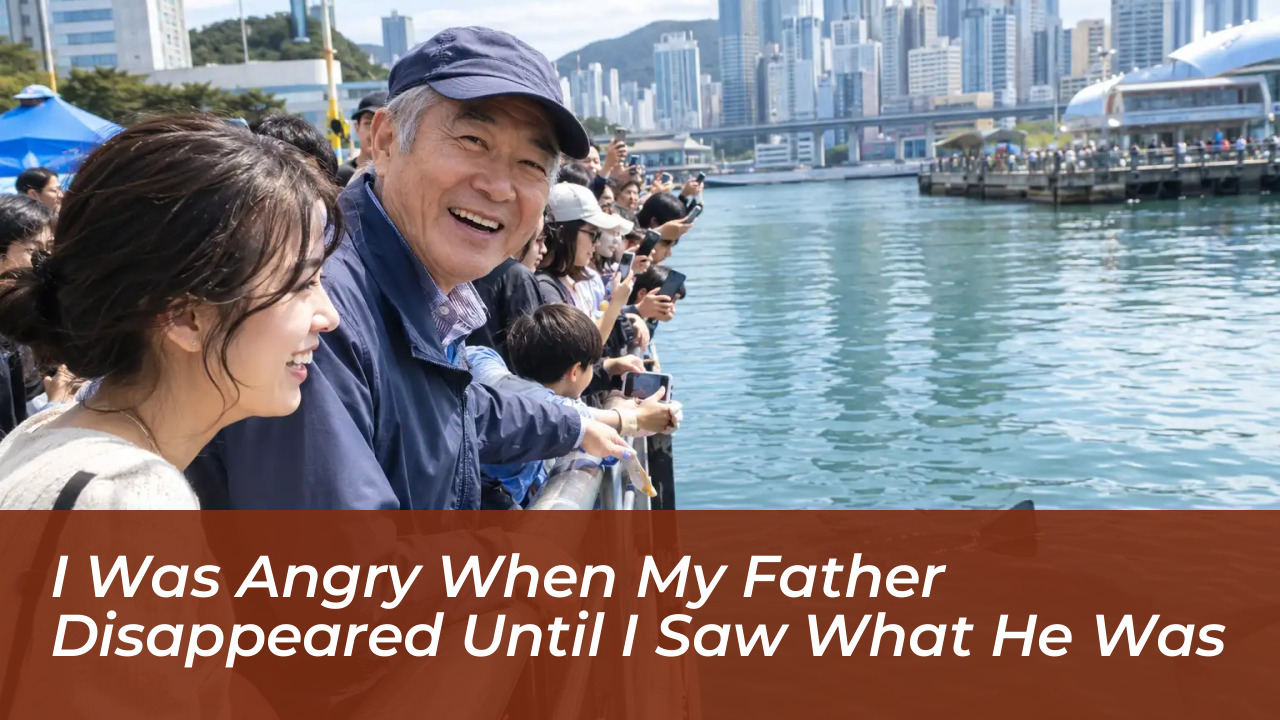
Min-seo was halfway through telling her father that they were absolutely not going to see the shark exhibit when he suddenly stopped in his tracks. For months, resentment had been building quietly beneath the surface of their relationship. Between long work hours, missed milestones, and a lingering sense of emotional detachment, Min-seo felt like she was constantly fighting for a fraction of his attention. When he seemed to drift away yet again in the middle of a crowded aquarium hallway, her initial irritation spiked into outright anger.
- The Complex Anatomy of Father Absence and Emotional Distance
- Why Anger Is the Shield We Use Against Grief
- When Perception Shifts: Seeing What He Was Watching
- Steps Toward Healing and Reconciling the Father Wound
- Frequently Asked Questions
- Why do I feel angry at my father even when I know he tried his best?
- Is it normal to grieve a father who is still alive?
- How can I stop taking my father’s emotional distance personally?
- What are the long-term effects of growing up with an emotionally absent father?
- How do I start healing from a father wound as an adult?
She opened her mouth to snap at him, ready to demand why he was tuning her out. But before the words could escape, she stopped and actually looked at what he was staring at. That single moment shifted everything, transforming an abrupt surge of frustration into a profound, tear-filled revelation about the hidden burdens parents often carry in silence.
The Complex Anatomy of Father Absence and Emotional Distance
The experience of feeling unseen or abandoned by a father figure leaves a distinct psychological imprint. According to developmental psychology research, fathers model emotional regulation, establish a sense of security, and serve as an early template for trust. When a father is physically present yet emotionally vacant, or when he vanishes completely, it forces children and later adults to navigate the world with an incomplete blueprint.
Psychologists note that the resulting “father wound” frequently manifests in several distinct ways:
- Chronic Self-Doubt: A persistent internal question of “Am I enough?” driven by unmet emotional needs.
- Relationship Anxiety: Oscillating between anxious clinging to partners and complete emotional withdrawal to prevent anticipated rejection.
- Unprocessed Grief: Carrying an open-ended sorrow that does not follow a clean timeline, often resurfacing decades later.
Min-seo’s frustration was not isolated. It was built upon years of feeling like a second priority. Yet, human emotions rarely operate in straight lines. Grief and anger often coexist, creating a turbulent inner landscape where love and resentment tangle together.
Why Anger Is the Shield We Use Against Grief
When someone we love pulls away, whether through emotional unavailability, physical distance, or final loss, anger is frequently the first emotion to step forward. Psychologists explain that anger acts as a psychological defense mechanism. It is far easier, and far less agonizing, to be angry at a father for not caring enough than it is to sit in the raw, terrifying vulnerability of feeling unloved.
In Min-seo’s case, her anger shielded her from the daily disappointment of feeling like an afterthought. She had built sturdy emotional armor designed to protect her from expecting too much. But anger requires energy, and sustaining it depends entirely on the narrative that the other person is indifferent.
That narrative completely unraveled the moment she stopped talking, checked her own frustration, and turned her gaze toward the exact point where her father’s eyes were locked.
When Perception Shifts: Seeing What He Was Watching
Leaning against the heavy glass of the massive tank, her father wasn’t lost in thought, nor was he ignoring her out of apathy. His eyes were fixed on a small, battered sea turtle swimming slowly against a powerful artificial current. The turtle had a visible, healed scar across its shell-a remnant of an old boat strike, long survived but never forgotten.
As Min-seo watched her father watch the creature, she noticed the subtle hitch in his breathing and the quiet tension in his shoulders. This was a man who had spent his entire life working sixty-hour weeks, not out of detachment, but out of a desperate, grinding fear of failing his family financially. He was a man who had grown up in an era where emotional expression was viewed as a weakness, leaving him unequipped to articulate the crushing weight of his daily responsibilities.
In that quiet aquarium light, the anger dissolved. She realized her father wasn’t withholding his love; he was simply fighting his own silent currents, carrying invisible scars just like the turtle behind the glass. He was surviving the only way he knew how, hoping against hope that his struggles would shield his children from ever having to feel the same cold water.
Steps Toward Healing and Reconciling the Father Wound
Recognizing that a parent is flawed, human, and fighting their own silent battles does not automatically erase the pain of past absence. True healing requires deliberate, compassionate steps:
- Acknowledge the Pain Without Minimizing It: Give yourself permission to grieve the support or presence you missed out on, without feeling guilty for loving your father.
- Separate Intent from Impact: Understand that a father’s emotional distance often stems from his own historical trauma and lack of modeling, rather than a direct reflection of your personal worth.
- Open Up Honest Dialogue: When possible, initiate vulnerable conversations that move past surface-level complaints into deeper mutual understanding.
- Build a Supportive Community: Seek out mentors, support groups, or trusted partners who can model healthy emotional validation and reliable connection.
Forgiveness is rarely a single, lightning-bolt moment. More often, it looks like Min-seo standing shoulder-to-shoulder with her father in front of a glowing tank, realizing that beneath every frustrating layer of absence, there is a flawed human being trying his absolute best to stay afloat.
Frequently Asked Questions
Why do I feel angry at my father even when I know he tried his best?
Anger and gratitude can coexist. Even if a father had good intentions, unmet emotional needs during childhood leave deep psychological imprints. Acknowledging your father’s limitations does not invalidate your own right to feel hurt by his absence.
Is it normal to grieve a father who is still alive?
Yes. This is known as ambiguous loss or living grief. Missing an emotionally unavailable or estranged father brings a complex, open-ended sorrow because there is no clear closure or finality like death provides.
How can I stop taking my father’s emotional distance personally?
Remind yourself that emotional unavailability is almost always a reflection of a person’s internal coping mechanisms, generational conditioning, and past trauma. It is a statement about their limitations, not your inherent worth.
What are the long-term effects of growing up with an emotionally absent father?
Adults who experienced emotional neglect from a father often struggle with chronic self-doubt, perfectionism, high anxiety, and difficulty forming secure attachments in romantic relationships. They frequently swing between anxious clinging and complete independence.
How do I start healing from a father wound as an adult?
Healing begins with naming the pain, practicing self-compassion, challenging negative core beliefs about your self-worth, and engaging in trauma-informed therapy or building a strong community of supportive mentors.