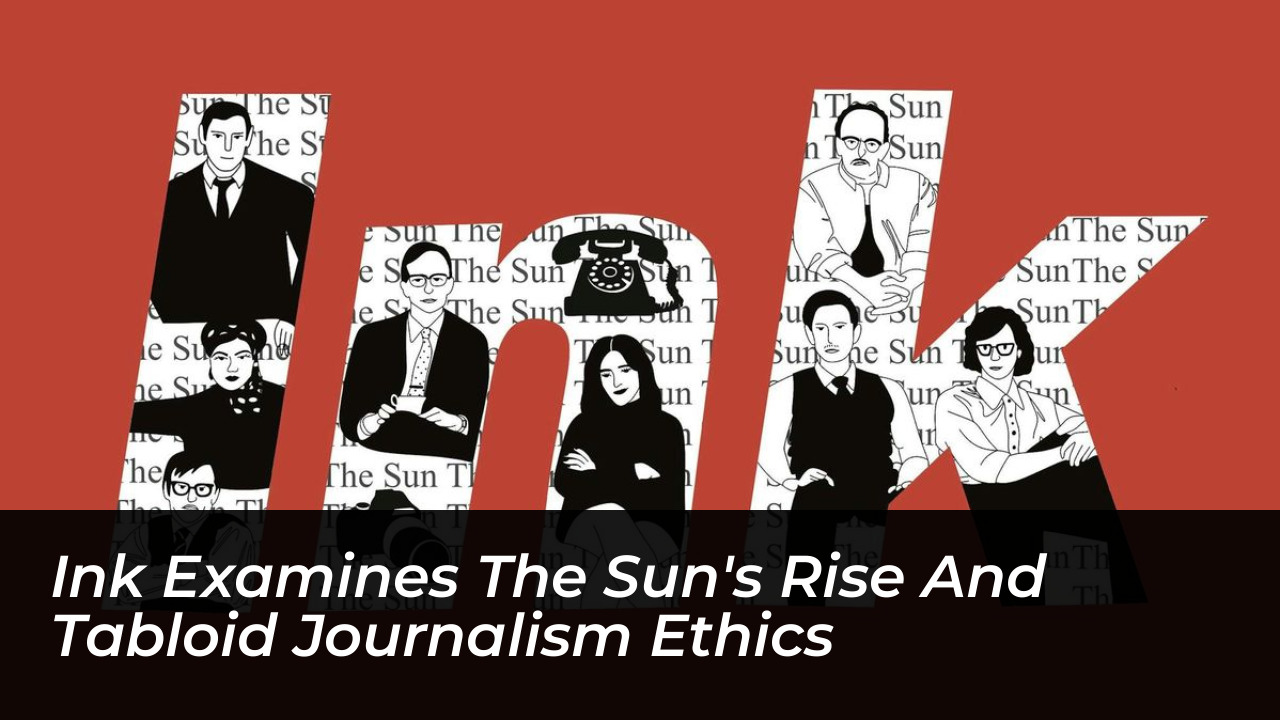

Danny Boyle’s 2026 film Ink examines how media mogul Rupert Murdoch and editor Larry Lamb transformed the struggling British newspaper The Sun into a publishing powerhouse. By prioritizing sensational stories, entertainment, and mass appeal, the publication dramatically reshaped the United Kingdom’s media landscape.
Screened by the Hopkins Center for the Arts as part of the Telluride at Dartmouth series on Sept. 19, the film explores the persistent tension between commercial success and journalistic responsibility. Based on James Graham’s acclaimed 2017 stage play, Ink follows Murdoch’s pivotal 1969 acquisition of The Sun and his appointment of Lamb as editor.
The Formula for Mass Appeal
The core strategy deployed by Murdoch and Lamb centered on providing readers with highly accessible entertainment. Rather than focusing strictly on traditional hard news, the paper leaned heavily into sports, celebrity scandals, and crime reporting.
This calculated formula established a fresh blueprint that revolutionized British journalism. As readership numbers experienced rapid growth, the physical newsroom transformed into a chaotic environment defined by a relentless pursuit of attention and a culture of excess.
- Acquisition of The Sun by Rupert Murdoch in 1969
- Appointment of Larry Lamb as the visionary editor
- Shift in editorial focus toward sports, crime, and scandal
- Exploration of commercial triumphs versus ethical compromises
The Darker Side of Media Influence
While the film captures the electrifying energy of commercial triumph, it simultaneously questions the deep ethical compromises required to sustain the newspaper’s aggressive approach. Ink balances its narrative focus by weaving in a harrowing parallel storyline.
The subplots track the tragic kidnapping and murder of Muriel McKay, the wife of Murdoch’s deputy, Alick McKay. In a devastating twist of identity, the kidnappers mistakenly targeted her instead of Anna Murdoch, creating a grim, real-world counterpoint to the expanding influence and intrusive nature of the sensationalist press.
Tabloid Journalism and Its Legacy
The transformation of The Sun serves as a classic case study in media history, illustrating how shifting economic pressures can alter the fundamental purpose of journalism. To understand the broader implications of the era depicted in Ink, it is helpful to examine the structural mechanics that propelled tabloid journalism to dominance.
Key Drivers of Tabloid Success
- Simplified Narratives: Complex political and social issues are reduced to clear hero-and-villain dynamics.
- Emotional Engagement: Prioritizing outrage, sympathy, and excitement over objective analysis to drive daily sales.
- Visual Dominance: Heavy reliance on striking photography, bold headlines, and striking typographic hierarchy.
- Accessibility: Using colloquial language and direct addresses to resonate with working-class demographics.
Frequently Asked Questions
What is the film Ink about?
Ink is a 2026 film directed by Danny Boyle, based on James Graham’s 2017 play. It chronicles Rupert Murdoch’s 1969 purchase of The Sun and his partnership with editor Larry Lamb to transform the paper into a tabloid giant.
Who are the main historical figures portrayed in the film?
The primary historical figures featured in the narrative include media mogul Rupert Murdoch, editor Larry Lamb, and deputy Alick McKay, alongside the tragic storyline involving Muriel McKay.
Where was Ink screened in September 2026?
The film was screened by the Hopkins Center for the Arts as a special presentation during the Telluride at Dartmouth event on September 19.
What ethical dilemmas does the film highlight?
The film questions the trade-offs between achieving massive commercial success and maintaining journalistic integrity, privacy, and social responsibility within a high-pressure newsroom.
How did Larry Lamb change The Sun?
Lamb shifted the paper’s focus away from traditional broadsheet journalism toward accessible entertainment, emphasizing sports, crime, page-three features, and gripping scandals.