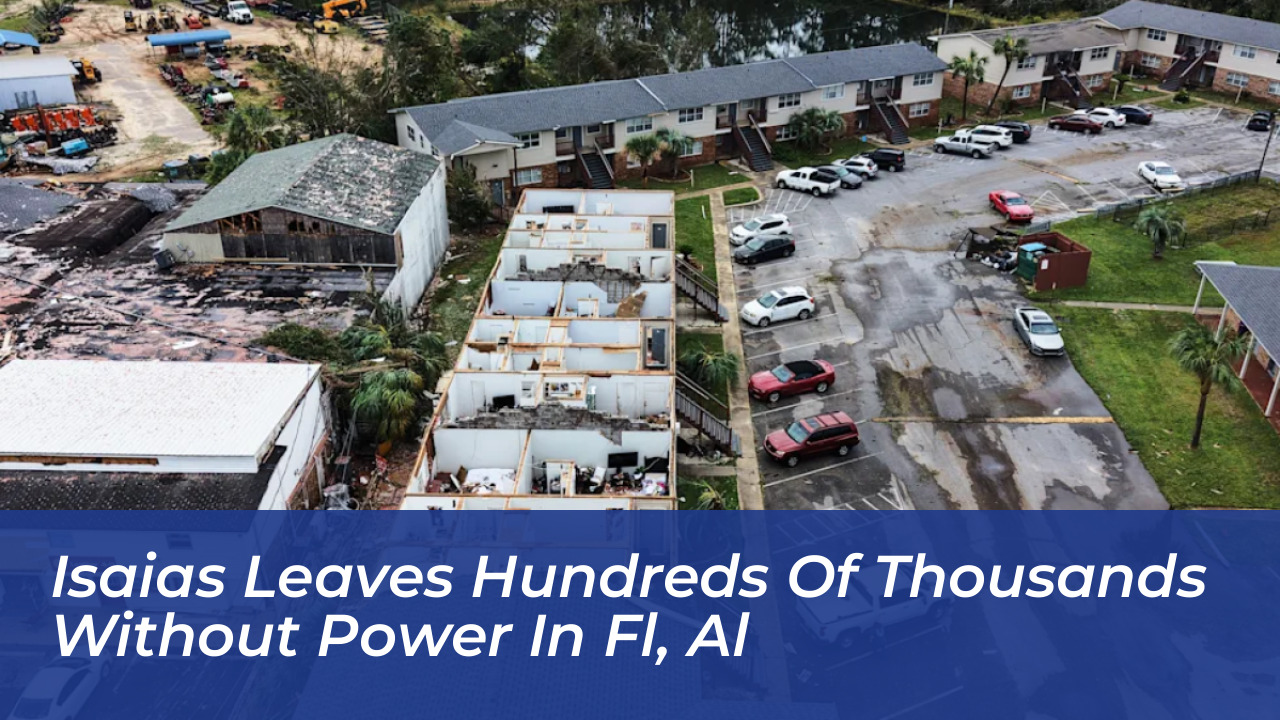

Nearly 390,000 electricity customers across Florida’s Panhandle and southern Alabama remained without power in the wake of Hurricane Isaias. The powerful storm battered the U.S. Gulf Coast before moving northward as a post-tropical cyclone. It left widespread flooding, downed trees, and structural damage in its wake.
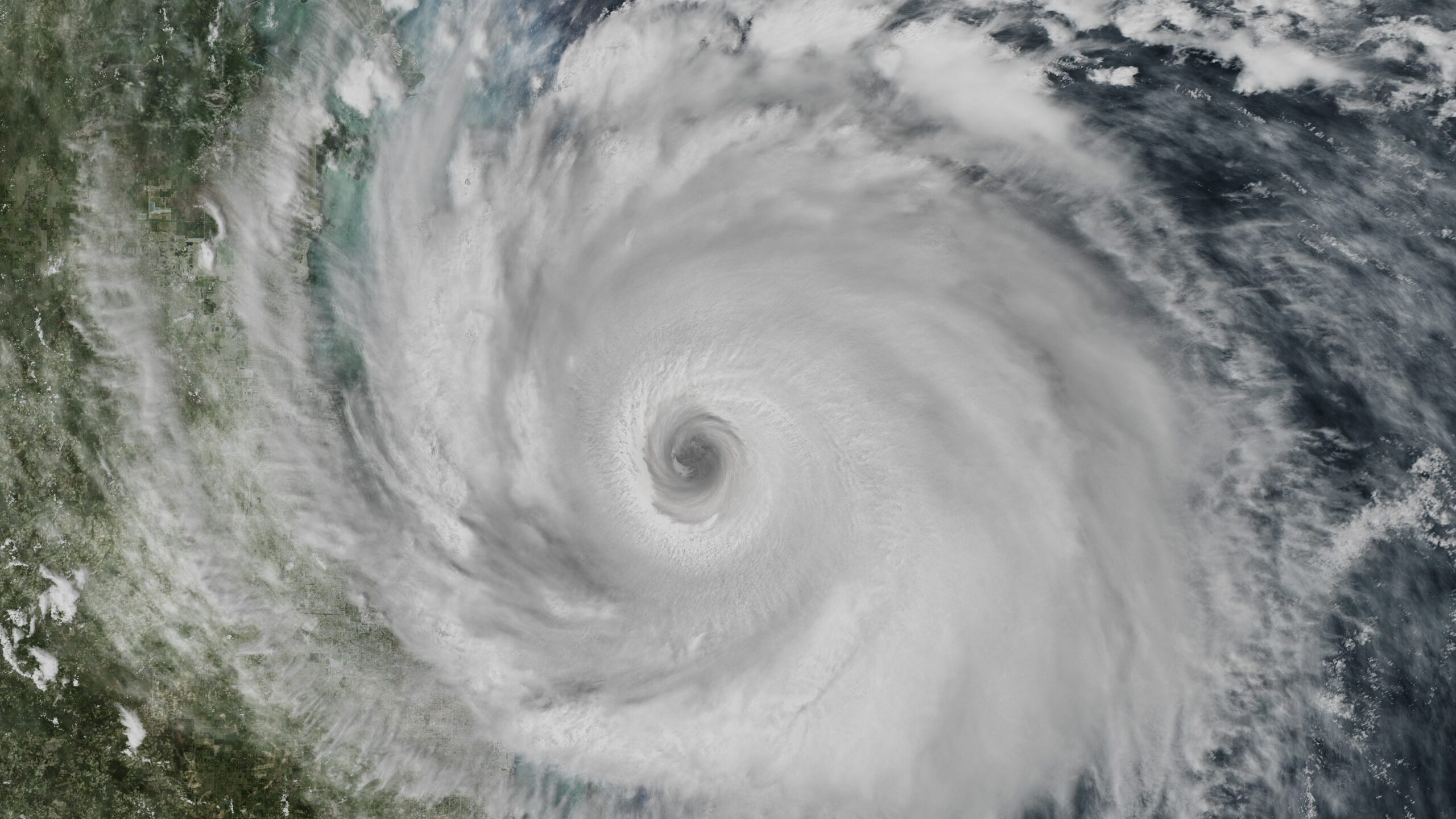
The storm system is linked to at least four deaths, including two in Florida and two in Alabama. According to the National Weather Service, the remnants of the storm continue to threaten parts of the central Appalachians and mid-Atlantic with heavy rain, urban flooding, and possible tornadoes.
Storm Impact and Power Outages
Isaias made landfall near Destin, Florida, as a Category 2 hurricane. It brought hurricane-force winds to the low-lying coastal region. Roads in Destin quickly flooded. Law enforcement in nearby Pensacola urged residents to stay off streets blocked by debris and downed power lines.
At its peak, more than 726,000 customers across Florida and Alabama lost electricity. Utility crews immediately began repair efforts. However, approximately 390,000 accounts remained disconnected as the weekend progressed. In Pensacola, local resident Tim Mowry described the storm’s intense winds sounding like a train whistle. Still, many coastal communities felt fortunate that structural impacts were less severe than initially feared.
National Weather Service Warnings and Post-Tropical Transition
By early Saturday morning, the National Hurricane Center downgraded Isaias to a post-tropical cyclone as it moved inland over Alabama. Although sustained tropical storm alerts ended, forecasters maintained wind advisories across the region for gusts reaching up to 50 mph.
Philippe Papin, a senior hurricane specialist at the National Hurricane Center in Miami, highlighted ongoing atmospheric threats as the system tracked northeast. The National Weather Service warned that persistent rainfall could trigger severe flash flooding, while river levels steadily climbed in western North Carolina. Dangerous surf and strong rip currents also persisted along both the Gulf and southeastern Atlantic coastlines.
Travel Disruptions and Emergency Responses
The severe weather grounded numerous flights at regional Panhandle airports, including all incoming and outgoing flights at Destin-Fort Walton Beach Airport. Several Panhandle counties temporarily suspended local emergency response operations on Friday night due to extreme hazards on roadways.
Political figures adjusted their schedules in response to the crisis. President Donald Trump canceled plans to attend a college football game between the University of Georgia and the University of Alabama in Tuscaloosa. This decision avoided disrupting emergency management and recovery efforts on the ground.
Forecasters expect additional rainfall accumulations of 4 to 8 inches, with locally higher amounts, stretching from southern Alabama and the Florida Panhandle into southwest Georgia. The system will then move toward parts of the Midwest and Northeast.