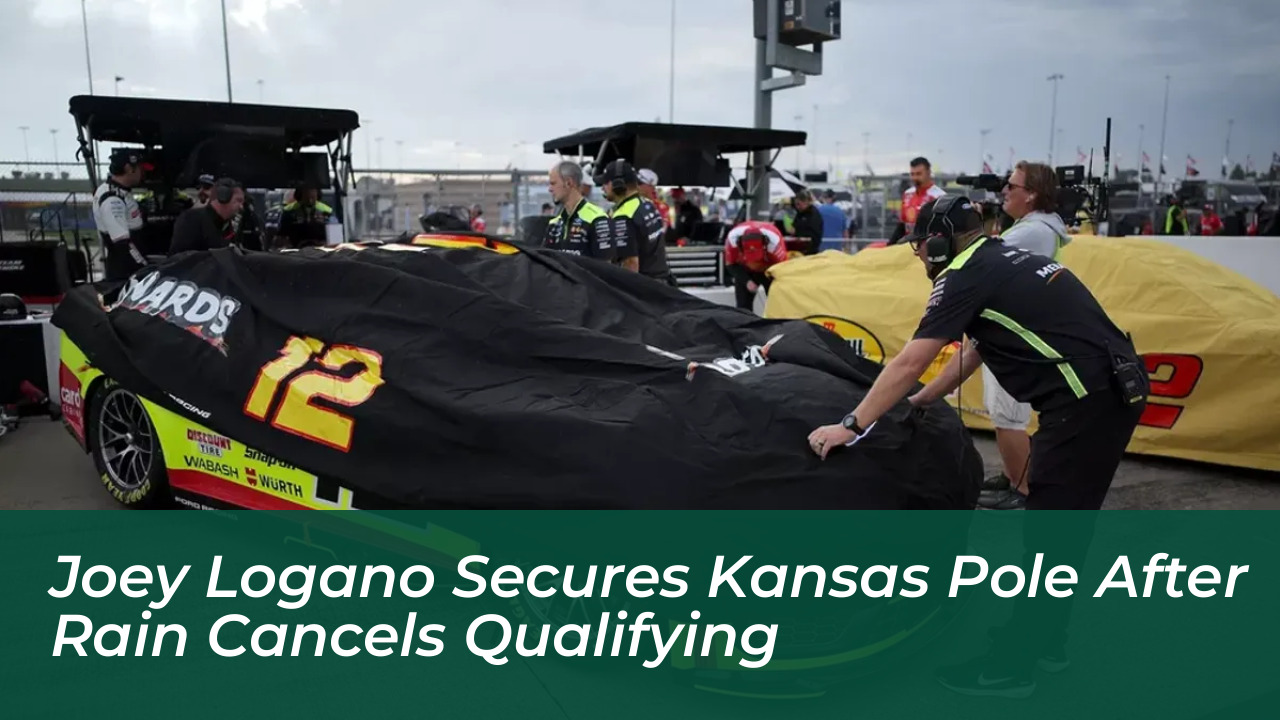
Severe weather forced NASCAR officials to cancel practice and qualifying sessions for the Hollywood 400 at Kansas Speedway. Persistent heavy rain across the Kansas City region left track drying crews unable to prepare the 1.5-mile intermediate oval. Officials implemented NASCAR’s metric formula to set the starting lineup for the fourth race of postseason competition. Joey Logano inherited the pole position in the No. 22 Team Penske Ford, positioning himself at the front of the field for Sunday’s 400-mile battle.
- How the NASCAR Metric Formula Determined the Kansas Grid
- The Weight of Recent Finishes and Points
- Front Row Lockout for Championship Contenders
- Championship Contenders Dominate the Top Starting Spots
- Top Five Breakdown
- Notable Mid-Pack Starters
- Highest Non-Chaser
- Strategic Impact of Starting Up Front at Kansas Speedway
- Historical Track Position Value
- The Advantage of Stall One
- The Challenge of Zero Practice Laps
- Navigating Blind Setups
- Understanding the Postseason Weather Impact
- Frequently Asked Questions
- Why was qualifying canceled at Kansas Speedway?
- Who won the pole position for the race?
- How does the NASCAR metric formula work?
- Which non-playoff driver started highest on the grid?
Logano enters the weekend sitting third in the championship standings, trailing the leader by a slim margin. His recent victory at the Bristol Night Race provided the momentum and owner points necessary to claim the top starting spot when combined with the metric calculations.
How the NASCAR Metric Formula Determined the Kansas Grid
When weather washes out time trials, the rulebook mandates a mathematical approach to establish starting orders. The system removes subjective guesswork and applies rigid calculations based on recent results.
The Weight of Recent Finishes and Points
- Combines the driver’s finishing position from the previous race with a weight of fifty percent.
- Accounts for the owner points standings position with a weight of thirty-five percent.
- Includes the fastest lap finish position from the prior race weighted at fifteen percent.
Front Row Lockout for Championship Contenders
Kyle Larson secured the second starting position alongside Logano on the front row. Larson holds a narrow advantage at the top of the standings. This front-row lockout highlights how the metric formula rewards drivers who maintain strong positions near the top of the championship hunt.
Championship Contenders Dominate the Top Starting Spots
Playoff drivers swept the entire top nine positions on the starting grid, proving that regular-season consistency pays off when rain alters the weekend schedule.
Top Five Breakdown
- Pole Position: Joey Logano (Team Penske Ford)
- Second Place: Kyle Larson (Hendrick Motorsports Chevrolet)
- Third Place: Christopher Bell (Joe Gibbs Racing Toyota)
- Fourth Place: Carson Hocevar (Spire Motorsports Chevrolet)
- Fifth Place: Ty Gibbs (Joe Gibbs Racing Toyota)
Notable Mid-Pack Starters
Denny Hamlin rolls off the grid from sixth position, aiming to hunt down Larson during Sunday’s race. Meanwhile, several championship contenders face an uphill battle through traffic. Chase Elliott starts 18th, Chase Briscoe lines up 23rd, and defending champion Ryan Blaney starts 25th after lower finishes in previous rounds impacted their metric scores.
Highest Non-Chaser
Josh Berry stands out as the highest-starting non-playoff driver, piloting the No. 21 Wood Brothers Racing Ford into the 10th position.
Strategic Impact of Starting Up Front at Kansas Speedway
Racing on 1.5-mile intermediate tracks places a massive premium on clean air and pit selection. Aerodynamic turbulence severely hinders handling for cars mired in traffic.
Historical Track Position Value
Historical data at Kansas Speedway shows that track position dictates success. Twelve of the past thirteen Cup Series races concluded with victories earned by drivers starting inside the top ten positions.
The Advantage of Stall One
Securing the first pit stall grants a distinct tactical advantage during yellow-flag pit stops. The opening stall gives the team an unobstructed, straight exit onto the racing surface, saving critical fractions of a second during chaotic caution cycles.
The Challenge of Zero Practice Laps
Teams enter Sunday’s green flag without a single lap of practice data on the intermediate layout. Only four drivers completed limited installation laps before the heavy rain arrived, with Chase Elliott pacing that brief session at 178.932 mph.
Navigating Blind Setups
- Crew chiefs rely entirely on simulation models and historic setup notebooks.
- Engineers use correlation confidence to predict tire degradation and balance trends.
- Teams cannot validate vehicle balance over long green-flag runs before the race starts.
Early pit-stop adjustments and aggressive race strategy become vital survival mechanisms. Logano and the No. 22 team look to capitalize on clean air at the start of the race, while trailing crews must gamble on chassis adjustments during the opening stage to stay competitive.
Understanding the Postseason Weather Impact
Weather delays introduce unique variables into the championship battle by eliminating vital adjustment windows. Teams must adapt immediately when the green flag waves without prior data.
Engineers analyze weather radar patterns continuously while crew chiefs prepare backup setup sheets. Small adjustments made during competition carry enormous weight when nobody has verified tire wear beforehand.
Frequently Asked Questions
Why was qualifying canceled at Kansas Speedway?
Persistent heavy rain across the region forced track officials to cancel both practice and qualifying sessions.
Who won the pole position for the race?
Joey Logano secured the pole position in the No. 22 Team Penske Ford using NASCAR’s metric formula.
How does the NASCAR metric formula work?
The formula combines previous race finishing positions, owner points standings, and fastest lap data.
Which non-playoff driver started highest on the grid?
Josh Berry qualified highest among non-playoff competitors, starting in the 10th position.