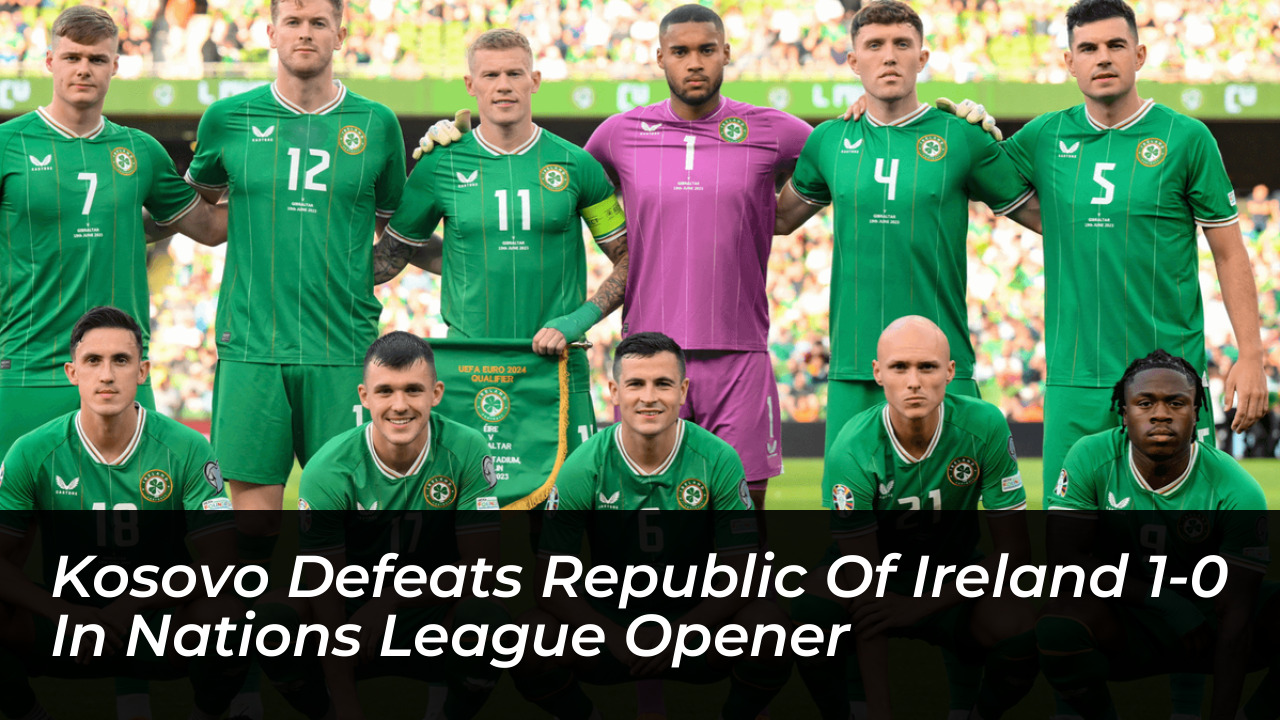
On September 24, 2026, the Fadil Vokrri Stadium in Pristina hosted a momentous fixture as Kosovo and the Republic of Ireland met at the senior international level for the very first time. Opening their UEFA Nations League Group B3 campaign, the host nation delivered a disciplined, high-energy performance that ultimately dismantled the visiting Irish side. A late header from record goalscorer Vedat Muriqi broke the deadlock in the 83rd minute, sealing a deserved 1-0 victory for Franco Foda’s team.
- Introduction to the Historic UEFA Nations League Encounter
- Pre-Match Context, Squad Absences, and Controversies
- Kosovo Roster Turbulence and Captaincy Shift
- Ireland Injury Crisis and External Distractions
- Tactical Lineups and Formations
- Kosovo Starting XI (3-4-2-1)
- Republic of Ireland Starting XI (3-4-2-1)
- First Half: Tactical Dominance and Defensive Resilience
- Second Half: Increased Pressure and the Breakthrough
- The 83rd-Minute Winner and VAR Drama
- Post-Match Analysis and Group B3 Standings
Despite entering the fixture ranked 21 places behind Ireland in the official FIFA rankings, the hosts controlled large stretches of the match. Heimir Hallgrímsson deployed a cautious defensive formation for the Republic of Ireland, aiming to absorb pressure and hit on the counterattack. However, relentless flank play from Kosovo and an inability for the Irish attack to retain possession transformed the evening into an uphill battle for the visitors.
Introduction to the Historic UEFA Nations League Encounter
The atmosphere inside the Fadil Vokrri Stadium reached fever pitch as the referee blew the whistle for this historic Group B3 clash. For Kosovo, this match represented an opportunity to cement their growing reputation on the European international stage. Facing an opponent with the historical pedigree of the Republic of Ireland brought immense pressure, yet the hosts embraced the underdog tag with relentless tactical organization.
Entering the match with Kosovo positioned at 77th in the FIFA rankings and Ireland sitting comfortably at 56th, conventional expectations favored the away side. However, modern international football punishes hesitation. Franco Foda prepared his squad to exploit the wide areas, relying on quick transitions and technical midfield control to dismantle the traditional Irish defensive block.
Pre-Match Context, Squad Absences, and Controversies
Kosovo Roster Turbulence and Captaincy Shift
The build-up to this Group B3 opener was dominated by heavy external noise, injury crises, and high-profile absences for both nations. Kosovo experienced significant turbulence prior to kickoff when team captain Amir Rrahmani abruptly retired from international football following a dispute with the Football Federation of Kosovo. Manager Franco Foda reacted quickly by appointing veteran striker Vedat Muriqi as the new national team captain, with Mërgim Vojvoda named vice-captain.
Additionally, Kosovo missed several key personnel due to fitness concerns. Midfielders Florent Muslija and Elvis Rexhbeçaj were unavailable due to injury, forcing tactical adjustments in the center of the park. On a positive note for the hosts, young Bayern Munich talent Erblin Osmani and Basel loanee Dion Kaçuri earned maiden call-ups, injecting youthful potential into a squad that successfully absorbed the pre-match drama.
Ireland Injury Crisis and External Distractions
The Republic of Ireland arrived in Pristina facing an equally severe injury list. Head coach Heimir Hallgrímsson had to plan without captain Nathan Collins, who suffered a calf injury, alongside long-term absentees Evan Ferguson and Josh Cullen. Further defensive and midfield depth was depleted by ankle issues for Jimmy Dunne and training injuries that forced Jamie McGrath and Harvey Vale to withdraw from the final squad.
Beyond injuries, the Irish camp found itself engulfed in political and media discourse concerning their upcoming fixtures, which cast a massive shadow over athletic preparations. Defender Dara O’Shea captained the side in Collins’ absence, attempting to shield the squad from distractions while acknowledging the emotional weight hanging over the international window.
Tactical Lineups and Formations
Both managers opted for structurally cautious formations designed to crowd the midfield while utilizing wing-backs to stretch the pitch. The mirror 3-4-2-1 tactical setups guaranteed physical battles across every zone of the pitch.
Kosovo Starting XI (3-4-2-1)
- Goalkeeper: Arijanet Muric
- Defenders: Lumbardh Dellova, Ilir Krasniqi, Albian Hajdari
- Midfielders: Mërgim Vojvoda, Leon Avdullahu, Veldin Hodza, Dion Gallapeni
- Attacking Midfielders: Edon Zhegrova, Baton Zabërgja
- Striker: Vedat Muriqi (Captain)
Republic of Ireland Starting XI (3-4-2-1)
- Goalkeeper: Caoimhín Kelleher
- Defenders: James Abankwah, John Egan, Dara O’Shea (Captain)
- Midfielders: Liam Scales, Jayson Moloumby, Jason Knight, Chiedozie Ogbene, Jake O’Brien
- Attacking Midfielder: Finn Azaz
- Striker: Troy Parrott

First Half: Tactical Dominance and Defensive Resilience
From the opening whistle, Kosovo utilized the backing of a fervent home crowd to establish territorial dominance. Operating with high intensity, the hosts repeatedly targeted the flanks, with Baton Zabërgja and Edon Zhegrova causing constant headaches for the Irish wing-backs. Ireland’s defensive setup, featuring James Abankwah making his first competitive start in green, struggled to contain the fluid movement of Foda’s midfield.
Despite dominating possession, Kosovo found clear-cut openings difficult to convert thanks to desperate Irish defending. In the 22nd minute, Chiedozie Ogbene squandered Ireland’s best attacking opportunity of the first half, blazing a shot over the crossbar after being teed up by Abankwah. Shortly after, Kosovo turned up the pressure when Veldin Hodza tested Caoimhín Kelleher with a powerful header.
The most dramatic moment of the opening forty-five minutes arrived in the 29th minute. Kosovo transitioned at lightning speed, catching the Irish defense completely out of position. Jayson Moloumby produced a sensational, last-gasp goal-line clearance to deny Vedat Muriqi from close range, with Kelleher sweeping up the loose ball to avert further disaster as the teams headed into the interval scoreless.
Second Half: Increased Pressure and the Breakthrough
The second period began with Ireland attempting to assert more attacking initiative. Troy Parrott began finding pockets of space, connecting with a Liam Scales cross in the 50th minute, though his headed effort lacked the power to trouble Arijanet Muric. However, this brief resurgence faded as Kosovo reclaimed control of the tempo.
Edon Zhegrova continued to pull strings in the final third, firing several long-range efforts that kept the Irish defense pinned deep. Frustration grew for the visitors as yellow cards accumulated for Jayson Moloumby and James Abankwah due to cynical fouls required to halt dangerous Kosovan transitions. Hallgrímsson turned to his bench, introducing fresh energy, but the Irish frontline remained starved of service.
As the match ticked into its final ten minutes, Kosovo ratcheted up the intensity. Ermal Krasniqi, introduced as a substitute, broke through the Irish backline in the 86th minute only to shoot narrowly wide of the post. It was a warning shot that preceded the decisive blow.
The 83rd-Minute Winner and VAR Drama
The breakthrough arrived in the 83rd minute through talisman Vedat Muriqi. Substitute Ermal Krasniqi controlled the ball brilliantly inside the penalty area and unleashed a powerful shot. The attempt deflected awkwardly off the crossbar, causing panic in the Irish six-yard box.
Vedat Muriqi reacted quickest amidst the chaos, diving forward to head past a helpless Caoimhín Kelleher for his 33rd international goal. Celebrations erupted across the Fadil Vokrri Stadium, though the joy faced a nervous delay. A lengthy VAR review checked the play for an alleged push by Muriqi on Dara O’Shea during the aerial scramble.
Referee intervention and video replays ultimately confirmed the goal as legitimate, ruling that minimal contact occurred under normal competitive shielding. The stadium roared back to life as the restart confirmed a historic lead for the hosts.
Post-Match Analysis and Group B3 Standings
The full-time whistle confirmed Kosovo’s fully deserved 1-0 victory over a resilient but ultimately outplayed Republic of Ireland side. Foda’s tactical discipline paid massive dividends, proving that home advantage and tactical clarity outweigh FIFA ranking deficits in modern European football.
| Position | Team | Points |
|---|---|---|
| 1 | Austria | 3 |
| 2 | Kosovo | 3 |
| 3 | Republic of Ireland | 0 |
| 4 | Group Opponent | 0 |
Following this opening round of fixtures, Kosovo moves into second place in Group B3 behind Austria on goal difference. For the Republic of Ireland, this disappointing result piles pressure on upcoming matches, requiring immediate tactical improvements from Heimir Hallgrímsson and his depleted squad.