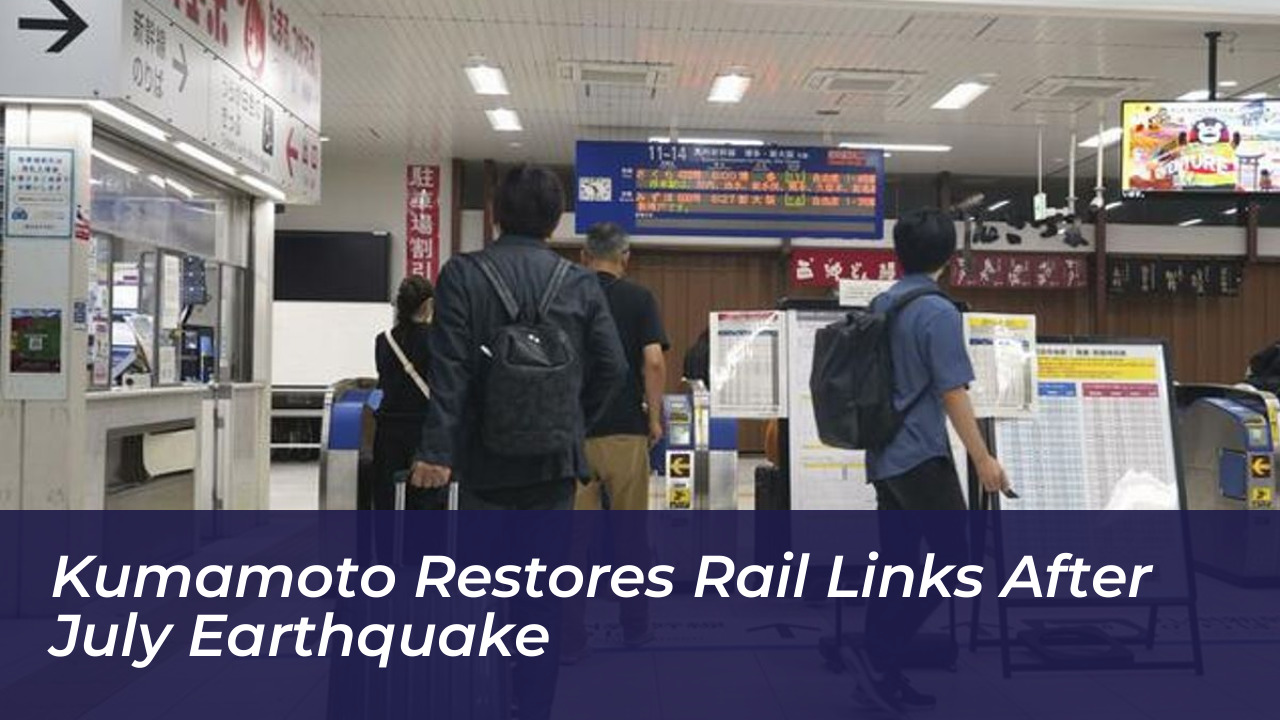

Kumamoto Prefecture has achieved a major milestone in its ongoing recovery from the powerful magnitude-7.1 earthquake that struck southwestern Japan on July 28, 2026. All regional rail links have officially returned to operational status following the restoration and reopening of the final suspended transport corridors in October 2026.
The earthquake struck at 4:27 p.m. at a depth of 16 kilometers, causing widespread infrastructural devastation across Kumamoto Prefecture. Hardest-hit areas such as Uki, Hikawa, Yatsushiro, and Ashikita suffered severe localized damage, including deformed railway tracks, fractured passenger platforms, and broken utility poles.
Full Restoration of JR Kyushu and Regional Rail Lines
The recovery of the rail network occurred in carefully managed phases, depending on the operator and the extent of the damage:
- Kyushu Shinkansen: High-speed bullet train services between Kumamoto and Shin-yatsushiro stations resumed operations in September, offering vital alternative transit during early reconstruction.
- JR Kyushu Conventional Lines: Services along the Kagoshima Main Line between Uto and Yatsushiro stations officially resumed on Saturday, October 10, 2026, ending 74 days of disruption for thousands of daily student and worker commuters.
- Hisatsu Orange Railway: The independent third-sector operator resumed passenger service across its final 23.6-kilometer suspended corridor between Yatsushiro and Higo-Tanoura stations on Tuesday, October 13, 2026. This final link officially ended 77 consecutive days of regional travel restrictions.
Relief for Commuters and the Local Community
During the multi-month closures, transport authorities relied on substitute bus services and limited alternative routes. However, bus detours between Uto and Yatsushiro extended travel times to nearly one hour and fifty minutes, compared to just thirty minutes by local train. This placed heavy burdens on students and elderly residents.
“I can finally return to normal life,” said Yukiko Miyagawa, a 13-year-old junior high school student from Yatsushiro who faced lengthy daily commutes and disruptions to school club activities following the disaster.
Seiki Nakamura, president of Hisatsu Orange Railway Inc., expressed deep gratitude during the reopening of the coastal route. He noted that the return of regular train service restores essential geographic continuity and lifeline access for medical visits and regional commerce.
Tourism Recovery and Infrastructure Resilience
With railway connectivity fully re-established, local tourism operators anticipate a steady revival of autumn travel along the scenic Shiranui Sea coast. The safe resumption of services highlights the advanced engineering standards and rapid diagnostic protocols deployed by Japanese railway operators following seismic events.
Transport planners continue to review multimodal vulnerabilities to ensure greater redundancy during future natural disasters. For the residents of Kumamoto, however, the return of regular rail schedules marks a decisive and welcome step toward complete community reconstruction.