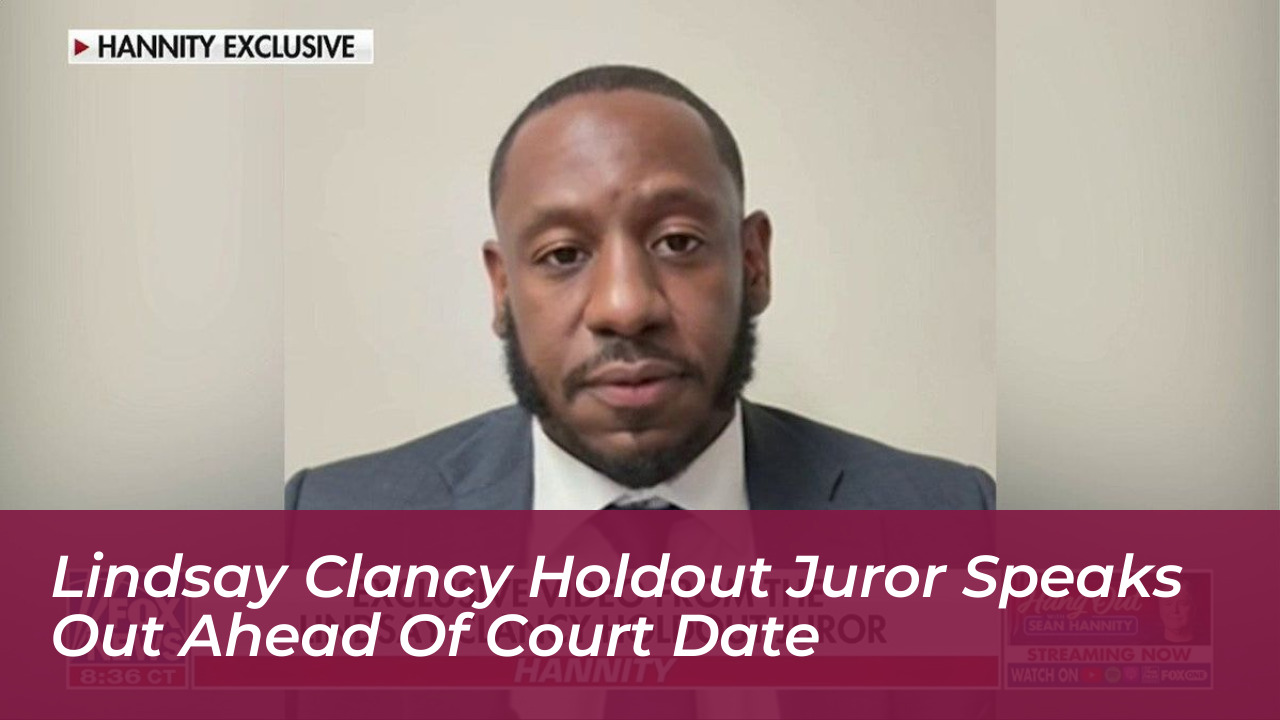
Ahead of a scheduled Tuesday status conference at the Plymouth County Superior Court in Plymouth, Massachusetts, the lone holdout juror who triggered a mistrial in the high-profile Lindsay Clancy murder case released public video remarks. Michael Desronvil, the juror who prevented a unanimous verdict, addressed the public directly on Monday, September 28, 2026, amid an escalating legal battle between opposing defense attorneys and prosecutors.
“I know the whole focus has been on me, but we want to reel everything back and put the focus on the three angels,” said Michael Desronvil during a national television broadcast. Highlighting the young victims of the tragedy, Desronvil added, “The ones that can’t speak for themselves, the ones that can’t defend themselves, and the ones that can’t fight the battles – and those are Cora, Dawson and Callan.” He also expressed gratitude for his personal faith, stating, “I want to thank God for my Catholic faith.”
The Context of the Mistrial and Legal Fallout
The high-stakes court date follows a dramatic three-week period since Lindsay Clancy’s first trial ended in a mistrial on September 4, 2026. Clancy, a 36-year-old former labor and delivery nurse, is accused of first-degree murder for the January 24, 2023, strangulation of her three children-Cora, 5, Dawson, 3, and Callan, 8 months-inside the family’s Duxbury, Massachusetts home. Clancy did not deny killing the children, but her defense team argued she was not criminally responsible due to severe postpartum psychosis and depression at the time. After 38 hours of deliberations across seven days, the jury remained deadlocked 11-1 because Desronvil refused to join the majority in finding her not guilty by reason of insanity.
In the wake of the mistrial, a war of words broke out. Several fellow jurors waived their anonymity to criticize Desronvil, accusing him of refusing to follow the law regarding reasonable doubt and scrolling on his phone during deliberations. Meanwhile, Desronvil hired high-powered attorney Edward Paltzik, who has defended his client vigorously against intense public scrutiny and alleged threats.
Motions Before Judge William Sullivan
Tuesday’s status and trial assignment hearing before Judge William Sullivan addresses multiple critical defense motions aimed at avoiding a second trial:
- Motion for Required Finding of Not Guilty: Defense attorney Kevin Reddington argues that the prosecution presented insufficient evidence to prove beyond a reasonable doubt that Clancy was in control of her actions or could conform her conduct to the law despite her acknowledged mental illness.
- Motion to Dismiss (Double Jeopardy): Filed by Reddington and co-counsel Martin Weinberg, this motion contends that a second trial violates double jeopardy rules because Judge Sullivan allegedly failed to properly probe or question the holdout juror after the foreperson sent notes indicating a juror was refusing to follow instructions.
- Juror Inquiry and Records Request: The defense filed a motion requesting cell phone records, juror questionnaires, and an inquiry into whether the holdout juror answered background questions truthfully, pointing to a past 2021 domestic violence charge that was ultimately dismissed.
Desronvil’s attorney, Edward Paltzik, has strongly pushed back against the defense filings, calling them attacks on constitutional rights and legal protections for jurors. Paltzik confirmed that Desronvil would not attend Tuesday’s court appearance.
Next Steps for the Plymouth County District Attorney
Plymouth County District Attorney Timothy Cruz has remained largely silent regarding the state’s official next steps since the mistrial was declared. Prosecutors must weigh whether to pursue a second trial on the original first-degree murder charges, seek lesser charges like manslaughter, or explore potential plea negotiations to spare the victims’ families-including surviving father Patrick Clancy-from undergoing another grueling legal proceeding.
Judge William Sullivan could rule on the pending motions immediately, take the matters under advisement for a later date, or officially establish a timetable for a retrial.