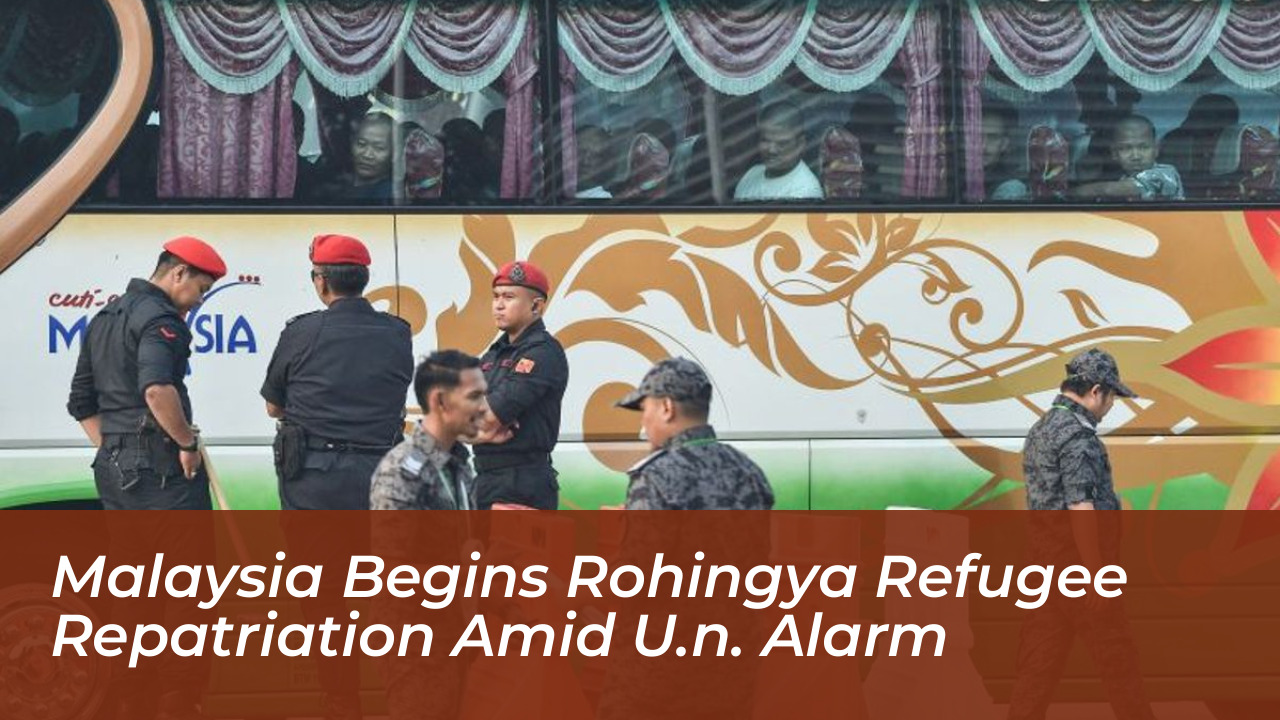
Malaysia has officially commenced the repatriation of nearly 1,500 Myanmar nationals, marking the first phase of a contentious government program to return an estimated 5,000 refugees back to Myanmar. Transported under heavy police escort to a naval base in Lumut, northwest Malaysia, the initial group departed via two Myanmar naval vessels and a hospital ship on September 29, 2026. The move has triggered immediate international backlash, with the United Nations and multiple human rights organizations warning that Myanmar remains critically unsafe due to ongoing civil conflict and systemic persecution.
- The Mechanics and Controversy of the Repatriation Plan
- Drivers Behind Malaysia’s Policy Shift
- Dismal Realities Awaiting Returnees in Myanmar
- Broader Humanitarian and International Fallout
- Frequently Asked Questions
- Why is Malaysia repatriating Rohingya refugees?
- How many refugees are scheduled to be returned?
- What is the position of the United Nations on the repatriation?
- Are the returns considered voluntary by human rights groups?
- What specific dangers do returnees face in Myanmar?
The Mechanics and Controversy of the Repatriation Plan
The first wave of deportations stems from an agreement struck between Malaysian Prime Minister Anwar Ibrahim and Myanmar’s military ruler, Min Aung Hlaing. According to Malaysia’s Home Ministry, the operations involve individuals moved directly from local immigration detention centers. Although Malaysian officials maintain that the returns are entirely voluntary, independent human rights advocates strongly dispute this characterization.
Critics point out that detainees held in closed facilities lack the freedom to make fully informed, uncoerced choices. , the United Nations High Commissioner for Refugees (UNHCR) confirmed it had no operational role or access to screen the returnees prior to their departure. Human rights groups argue that forcing refugees back into an active combat zone directly violates the foundational international principle of non-refoulement, which forbids returning individuals to places where they face torture, persecution, or grave physical harm.
Drivers Behind Malaysia’s Policy Shift
Prime Minister Anwar Ibrahim’s administration has defended the repatriation as a necessary response to mounting domestic pressures. Malaysia, which is not a signatory to the 1951 Refugee Convention and does not officially recognize refugee status, currently hosts more than 215,000 registered refugees and asylum-seekers, the vast majority originating from Myanmar.
The country’s policy stance has tightened significantly following post-pandemic economic strains and a surge of xenophobic sentiment on social media platforms. Viral disinformation campaigns-including false online claims regarding municipal waste and demands for land-have stoked public hostility against the roughly 126,000 Rohingya living in informal communities across Malaysia. Facing a sharp decline in personal popularity, internal party divisions, and a general election mandated by early 2028, Prime Minister Anwar has leaned into stricter immigration controls to appease domestic political constituencies.
Dismal Realities Awaiting Returnees in Myanmar
Human rights advocates have painted a grim picture of the conditions awaiting returnees upon arrival in Myanmar. The country has remained fractured by civil war since the February 2021 military coup led by the junta. A massive portion of Rakhine State-the historic homeland of the Rohingya population-is currently controlled by the insurgent Arakan Army and subjected to intense aerial bombardment by the Myanmar air force.
Nay San Lwin, co-chair of the Arakan Rohingya National Council, condemned the operation bluntly, describing the returns as “sending people back to a killing field.” Beyond active combat hazards, acute risks include forced military conscription under the junta’s aggressive new laws, arbitrary detention, and forced confinement in severely under-resourced displacement camps.
Broader Humanitarian and International Fallout
More than 160 civil society organizations, alongside international bodies like Doctors Without Borders (MSF), have formally called on Kuala Lumpur to halt subsequent phases of the repatriation plan and transparently disclose the identities and individual risk assessments of those deported.
Despite the severe criticism, Prime Minister Anwar has signaled intentions to further warm diplomatic ties with Naypyitaw, even considering an official visit invitation for Min Aung Hlaing to streamline future returns. Meanwhile, for the remaining tens of thousands of Rohingya refugees still navigating daily life in Malaysia without legal protection or formal status, the naval departures serve as an alarming indicator of an increasingly precarious future.
Frequently Asked Questions
Why is Malaysia repatriating Rohingya refugees?
Malaysia is returning Rohingya and other Myanmar nationals to manage domestic economic pressures, public security concerns, and growing local hostility fueled by anti-immigrant social media campaigns ahead of upcoming national elections.
How many refugees are scheduled to be returned?
The initial phase involves approximately 1,500 individuals, part of a broader agreement between Malaysia and Myanmar’s military leadership to repatriate up to 5,000 Myanmar nationals.
What is the position of the United Nations on the repatriation?
The UNHCR has strongly opposed the operation, stating that conditions in Myanmar do not meet the standards for safe, dignified, and voluntary returns, and noting that the agency was barred from screening the departing refugees.
Are the returns considered voluntary by human rights groups?
No. Human rights organizations argue that because the returnees were selected from detention centers and denied independent legal or UNHCR screening, their choices cannot be considered genuinely voluntary or free from coercion.
What specific dangers do returnees face in Myanmar?
Returnees face severe security risks, including being caught in active armed conflict between the Myanmar military and the Arakan Army in Rakhine State, potential forced military conscription, and confinement in impoverished displacement camps.