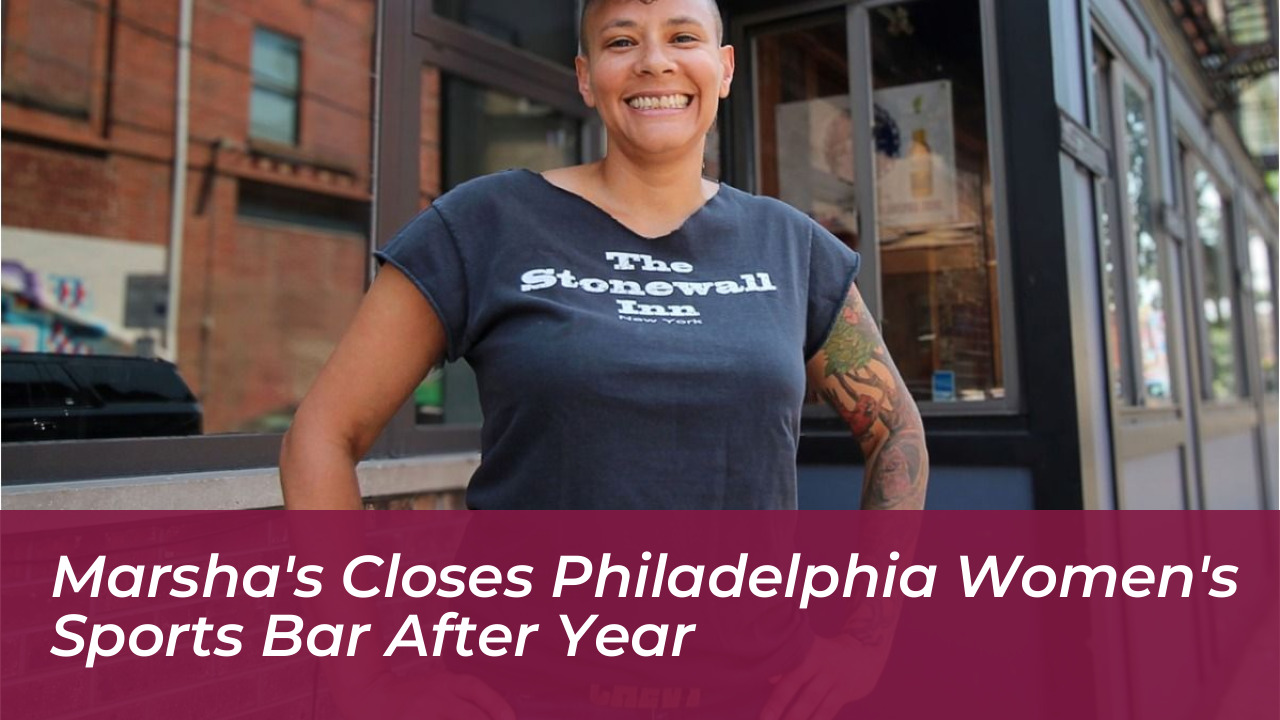

Philadelphia’s effort to create a dedicated gathering place for women’s sports fans is losing one of its pioneering venues as Marsha’s prepares to close permanently on October 18, 2026. Located on South Street in the Queen Village neighborhood, the establishment announced its final weekend on social media after just over a year in business. Owner Chivonn Anderson cited the impact of ongoing controversy and a sustained decline in customers as the primary reasons for the closure.
The establishment originally opened on September 19, 2025, to bring together women, LGBTQIA+ community members, and other sports fans. Named in honor of pioneering LGBTQ+ activist Marsha P. Johnson, the business aimed to provide a welcoming setting where women’s athletics and local Philadelphia teams received prominent television coverage.
A Vision for Representation and Community
Founder Chivonn Anderson conceived the space after struggling to get a bartender to switch a television channel to the Women’s World Cup while out with friends. Realizing the lack of dedicated venues for women’s sports enthusiasts, Anderson established Marsha’s to serve as a community anchor on South Street.
The bar’s official opening in September 2025 drew large crowds, with hundreds waiting in line for hours. For queer women and marginalized sports fans in Philadelphia, the venue filled a nightlife void left by the earlier closure of establishments like Toasted Walnut during the COVID-19 pandemic. Throughout its run, the venue featured major events, local games, and matchups highlighting professional leagues.
Challenges, Controversies, and Public Scrutiny
Despite initial excitement, Marsha’s faced multiple high-profile challenges throughout its year in operation:
- Police Inspection: In February 2026, roughly a dozen police officers entered the bar during a late-night compliance check following complaints regarding alcohol service and licensing. While no citations or underage drinking violations were substantiated, the heavy police presence sparked community concerns regarding how LGBTQ+ spaces are policed.
- Workplace Allegations: In April 2026, former manager and bartender Olivia Rhodes, a Black trans woman, posted allegations on social media accusing leadership of fostering a hostile work environment and making discriminatory comments. Other former employees subsequently came forward with related complaints.
- Community Fallout: The public disputes led organizations like Philly Black Pride to cancel scheduled partnerships. Although former general manager Rylan Murphy departed and Anderson issued public apologies and hosted virtual listening sessions, owner Chivonn Anderson noted that business never fully recovered from the online fallout.
Final Weekend and Legacy
In its closing announcement posted to Instagram, the bar encouraged patrons to visit during its final weekend for “one last hurrah.” The venue stayed open through the weekend, broadcasting regular games including the WNBA Finals and the Philadelphia Eagles’ matchup against the Carolina Panthers.
The establishment’s final statement emphasized the ongoing importance of businesses owned by women, queer individuals, and Black, Indigenous, and people of color (BIPOC). It expressed hope that another operator would eventually step up to fill the void left on South Street.
Frequently Asked Questions
When did Marsha’s officially close?
Marsha’s permanently closed its doors on Sunday, October 18, 2026, after completing its final weekend of operations.
Who owned Marsha’s in Philadelphia?
The bar was founded and owned by Chivonn Anderson, a Black, queer woman.
Where was Marsha’s located?
The venue was located at 430 South Street in the Queen Village neighborhood of Philadelphia.
Why did Marsha’s close down?
Owner Chivonn Anderson cited a sustained decline in customer patronage and the compounding impact of public controversies and workplace disputes that affected the business’s reputation.
Who was the bar named after?
The establishment was named in honor of Marsha P. Johnson, a prominent Black transgender activist and key figure in the 1969 Stonewall uprising.