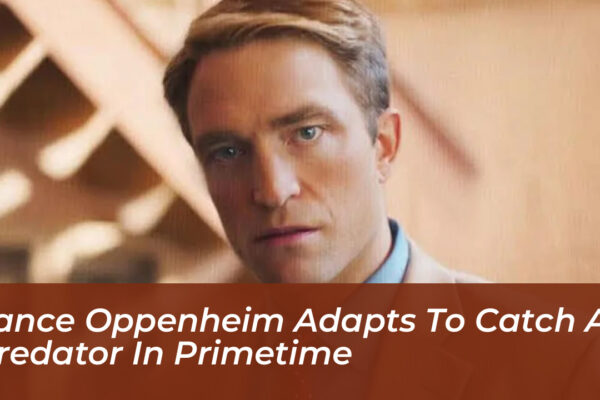
The psychological weight of the A24 feature Primetime anchors itself heavily on the screen presence of Merritt Wever, an actress known for her quiet precision and emotional depth. Directed by documentary filmmaker Lance Oppenheim in his narrative feature debut, the film dives straight into the turbulent ecosystem of 2000s sensationalist television. It examines the dark cultural footprint left behind by controversial sting operations like To Catch a Predator, exposing the machinery that converted public humiliation into high-rated entertainment. Wever stars as Andie Bender, an ambitious television news producer whose professional drive requires a calculated, almost chilling suspension of empathy. Standing alongside Robert Pattinson as charismatic host Chris Hansen and Skyler Gisondo as a vulnerable decoy, Wever delivers a standout performance that dissects the hidden moral costs of broadcast entertainment and the invisible people who keep the ratings engine running.
- Introduction to Primetime and Merritt Wever’s Return to the Screen
- Deconstructing Andie Bender: Ambition Without Apology
- The Banality of Professional Compromise
- Drawing Inspiration from Real-World Control Rooms
- The Improvised Chaos of Lance Oppenheim’s Set
- Verite-Driven Filmmaking in a Narrative Space
- Dynamic Chemistry Between Merritt Wever and Robert Pattinson
- Navigating the Editing Room Revolution
- Sculpting a Three-Hour Rough Cut
- Challenging Conventional Screenwriting Paradigms
- Content Gap Analysis: The Psychological Toll on Production Crews
- Occupational Numbness in Sensationalist Media
- The Structural Complicity of the Entire Ecosystem
- Bridging Comedy and Drama: Wever’s Unique Career Trajectory
- Mastering Emotional Crosswinds
- Maintaining Artistic Integrity Away from Public Scrutiny
- Frequently Asked Questions
- What is Merritt Wever’s role in Primetime?
- Who directed the film Primetime?
- How does the film relate to real-world television?
- Who else stars alongside Merritt Wever in the film?
Introduction to Primetime and Merritt Wever’s Return to the Screen
Primetime takes viewers back to an era where tabloid journalism and reality television bled together into a chaotic, nightly spectacle. The premise revolves around the aggressive network tactics of the early 2000s, where human lives were routinely packaged as high-stakes programming. Lance Oppenheim brings his distinct verité-driven documentary background into this scripted space, giving the movie a raw, unvarnished texture that separates it entirely from conventional true-crime dramas. Rather than focusing solely on the sensational arrests, the narrative zooms in on the control room. This is where Wever’s portrayal of Andie Bender takes center stage, offering a harsh look at the everyday compromises required to survive in an industry driven purely by shock value and audience engagement metrics.
- The film reconstructs the fast-paced, morally ambiguous television environments of the 2000s.
- Lance Oppenheim transitions from acclaimed documentaries to his first narrative feature film.
- Wever portrays a mid-level producer whose ambition blinds her to the human collateral of her work.

Deconstructing Andie Bender: Ambition Without Apology
Portraying a character who operates comfortably within ethical grey zones requires a delicate touch. Wever avoids standard cartoon villain tropes, choosing instead to present a chillingly normal media professional. Andie Bender is not sitting in a dark office plotting misery; she is simply doing her job, answering to executives, and chasing the next big ratings spike. This normalcy is precisely what makes the character unsettling. The role reflects a world where empathy is a professional liability, and looking away from the human cost of a broadcast becomes a necessary survival skill.
The character draws heavy inspiration from real-world producers who operated behind the scenes of sting television operations during the peak of cable news dominance. These professionals faced relentless pressure to deliver escalating spectacles while managing tight production schedules. Wever captures this dynamic by showing how institutional normalization works from the inside out. Participating in public humiliation stops feeling abnormal when everyone around you treats it as standard business. Her performance presents an accurate portrait of an environment where ambition completely overrides basic human decency.
The Banality of Professional Compromise
- Wever bypasses standard villain archetypes to show how everyday professionals enable systemic harm.
- The character relies on a deliberate suspension of empathy to prioritize network ratings above all else.
Drawing Inspiration from Real-World Control Rooms
- The role reflects the high-pressure environment faced by real archival researchers and segment producers.
- Public shaming is treated as a routine broadcast requirement rather than a moral failure.

The Improvised Chaos of Lance Oppenheim’s Set
Director Lance Oppenheim refused to rely on rigid, traditional filmmaking structures for his narrative debut. Instead, he applied documentary-style methodologies to a scripted space, turning the set into an unpredictable laboratory. Both Wever and her co-stars spoke openly about the erratic energy that fueled daily production. The guiding rule on set was simple: the best idea won, regardless of who suggested it. This environment of radical allowance forced every actor to stay entirely on their toes.
Robert Pattinson embraced a volatile approach to portraying host Chris Hansen, frequently changing his physical positioning and vocal intensity between takes. For Wever, this unpredictability served as an invaluable acting catalyst. Because Pattinson could move anywhere in a scene or deliver lines with radically different emotional weights, Wever’s reactions as Andie remained grounded in genuine surprise. Active listening replaced rehearsed mechanics, resulting in scene dynamics that feel dangerous, authentic, and entirely unscripted.
Verite-Driven Filmmaking in a Narrative Space
- Oppenheim brought documentary production techniques into a scripted feature film.
- Actors were encouraged to take massive creative risks to generate organic tension.
Dynamic Chemistry Between Merritt Wever and Robert Pattinson
- Pattinson’s volatile performance as the host kept scene partners constantly off-balance.
- Wever utilized active listening to ground her character’s responses in unscripted authenticity.
Navigating the Editing Room Revolution
The experimental nature of Primetime did not end when the cameras stopped rolling. The post-production phase involved an extensive, multi-layered excavation led by editor Dan Garber and director Lance Oppenheim. Early rough cuts of the movie exceeded three hours before being aggressively sculpted down to a leaner runtime. Because the editing process was so fluid and exploratory, the cast remained completely in the dark regarding the final narrative shape until they attended the premiere.
Wever admitted that walking away from the shoot felt entirely different from any previous project in her career. She genuinely did not know which character beats or narrative threads would survive the final edit. This documentary-style approach means the finished film functions less like a conventional three-act screenplay and more like an assembled piece of investigative journalism. The juxtaposition of grainy footage, erratic pacing, and explosive performances keeps viewers emotionally disoriented from start to finish.
Sculpting a Three-Hour Rough Cut
- Editor Dan Garber and Oppenheim reshaped the massive amount of footage into a tight narrative.
- The cast had no idea how their performances would be framed until the movie premiered.
Challenging Conventional Screenwriting Paradigms
- The film mirrors the pacing and investigative structure of a deep-dive journalism piece.
- Erratic editing choices force the audience into a state of persistent emotional unease.
Content Gap Analysis: The Psychological Toll on Production Crews
Most mainstream conversations regarding true-crime dramatizations focus heavily on the actors portraying perpetrators or investigators. However, critical industry discussions frequently overlook the psychological toll experienced by the unseen production staff. These are the archival researchers, associate producers, and floor coordinators who sift through mountains of disturbing material daily just to produce a thirty-minute segment. Wever’s portrayal of Andie Bender fills this exact content gap in cinematic storytelling.
By focusing the lens on a mid-level producer, Primetime explores occupational numbness within sensationalist media. Continuous exposure to raw, exploitative footage slowly erodes the mental well-being of the crew behind the camera. , the film implicates the entire media ecosystem. Networks demand ratings, producers package the misery, hosts perform moral authority, and viewers provide the vital engagement metrics. This shared complicity draws a direct line between early 2000s television stings and modern algorithmic outrage culture on social media.
Occupational Numbness in Sensationalist Media
- The daily handling of disturbing archival footage takes a severe psychological toll on production staff.
- Wever highlights the invisible labor operating behind the broadcast lens.
The Structural Complicity of the Entire Ecosystem
- Networks, producers, hosts, and viewers share responsibility for mediated public shaming.
- Parallels exist between broadcast television stings and modern social media outrage cycles.
Bridging Comedy and Drama: Wever’s Unique Career Trajectory
Merritt Wever’s ability to anchor a dark, morally ambiguous project like Primetime stems from a decades-long career defined by genre versatility. From her Emmy-winning work in Nurse Jackie and Godless to her chilling precision in Unbelievable and Severance, Wever specializes in characters who live in emotional crosswinds. Her approach to acting consistently emphasizes raw authenticity over scripted perfection. She prefers the intimacy of theatre and quiet script analysis over mainstream celebrity culture.
This deep-seated humility translates directly into her performances, giving characters like Andie Bender a startling degree of human vulnerability. Even when Wever plays someone making deeply questionable professional choices, she grounds them in a recognizable reality. She refuses to judge her characters, allowing audiences to sit with the discomfort of watching complex, flawed human beings navigate broken systems without easy moral resolutions.
Mastering Emotional Crosswinds
- Wever has built a reputation for handling morally complex characters across television and film.
- Her performances consistently prioritize raw emotional truth over polished perfection.
Maintaining Artistic Integrity Away from Public Scrutiny
- The actress prefers quiet script analysis and intimate projects over mainstream fame.
- Humility allows her to approach difficult characters without defensive judgment.
Frequently Asked Questions
What is Merritt Wever’s role in Primetime?
Merritt Wever stars as Andie Bender, an ambitious television news producer working within the high-pressure, sensationalist broadcast ecosystem of the early 2000s.
Who directed the film Primetime?
The film was directed by documentary filmmaker Lance Oppenheim, marking his narrative feature film debut after acclaimed documentaries like Some Kind of Heaven.
How does the film relate to real-world television?
Primetime examines the cultural footprint of controversial sting operations like To Catch a Predator, focusing heavily on the unseen production staff and the ethical grey zones of reality television.
Who else stars alongside Merritt Wever in the film?
The film features Robert Pattinson as a charismatic, erratic television host and Skyler Gisondo as an inexperienced decoy caught up in the escalating production tension.