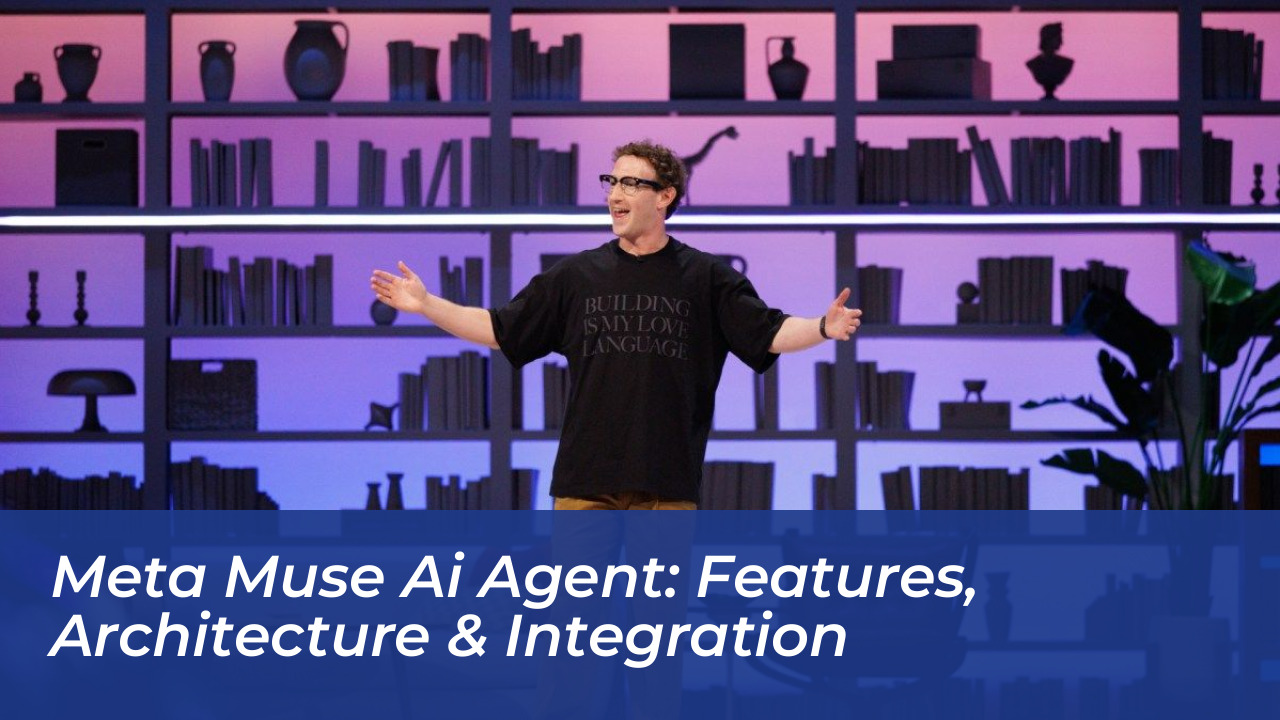
Meta officially introduced Muse, a proactive personal AI agent designed to turn long-term goals into automated action plans rather than just answering conversational prompts. Built from the ground up by Meta under the leadership of Superintelligence Labs, Muse represents a major paradigm shift from traditional chatbots to fully autonomous execution engines. With early adoption surging past 600,000 daily active users in the United States alone according to Apptopia data, Meta is positioning Muse as a foundational utility for managing daily workflows, digital errands, and multi-step projects.
- Introduction to Meta Muse: A New Era of Autonomous AI Agents
- The Technological Foundation: Muse Spark and Agentic Architecture
- Infrastructure and Security: Understanding the Muse Secure VM
- Payment Integration and Fraud Protections with Stripe Link
- Availability, Distribution Channels, and Platform Access
- Pricing Structure and Usage Tiers
- Upcoming Device Integration: Muse on Meta AI Glasses
- Comparative Analysis: Muse vs. Competing AI Agents
- Risk Assessment: Privacy, Prompt Injection, and Autonomous Errors
Unlike passive assistants that merely draft text or summarize documents, Muse operates independently within a dedicated cloud architecture. It opens browsers, fills out online forms, negotiates on behalf of users, and coordinates complex schedules. This comprehensive guide breaks down the core architecture, security protocols, pricing tiers, device integrations, and competitive positioning of Meta Muse in the rapidly evolving agentic AI landscape.
Introduction to Meta Muse: A New Era of Autonomous AI Agents
Meta introduces Muse, a proactive personal AI agent designed to convert long-term goals into automated execution plans rather than just answering conversational prompts. Developed under the leadership of Superintelligence Labs, Muse shifts the industry paradigm from traditional chatbots to fully autonomous execution engines. This design philosophy removes the friction of manual prompt engineering, allowing users to delegate overarching objectives.
Surging past 600,000 daily active users in the United States at launch, the platform signals strong market adoption and consumer readiness for hands-off automation. Unlike passive assistants that draft text or summarize documents, Muse operates independently within a dedicated cloud architecture to open browsers, fill out forms, negotiate, and coordinate complex schedules.
The system excels at handling multi-day tasks, such as finding the optimal travel itinerary across multiple booking sites, booking the reservations, and updating calendar invites without requiring constant user check-ins. By moving past conversational boundaries, Muse establishes a new benchmark for utility-driven artificial intelligence.
The Technological Foundation: Muse Spark and Agentic Architecture
Muse runs on Muse Spark, Meta’s foundation model family optimized for real-world agentic execution. The naming architecture aligns closely with Meta’s broader AI development roadmap, following the release of Muse Spark 1.3 for developers and enterprise coding workflows. Traditional AI assistants rely on sequential text generation, requiring human intervention at every single step of a task.
Muse shifts this dynamic entirely by utilizing an agentic loop. When a user inputs a high-level objective, such as planning a dinner party or selling a used vehicle, Muse breaks the goal down into actionable sub-tasks, allocates resources, tracks progress over time, and executes workflows autonomously across connected applications. Dynamic planning algorithms continuously adjust schedules and parameters when external conditions shift, such as calendar conflicts or changing user preferences.
Multi-app connectors integrate seamlessly with email clients, calendars, payment gateways, e-commerce platforms, and productivity tools. Contextual memory retains essential details mentioned across separate conversations, turning casual remarks into actionable long-term preferences. The system runs independently in the background, even after users close the mobile or desktop application.
Infrastructure and Security: Understanding the Muse Secure VM
Granting an artificial intelligence agent access to personal inboxes, calendars, and financial credentials introduces severe security and privacy challenges. To mitigate these risks, Meta engineered a novel infrastructure called the Muse Secure Virtual Machine (VM). Every user instance of Muse operates inside a dedicated, isolated virtual machine housed within Meta’s cloud infrastructure, completely walled off from other users.
A separate Sentinel agent runs concurrently on the exact same virtual machine to inspect and approve all actions before execution. Muse cannot access the internet directly or execute external network requests unless the Sentinel agent inspects the action and approves it. This dual-layer architecture guarantees that rogue commands or system anomalies are caught instantly before affecting external applications.
A strict zero-visibility policy ensures Muse never sees raw passwords or sensitive payment credentials directly. Credentials entered into the system route straight to secure storage vaults to authenticate sessions safely, allowing the agent to manage accounts without exposing underlying plaintext passwords to the model layers.

Payment Integration and Fraud Protections with Stripe Link
A critical barrier for consumer adoption of autonomous agents is financial safety. Meta partnered with Stripe to integrate Link into Muse, making it the first personal AI agent covered by comprehensive purchase protections. When executing transactions on the internet, Muse utilizes Link’s agent wallet to generate unique, one-time-use virtual card numbers to keep primary credit card details hidden from merchant websites.
Built-in purchase protections cover damaged or lost shipments, unexpected price drops, no-fee returns, and guaranteed return policies on eligible transactions. If an automated purchase encounters delivery failures, the Stripe integration facilitates streamlined refunds and dispute resolutions directly through the chat interface.
Meta has also announced upcoming support for Shop Pay and 1Password integration, expanding payment flexibility and credential management. This ensures users can leverage their preferred payment methods while maintaining enterprise-grade financial security across all automated purchases.
Availability, Distribution Channels, and Platform Access
Meta deployed Muse across multiple high-traffic surfaces to eliminate friction and maximize initial user acquisition. At launch, the platform is accessible via dedicated iOS and Android applications, a standalone web portal at muse.ai, and direct integration within WhatsApp. The WhatsApp integration serves as a powerful distribution catalyst, removing the need to download standalone utility software or browser extensions.
Users simply message Muse as they would communicate with a human contact, making agentic workflows accessible to billions of global messaging users. However, initial deployment comes with strict geographical and age parameters. Muse is currently restricted to individuals located within the United States who are 18 years of age or older.
Additionally, Meta enforces a mandatory credit card verification step during account setup, even for users signing up for the free tier. This verification acts as an additional layer of identity validation and anti-bot security to prevent malicious automated scripts from flooding the cloud infrastructure.
Pricing Structure and Usage Tiers
Meta structured Muse around a usage-metered pricing model rather than locking core features behind paywalls. The platform operates on three distinct tiers designed to accommodate varying volumes of agentic activity without restricting functional capabilities:
| Tier Name | Monthly Price | Weekly Token Allowance | Target User Profile |
|---|---|---|---|
| Free Tier | $0 | Up to 100 Million Tokens | Casual consumers managing light scheduling and everyday queries. |
| Power Plan | $20 | Up to 500 Million Tokens | Active users running continuous shopping, travel, and calendar automation. |
| Maximum Plan | $100 | Up to 3 Billion Tokens | Power users and professionals executing heavy, multi-step automated workflows. |
Unlike traditional software suites where higher subscription fees unlock exclusive tools, Meta’s paid tiers provide raw computing headroom and token capacity within the exact same underlying agentic engine. The generous free tier allowance of 100 million tokens per week signals Meta’s aggressive strategy to prioritize mass adoption and market share over immediate monetization.
Upcoming Device Integration: Muse on Meta AI Glasses
While the initial launch focuses on mobile apps, web browsers, and messaging interfaces, Meta has confirmed that Muse is expanding rapidly to hardware. Integration with Meta’s flagship AI glasses is slated for release in upcoming product cycles. Hardware integration transforms Muse from a screen-bound assistant into an ambient, real-world companion.
Integration with Meta’s flagship AI glasses enables natural voice commands while navigating the physical world. Users can point at restaurant menus, grocery items, or architectural landmarks to request immediate analysis, price comparisons, or reservations through audio feedback and heads-up displays.
The glasses capture visual context, recognize objects, manage itineraries, and execute physical errands seamlessly. This hardware bridge positions Meta to dominate both software automation and wearable augmented reality ecosystems.
Comparative Analysis: Muse vs. Competing AI Agents
Meta Muse focuses heavily on native mobile distribution and messaging infrastructure via WhatsApp, giving it an unmatched advantage in immediate user accessibility. This contrasts with OpenAI ChatGPT Atlas, which centers its architecture on browser-based automation and desktop operating system applications.
Google Gemini Agent takes a different approach by embedding deeply across Android operating systems and Workspace productivity tools. While Gemini leverages existing document suites, Muse stands out through its specialized focus on cross-platform consumer errands, transactional security via Stripe, and conversational messaging integration.
Understanding these distinct market positions helps consumers and developers choose the right agentic ecosystem for their specific personal and professional automation requirements.
Risk Assessment: Privacy, Prompt Injection, and Autonomous Errors
Evaluating potential vulnerabilities related to prompt injection attacks targeting agentic loops remains a top priority for Meta’s engineering teams. Malicious actors could attempt to hide hidden text on web pages designed to trick the agent into unauthorized actions during form submissions.
Mitigating risks of unintended financial transactions or schedule deletions requires strict Sentinel oversight and confirmation prompts for high-stakes tasks like money transfers or contract executions. The system automatically flags anomalous requests and pauses execution until human confirmation is explicitly provided.
Balancing convenience with data privacy across deeply connected digital ecosystems requires ongoing transparency, robust encryption standards, and continuous security audits. Meta’s multi-layered defense strategy minimizes these risks while pushing the boundaries of autonomous computing.