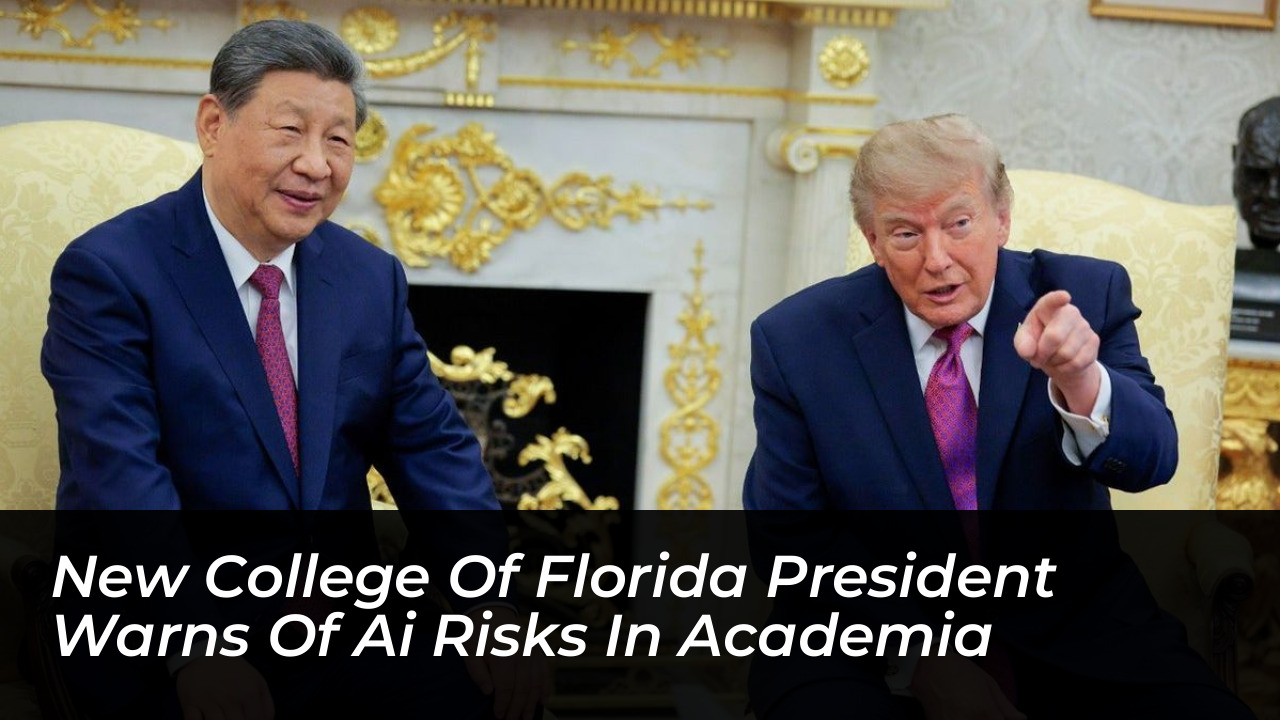
Higher education stands at a critical juncture as artificial intelligence rapidly integrates into student workflows and research methodologies. Campuses across the nation grapple with the balance between technological efficiency and academic rigor. Richard Corcoran, president of New College of Florida, recently emphasized the dual nature of these tools in modern learning environments.
- Introduction to Artificial Intelligence in Higher Education
- The Threat to Critical Thinking and Cognitive Development
- The Danger of Cognitive Atrophy in Student Workflows
- Evaluating the Devaluation of Academic Degrees
- Legislative Action and State-Level Regulatory Frameworks
- Florida Position on Artificial Intelligence Regulation
- Prohibitions and Safety Guardrails in Academic Settings
- Infrastructure Realities: Data Centers and Energy Grids
- The Physical Footprint of Large-Scale Models
- Holding Tech Corporations Accountable
- Faculty Adaptation and Economic Return on Investment
- Long-Term Faculty Pedagogical Redesign
- Quantifying the Economic Return on Investment of Artificial Intelligence Literacy
- Unique Perspectives on the Future of Academic Artificial Intelligence
- The Human-in-the-Loop Educational Model
- Institutional Sovereignty Versus Corporate Dependency
- Frequently Asked Questions
- Why did New College of Florida issue warnings about artificial intelligence?
- How are universities adapting curricula to counter generative algorithms?
- What are the primary infrastructure concerns tied to machine learning?
- Conclusion: Balancing Innovation and Academic Integrity
While artificial intelligence offers unprecedented speed in data synthesis and administrative automation, leadership warns that it poses significant threats to foundational cognitive development. The primary challenge involves harnessing these technologies without letting them replace the deep intellectual labor required for a genuine education. The discourse surrounding this shift focuses on proactive regulation to protect student safety, intellectual property, and human-centric instruction.
Universities must intentionally govern artificial intelligence adoption to protect intellectual rigor, preserve critical thinking, and manage institutional infrastructure. Meeting this challenge requires an active strategy that balances technical competitiveness with strict academic standards.
Introduction to Artificial Intelligence in Higher Education
The contemporary higher education landscape transforms rapidly as machine learning algorithms reshape how students consume information. Classrooms now feature automated research assistants, predictive text generators, and instant summarization tools. Students adopt these systems to streamline workloads, manage heavy reading schedules, and draft initial assignments. This integration accelerates project timelines, but it also blurs the line between assistance and substitution.
Institutional leaders like Richard Corcoran point out that unchecked reliance on machine learning creates a false sense of academic mastery. While administrative efficiency improves through automation, the core mission of a university is human intellectual development. Leadership at the New College of Florida takes a firm stance on separating administrative utility from cognitive reliance. They argue that technological convenience must not come at the expense of rigorous academic assessment.
To preserve the value of higher education, institutions must implement governance models that prioritize human intellect. Technology should serve as a scaffold rather than a substitute for original thought. Without deliberate boundaries, universities risk producing graduates who rely entirely on automated systems to navigate complex professional challenges.
The Threat to Critical Thinking and Cognitive Development
The Danger of Cognitive Atrophy in Student Workflows
Automated essay generation and text summarization tools bypass the cognitive struggle that is essential for true learning. When students rely on generative models to construct arguments or analyze complex texts, they skip the vital steps of synthesis and evaluation. This mental friction is not an obstacle to overcome, but rather the exact process through which critical thinking skills develop. Eliminating this struggle leads directly to cognitive atrophy over time.
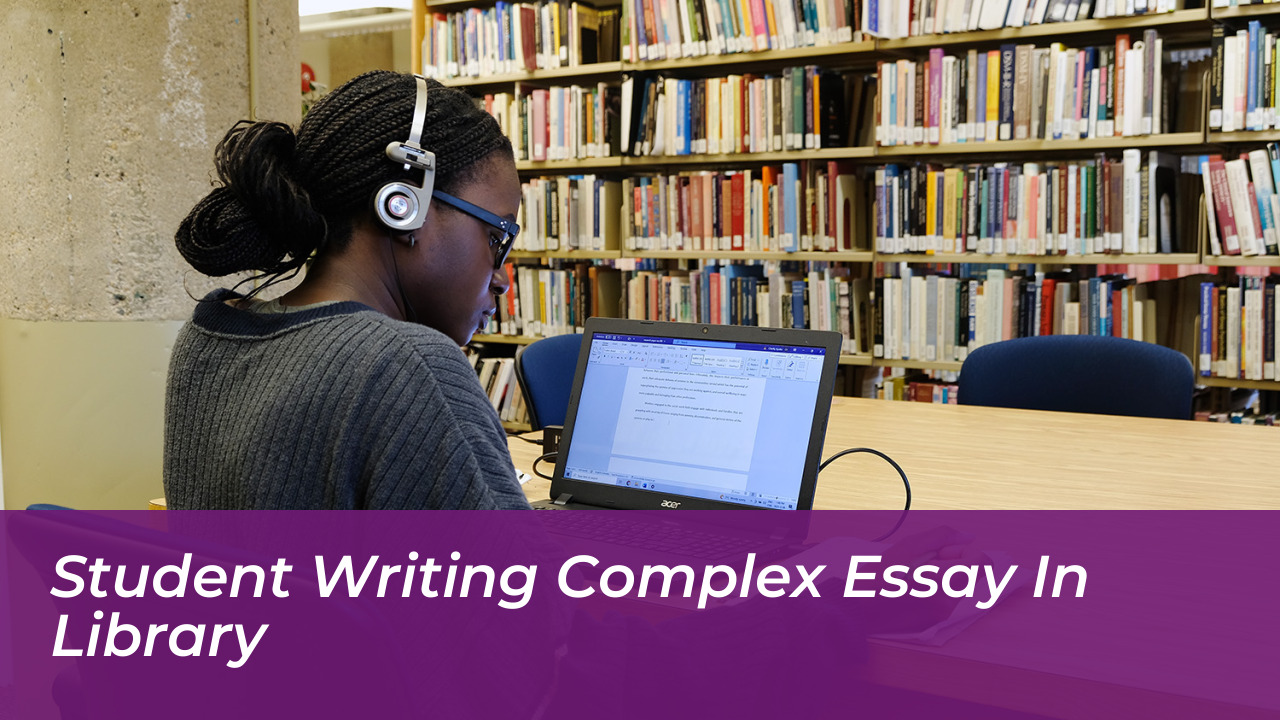
Academic workflows shift rapidly from deep research and synthesis to superficial prompt-and-response cycles. Students ask a model for an answer, receive a polished paragraph, and insert it into an assignment without verifying the underlying logic. This superficial engagement prevents students from building robust mental models, retaining information, or identifying logical fallacies within the generated text.
Evaluating the Devaluation of Academic Degrees
Graduating students who possess technical prompt proficiency but lack fundamental analytical skills creates severe long-term economic consequences. Employers expect college graduates to solve novel problems, evaluate ambiguous data sets, and construct original arguments. If degrees are awarded to individuals who merely acted as prompters for machine learning tools, the market value of those credentials diminishes sharply.
Modern universities hold a distinct responsibility to maintain strict standards of evaluation and intellectual merit. Faculty members must enforce assessment models that measure authentic student understanding rather than surface-level output. Protecting the integrity of academic degrees requires pushing back against automated shortcuts and re-centering the classroom on verifiable human intellect.
Legislative Action and State-Level Regulatory Frameworks
Florida Position on Artificial Intelligence Regulation
Florida has emerged as a national focal point for state-level artificial intelligence regulation. Governor Ron DeSantis and state leaders push aggressively for comprehensive guidelines to protect citizens and institutions from unchecked technological expansion. This proactive posture stands in stark contrast to the slower, fragmented approaches often observed at the federal level.
Proposed state policies include mandatory content disclaimers for machine learning outputs to prevent the spread of misinformation. These frameworks establish strict protections for intellectual property, ensuring that commercial entities cannot scrape academic research or student data without explicit consent. State leaders view these guardrails as essential for maintaining public trust in digital and academic spaces.
Prohibitions and Safety Guardrails in Academic Settings
State-level frameworks also introduce clear prohibitions regarding the deployment of generative models for sensitive applications. For instance, using unverified artificial intelligence systems for licensed therapy, psychological counseling, or high-stakes student advising within academic settings faces strict limitation or outright bans. Human oversight remains legally and ethically mandatory in areas involving personal well-being.
Balancing state legislative action with the rapid evolution of technology requires flexible yet firm boundaries. Universities must comply with state safety mandates while adapting their internal policies to address emerging software updates. This multi-layered oversight helps prevent the unregulated deployment of commercial software inside publicly funded classrooms.
Infrastructure Realities: Data Centers and Energy Grids
The Physical Footprint of Large-Scale Models
The conversation around artificial intelligence often focuses solely on software, ignoring the massive physical infrastructure required to sustain these networks. Hyperscale data centers demand immense amounts of electrical power and cooling water to run complex machine learning algorithms. These facilities consume energy equivalent to mid-sized cities, placing unprecedented stress on local utility grids.
Public institutions located near expanding tech hubs observe direct environmental and economic impacts on their surrounding communities. Local power grids experience brownout risks, and municipal water supplies face heavy depletion. Academic institutions must evaluate how this physical infrastructure footprint intersects with their sustainability goals and community responsibilities.
Holding Tech Corporations Accountable
Taxpayers and local communities should not bear the financial and energy burdens generated by private technology operations. State universities and local governments must establish accountability measures that require tech corporations to fund their own infrastructure upgrades. Implementing strict energy-use agreements and infrastructure fees ensures that private innovation does not compromise public utility reliability.
Faculty Adaptation and Economic Return on Investment
Long-Term Faculty Pedagogical Redesign
Most institutional discussions focus heavily on blunt bans or broad regulatory frameworks. However, universities lack practical, peer-reviewed strategies for faculty members seeking to redesign curricula. Educators need actionable methods to build assignments that are inherently resistant to automated shortcuts while still acknowledging technological reality.
Effective pedagogical redesign moves away from take-home essay prompts that algorithms solve in seconds. Instead, instructors incorporate multi-stage project evaluations, oral defenses, and in-class problem-solving sessions. These methods validate authentic student inquiry and reward original synthesis rather than polished formatting.
Quantifying the Economic Return on Investment of Artificial Intelligence Literacy
A notable disconnect exists between the generalized fear of job displacement and actual market demands for durable career skills. Universities have yet to properly quantify how specific forms of technical literacy translate into long-term career advantages. Employers do not just want students who know how to use a specific software interface. They require professionals who understand the limits of the technology and can verify its outputs.
Unique Perspectives on the Future of Academic Artificial Intelligence
The Human-in-the-Loop Educational Model
Future policy should focus less on restricting the software itself and more on verifying human output. Implementing a Human-in-the-Loop certification model for academic assignments changes how institutions track student progress. Students must document the complete evolution of their work, from raw brainstorming and initial research notes to the final draft.
This approach proves that artificial intelligence served as a structural scaffold for organization rather than a cognitive replacement. Requiring transparent audit trails for student projects preserves accountability and restores trust in academic evaluations.
Institutional Sovereignty Versus Corporate Dependency
Public universities currently rely heavily on proprietary, black-box commercial tools provided by a handful of dominant technology firms. This reliance creates severe vulnerabilities regarding data privacy, software pricing, and intellectual property leakage. A forward-thinking alternative involves developing proprietary, open-source models tailored specifically for state university systems.
Building open-source infrastructure allows institutions to maintain complete control over student data and research archives. It shields public universities from sudden corporate policy changes and ensures that academic sovereignty remains intact.
Frequently Asked Questions
Why did New College of Florida issue warnings about artificial intelligence?
Leadership aims to protect foundational cognitive development and prevent students from losing critical thinking skills to automated shortcuts.
How are universities adapting curricula to counter generative algorithms?
Educators implement multi-stage project evaluations, oral defenses, and in-class problem-solving sessions that require authentic human effort.
What are the primary infrastructure concerns tied to machine learning?
Hyperscale data centers consume massive amounts of electricity and water, placing heavy strains on local utility grids and municipal resources.
Conclusion: Balancing Innovation and Academic Integrity
The warnings issued by New College of Florida leadership highlight a necessary call for controlled and intentional integration. Artificial intelligence offers remarkable benefits, but uncritical adoption threatens the foundation of human critical thinking and intellectual property rights.
By protecting student agency, enforcing transparent verification models, and managing physical infrastructure demands, higher education can successfully navigate this technological shift. The ultimate goal is ensuring that graduates remain the masters of their own intellectual output in an increasingly automated world.