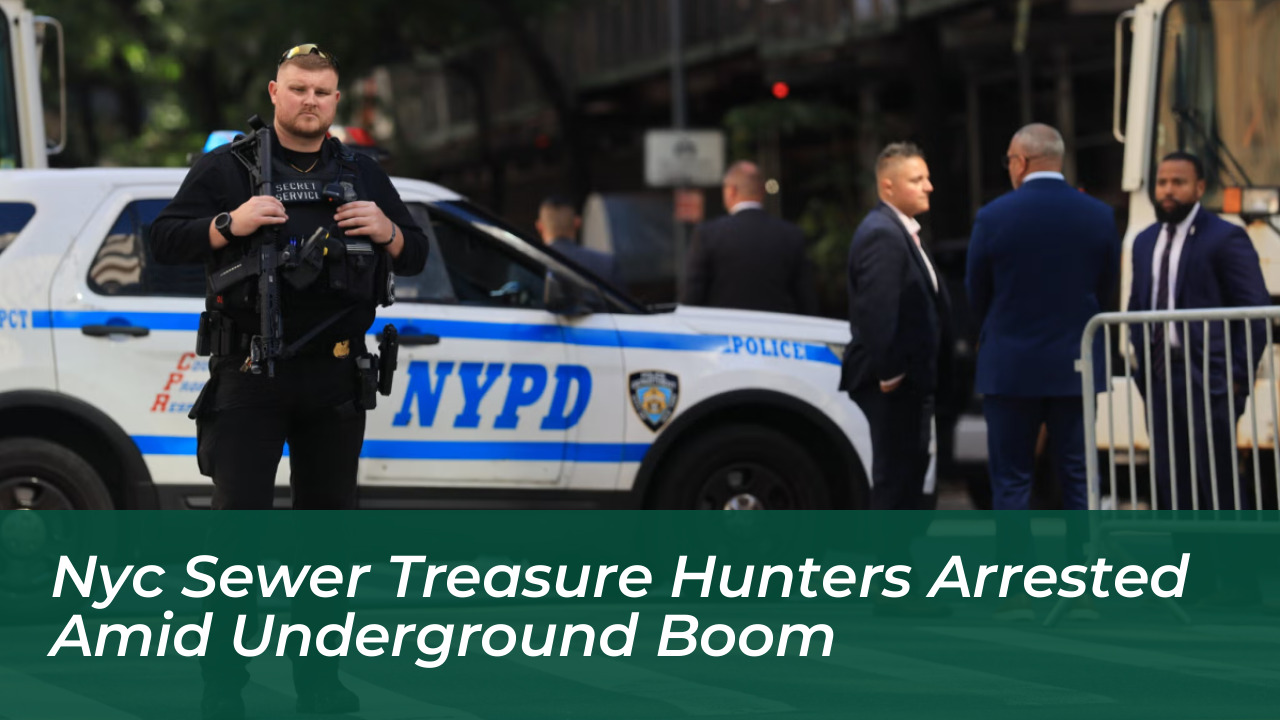
A high-stakes midnight arrest of two men entering a Midtown Manhattan manhole near Park Avenue and East 61st Street during the United Nations General Assembly highlights a bizarre and growing municipal security challenge. Viral social media urban legends of underground wealth are colliding with the harsh reality of municipal infrastructure security. Modern scavengers dive into the dark looking for quick riches, but they face severe legal consequences and lethal environmental hazards.
- The Midnight Operation on Park Avenue
- Anatomy of a Subterranean Incursion
- Clearing Security Concerns
- The Viral Rise of the Underground Scavenger Trend
- A Growing Pattern Across the Boroughs
- Economic Pressures and Online Romanticism
- The Lethal Reality of Municipal Infrastructure
- Hydraulic Dangers and False Hopes
- Biological and Chemical Hazards
- Historical Precedents of Subterranean Prospecting
- A Century-Old Pursuit of Lost Riches
- Legal Consequences and Ongoing Investigations
- Arraignment and Federal Complications
- Heightened Security Protocols
- Frequently Asked Questions
- Why do people enter the New York City sewer system?
- Are these sewer exploration incidents linked to terrorism?
- What legal charges do arrested sewer trespassers face?
- Can people actually find gold or valuable jewelry in city sewers?
The Midnight Operation on Park Avenue
Anatomy of a Subterranean Incursion
Law enforcement officers arrested 26-year-old Kevin Rodriguez and 25-year-old Samuel Reveron after a four-hour subterranean excursion beneath the streets of Manhattan. The incident began near Park Avenue and East 61st Street as world leaders gathered nearby. Surveillance footage captured two Toyota Corolla sedans arriving at the scene, where six individuals lifted heavy iron covers to access the municipal sewer network before eventually exiting near the Queensboro Bridge.
The timing and location triggered an immediate and massive security response. The NYPD, Secret Service, and counter-terrorism units mobilized quickly to protect international dignitaries housed in nearby luxury hotels, including high-profile foreign leaders. Authorities treated the breach with extreme caution due to the proximity of the United Nations summit and the potential vulnerabilities associated with critical urban infrastructure.
Clearing Security Concerns
Following a thorough investigation, law enforcement officials officially dismissed any ties to terrorism or targeted attacks against foreign leaders. Interrogations and subsequent sweeps confirmed that the suspects operated purely as amateur prospectors seeking lost jewelry and precious metals. The primary motivation was strictly financial, driven by urban myths rather than malicious political intent.
Despite the lack of a terrorist connection, the breach exposed significant vulnerabilities in urban access management. Security teams maintained a heightened state of alert throughout the remainder of the international summit. City officials reiterated that unauthorized access to subterranean spaces poses massive security risks regardless of the trespasser’s underlying intentions.
The Viral Rise of the Underground Scavenger Trend
A Growing Pattern Across the Boroughs
The Park Avenue incident is far from an isolated occurrence. Over the course of the year, authorities documented similar intrusions in Williamsburg, Gravesend, and near Penn Station, involving individuals wearing protective waders and headlamps. Automated license plate readers and historical traffic databases proved crucial in tracking down the suspects and linking vehicles to multiple underground operations across the boroughs.
| Date | Location | Suspect Activity | Law Enforcement Outcome |
|---|---|---|---|
| Late May 2026 | Williamsburg & Gravesend, Brooklyn | Groups plunging into open municipal manholes | Multiple arrests for criminal trespassing |
| August 2026 | Near Penn Station, Manhattan | Three individuals wearing bib overalls and headlamps | Evaded immediate capture; identified via video surveillance |
| Mid-September 2026 | Middle Village, Queens | Scavengers spotted emerging from local drainage infrastructure | Active police investigation |
| Late September 2026 | Park Avenue & East 61st Street | Six individuals entering sewers near UN General Assembly hotels | Two suspects arrested and arraigned on conspiracy charges |
This escalating trend points to a broader cultural fascination with hidden city spaces. Investigators continue to review municipal security camera footage to identify other copycats inspired by online videos. The sheer frequency of these events has forced city agencies to reevaluate how they monitor and secure thousands of miles of subterranean infrastructure.
Economic Pressures and Online Romanticism
Internet forums and social media platforms frequently glamorize subterranean exploration as a modern treasure hunt. Videos showcasing dark tunnels and forgotten artifacts generate millions of views, creating a false sense of adventure. This digital romanticism inspires curious individuals to overlook the extreme dangers involved in urban exploration.
Direct financial motivations also emerged during suspect interrogations. Individuals openly admitted they were searching for gold, metallic scrap, and lost jewelry washing down street grates. Economic pressures combined with online speculation drive these amateur prospectors into the city’s complex drainage network in search of easy money.
The Lethal Reality of Municipal Infrastructure
Hydraulic Dangers and False Hopes
Urban historian Steve Duncan explains that the municipal drainage network functions as a high-velocity hydraulic system. Heavy rainfall creates powerful tidal surges that sweep silt, debris, and any unanchored objects completely through the system. This torrential force renders the search for lost valuables entirely futile.
The physical layout of the tunnels offers zero margin for error. When sudden storms strike, dry storm drains can fill with rushing wastewater within minutes. Trespassers trapped deep underground face insurmountable escape obstacles, often leading to tragic outcomes before emergency services can arrive.
Biological and Chemical Hazards
Subterranean explorers face lethal environmental risks that go far beyond fast-moving water. The tunnels contain concentrated pockets of toxic gases, volatile methane leaks from aging utility lines, and dangerously low oxygen levels. Breathing these airborne hazards can lead to sudden unconsciousness and death.
Health risks from municipal wastewater are equally severe. Pathogens, bacteria, and chemical contaminants thrive in the effluent, posing extreme dangers to anyone with broken skin or compromised immune systems. Poorly equipped trespassers place an unnecessary and dangerous strain on emergency rescue teams who must risk their lives to pull them out.
Historical Precedents of Subterranean Prospecting
A Century-Old Pursuit of Lost Riches
The pursuit of lost riches beneath the asphalt is far from a new phenomenon. Nineteenth-century historical archives document early brick sewer exploration by citizens searching for dropped coins and wedding bands. People have always looked to the ground beneath their feet as a potential source of unexpected wealth.
Decades of periodic arrests highlight a recurring cycle of individuals attempting to mine urban waste streams for cash. From the brick conduits of the 1800s to modern concrete drainage pipes, economic desperation and curiosity persistently drive individuals past legal boundaries and into dark municipal spaces.
Legal Consequences and Ongoing Investigations
Arraignment and Federal Complications
The Manhattan Criminal Court arraignment for Rodriguez and Reveron established serious legal repercussions, including formal charges of criminal trespassing and conspiracy. Collateral legal issues quickly compounded their situation, notably the federal immigration detainer placed on Samuel Reveron.
Law enforcement agencies continue their active manhunts for the remaining participants captured on surveillance footage during the Park Avenue operation. Prosecutors intend to hold all involved parties accountable to deter future copycat breaches across the city.
Heightened Security Protocols
The New York Police Department maintains strict enforcement strategies around critical infrastructure points, particularly during high-level international events. Law enforcement agencies enforce severe criminal penalties to maintain public safety and ensure municipal operational integrity.
Protecting the city requires constant vigilance from municipal workers and security forces alike. Unauthorized entries into utility vaults, subway tunnels, and sewer systems will continue to meet with swift arrests and heavy prosecution as authorities work to secure the urban core.
Frequently Asked Questions
Why do people enter the New York City sewer system?
Independent scavengers enter the municipal drainage network searching for lost jewelry, precious metals, and discarded items washed through street storm grates, driven by economic incentives and online speculation.
Are these sewer exploration incidents linked to terrorism?
The New York Police Department investigated the incidents and confirmed no connection to terrorism or planned attacks, attributing the activity entirely to unauthorized urban scavenging.
What legal charges do arrested sewer trespassers face?
Individuals caught entering municipal drainage infrastructure without authorization face charges of criminal trespassing and conspiracy, with potential additional charges for tampering with public utility access points.
Can people actually find gold or valuable jewelry in city sewers?
Urban historians and sanitation experts confirm that finding valuables is virtually impossible because powerful water surges during rainstorms wash all debris and unanchored objects completely through the system.