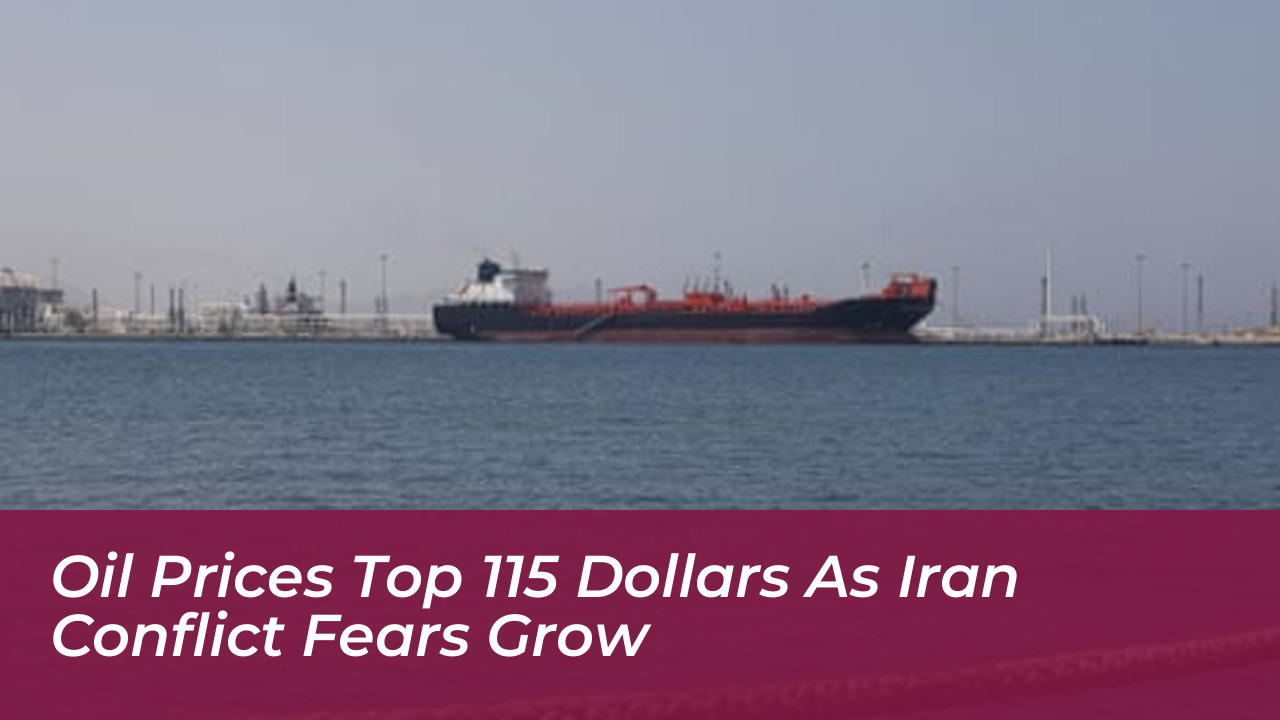

Brent crude prices climbed above 115 dollars a barrel on Friday as escalating tensions in the Middle East raised serious concerns about global energy supplies and maritime trade routes. The international oil benchmark rose 1% to reach its highest level since May, driven by heightened fears of a broader military conflict involving the United States, Israel, and Iran.
The latest price spike followed warnings from Tehran regarding potential retaliatory attacks on Gulf energy infrastructure should the United States and Israel launch another offensive against Iran. Iranian officials indicated that targets could potentially include vital oil facilities, undersea cables, datacenters, and artificial intelligence installations spread across the region.
Market analysts note that the compounding threats and rumors of potential military actions have created extreme uncertainty across global energy markets. Richard Hunter, head of markets at the broker Interactive Investor, pointed to reports suggesting that Washington might consider renewed military action following its midterm elections rather than prioritizing diplomatic resolutions.
Strait of Hormuz Disruptions and Regional Flashpoints
The ongoing conflict has severely impacted critical transit corridors, most notably the Strait of Hormuz, through which roughly one-fifth of the world’s petroleum passes daily. Tensions intensified further after the Islamic Revolutionary Guards Corps claimed responsibility for striking commercial shipping vessels in the strategic waterway.
Concurrently, ongoing hostilities involving Iran-backed Houthi rebels in Yemen have targeted energy installations and infrastructure across Saudi Arabia, compounding supply anxieties. Susannah Streeter, chief investment strategist at Wealth Club, highlighted that market sentiment remains vulnerable as geopolitical risks multiply across multiple fronts.
“Fears are rising that American and Israeli forces could be ordered to strike Iran’s energy infrastructure following the elections,” Streeter explained, noting that dangerous conditions for commercial shipping continue to restrict normal export flows from major Persian Gulf producers.
Global Economic Impacts and Government Responses
The surge in energy costs has immediately rippled through global financial markets, stoking renewed fears of sticky inflation and prompting central banks to reconsider monetary policies. Wholesale diesel prices have seen sharp increases globally, while consumer fuel prices at the pump have risen noticeably across advanced economies.
Governments and international energy bodies are actively deploying emergency measures to stabilize markets. The International Energy Agency and major industrial nations have discussed coordinated releases from strategic petroleum reserves to mitigate short-term supply deficits. Meanwhile, several Asian and European governments have implemented domestic fuel caps, tariff adjustments, and emergency production shifts to protect consumers and industrial sectors from prolonged economic shocks.
As the diplomatic stalemate continues, energy experts warn that any further escalation in the Gulf region or prolonged disruptions to key shipping channels could push crude prices even higher, testing the resilience of the global economic recovery.
This is a developing news story. Further updates will be provided as energy markets respond to regional developments.