The Mexican national football team kickstarted their 2030 World Cup cycle against Colombia at the M&T Bank Stadium in Baltimore, Maryland. This high-profile fixture marks the official managerial debut of head coach Rafael Márquez. El Tri entered this autumn window following a turbulent Round of 16 exit at the 2026 World Cup under Javier Aguirre, where Mexico fell short against England. Meanwhile, Colombia also bowed out in the Round of 16 of the recent tournament, losing on penalties to Switzerland after a scoreless defensive deadlock. This historic encounter represents the first-ever appearance of the Mexican national team in Baltimore, utilizing the home stadium of the NFL Baltimore Ravens to inaugurate a demanding four-match United States tour.
- A Historic Beginning for El Tri in Baltimore
- Overcoming the Conmebol Debut Curse
- Inside the First Roster Under Rafael Márquez
- Club Representation and Domestic Impact
- Colombia Undergoes a Transition of Their Own
- New Media Partnerships and Broadcast Reach
- The Demanding Autumn U.S. Tour Schedule
- Tactical Evolution Under the New Regime
- Frequently Asked Questions
- Who is the new head coach of the Mexican national team?
- What was the result of the Mexico versus Colombia match in Baltimore?
- Why were James Rodríguez and Luis Díaz absent for Colombia?
- Where can fans watch Mexico national team matches now?
Márquez inherits a rebuilding squad carrying immense expectations from passionate supporters and federation executives alike. Having spent the previous two years serving as an assistant coach under Aguirre, the legendary former central defender now takes absolute tactical command. His primary objective involves instilling an aggressive, possession-oriented tactical identity while simultaneously shoring up defensive stability. The opening match against Colombia acts as the immediate testing ground for these fresh philosophies as El Tri attempts to rewrite modern soccer history.
A Historic Beginning for El Tri in Baltimore
M&T Bank Stadium provided an electric atmosphere for the opening match of Mexico’s 2030 World Cup cycle against Colombia. The fixture marks the official managerial debut of head coach Rafael Márquez as he steps out of his assistant role and onto the main stage. El Tri enters this autumn window following a Round of 16 exit at the 2026 World Cup under Javier Aguirre.
Colombia also bowed out in the Round of 16 of the recent tournament, losing on a tense penalty shootout to Switzerland. Beyond the competitive implications, this encounter represents the first-ever appearance of the Mexican national team in the city of Baltimore. Fans packed the venue to witness the dawn of a new era for Mexican football under one of the country’s most celebrated historic icons.
The stadium hummed with anticipation as thousands of green-shirted supporters filled the stands hours before kickoff. Local organizers pulled out all the stops to ensure the event operated smoothly. This successful debut sets a high standard for future international fixtures hosted in non-traditional American markets. Security personnel managed the massive crowds efficiently while maintaining a welcoming, festive atmosphere throughout the venue.
Overcoming the Conmebol Debut Curse
History places a heavy psychological burden on incoming Mexican managers facing South American opposition in their inaugural matches. Past skippers such as Ricardo La Volpe, Efraín Flores, and Ricardo Ferretti all suffered defeats in their managerial debuts against Conmebol opponents. El Tri also carries a dismal recent record against Colombia specifically, securing only one victory and three draws across the last 23 years of matchups.
Colombia holds a commanding four-match winning streak against Mexico in recent friendlies. The most punishing recent defeat occurred when Colombia dismantled El Tri 4-0 at AT&T Stadium in Arlington, Texas. Mexico’s last victory over the South American side remains a narrow 1-0 triumph achieved way back in September 2010 in Monterrey. Breaking this statistical barrier represents an immediate challenge for Márquez at the helm.
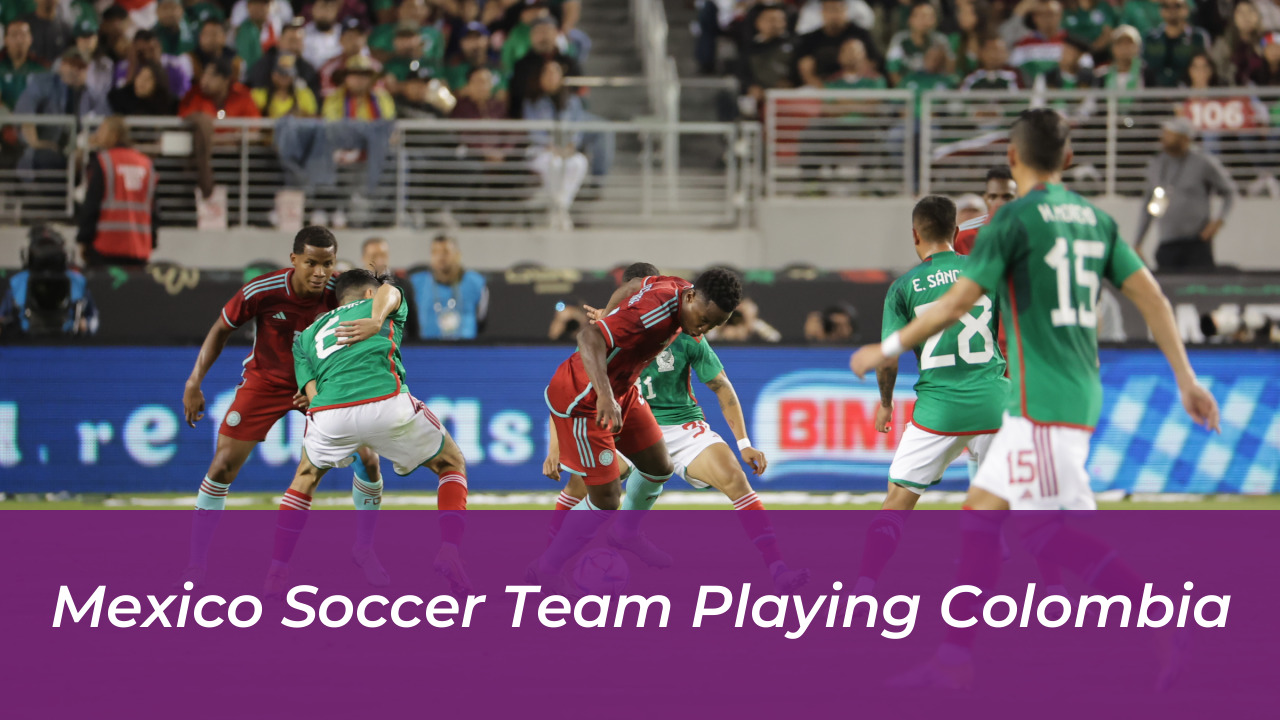
Tactical discipline served as the main talking point among pundits analyzing the historical matchup before kickoff. Analysts repeatedly stressed the importance of winning midfield battles to neutralize Colombia’s rapid transitional attacks. Players spent the entire week reviewing archival footage of past encounters to identify recurring defensive lapses. Breaking the psychological barrier against South American rivals requires unwavering mental fortitude and precise execution.
Inside the First Roster Under Rafael Márquez
Márquez selects a robust pool of 30 players, retaining 17 core members from the 2026 World Cup roster. European-based standouts Johan Vásquez and César Montes anchor the defensive line with vital experience. Winger Hirving Chucky Lozano reclaims a coveted spot in the national setup after a lengthy absence that predated the previous World Cup.
Conversely, high-profile omissions include West Ham midfielder Edson Álvarez, who was left out due to limited club playing time. Several veteran players were also held back to manage lingering physical ailments and prevent fatigue.
Club Representation and Domestic Impact
Guadalajara dominates domestic representation, supplying six players to the wider squad setup, including goalkeeper Raúl Rangel and forward Roberto Alvarado. Scheduling constraints with Liga MX force these domestic players to join camp late, altering early training sessions.
Late squad adjustments occurred due to minor injuries sustained right before camp. Club América midfielder Alan Cervantes suffered a muscle strain and was promptly replaced by teammate Isaías Violante.
Scouting networks worked overtime to identify promising youngsters deserving of a senior national team call-up. Assistant coaches traveled extensively across domestic league fixtures to evaluate raw talent firsthand. Integrating these emerging prospects ensures sustainable squad depth for upcoming competitive cycles. Veteran leaders welcomed the newcomers, fostering a collaborative environment within the training camp.
Colombia Undergoes a Transition of Their Own
Néstor Lorenzo utilizes the international window to jumpstart a transitional phase for the Colombian squad. Longtime stalwarts James Rodríguez and Juan Fernando Quintero are excluded to officially close their international chapters and clear space for younger talent.
Star winger Luis Díaz receives a mandatory rest period following heavy fixture congestion with his club. Dávinson Sánchez assumes the captain armband, providing veteran leadership for a reworked Colombian side.
The South American visitors arrived in Baltimore with a clear mandate to test emerging tactical systems. Young midfielders seized the opportunity to prove their worth on an international platform. Tactical observers noted sharper passing sequences from the revamped Colombian lineup during pre-match drills. This generational shift promises heightened competitiveness within upcoming continental qualifiers.
New Media Partnerships and Broadcast Reach
The Baltimore fixture inaugurates a multi-platform media distribution strategy for the Mexican national team. Traditional broadcast coverage in Mexico is shared by Canal 5, Azteca 7, and TUDN, alongside digital options like ViX.
Amazon Prime Video debuts its live coverage of El Tri during this match. This milestone follows a major four-year broadcast agreement that secures streaming rights for home matches through the 2030 World Cup cycle.
Digital streaming subscriptions experienced a massive surge leading up to the high-profile kickoff in Baltimore. Broadcasters deployed advanced camera rigs and tactical analysis suites to enhance viewer engagement. Fans enjoyed multi-angle viewing options that redefined modern sports consumption habits. This digital expansion broadens the global footprint of the Mexican national football team.
The Demanding Autumn U.S. Tour Schedule
The clash against Colombia opens a brutal four-match swing across the United States within a tightly packed two-week span. The itinerary features high-intensity matches against Peru in New Jersey, the United States in Arizona, and Chile in Los Angeles.
These autumn friendlies double as high-stakes preparation for upcoming Concacaf Nations League quarterfinals. Mexico already secured a direct berth into the knockout rounds as a top-ranked confederation team.
Logistical coordinators faced massive challenges organizing travel itineraries across multiple American time zones. Sports science teams monitored player workloads meticulously to mitigate injury risks during the grueling tour. Recovery sessions took precedence over tactical drills between matches to maintain optimal physical fitness. Every member of the traveling delegation understood the immense physical demands required.
Tactical Evolution Under the New Regime
Márquez emphasizes a stylistic shift toward proactive possession, intense high pressing, and high-volume scoring chances. Strategic priorities move decisively away from pragmatic counter-attacking toward a modern, aggressive forward posture.
The Baltimore debut exposes both structural vulnerabilities and exciting offensive potential for the newly minted squad. Supporters will monitor whether these tactical seeds blossom into sustained success as the 2030 cycle rolls onward.
Midfielders practiced rapid ball recycling drills to overwhelm opposing defensive blocks effectively. Defenders learned to maintain a higher defensive line without sacrificing security against speedy counter-attacks. Early training footage revealed encouraging signs of cohesion within the revamped tactical framework. Fans responded enthusiastically to the bold, forward-thinking approach displayed on the pitch.
Frequently Asked Questions
Who is the new head coach of the Mexican national team?
Rafael Márquez took over as the head coach of El Tri, beginning his tenure with the autumn U.S. tour match against Colombia in Baltimore.
What was the result of the Mexico versus Colombia match in Baltimore?
The match served as the opening fixture of Mexico’s 2030 World Cup cycle and the managerial debut for Rafael Márquez at M&T Bank Stadium.
Why were James Rodríguez and Luis Díaz absent for Colombia?
Néstor Lorenzo rested Luis Díaz due to fixture congestion and excluded James Rodríguez to transition toward a younger squad generation.
Where can fans watch Mexico national team matches now?
Alongside traditional broadcasters like TUDN and Azteca 7, Amazon Prime Video now broadcasts El Tri home matches following a major four-year rights agreement.