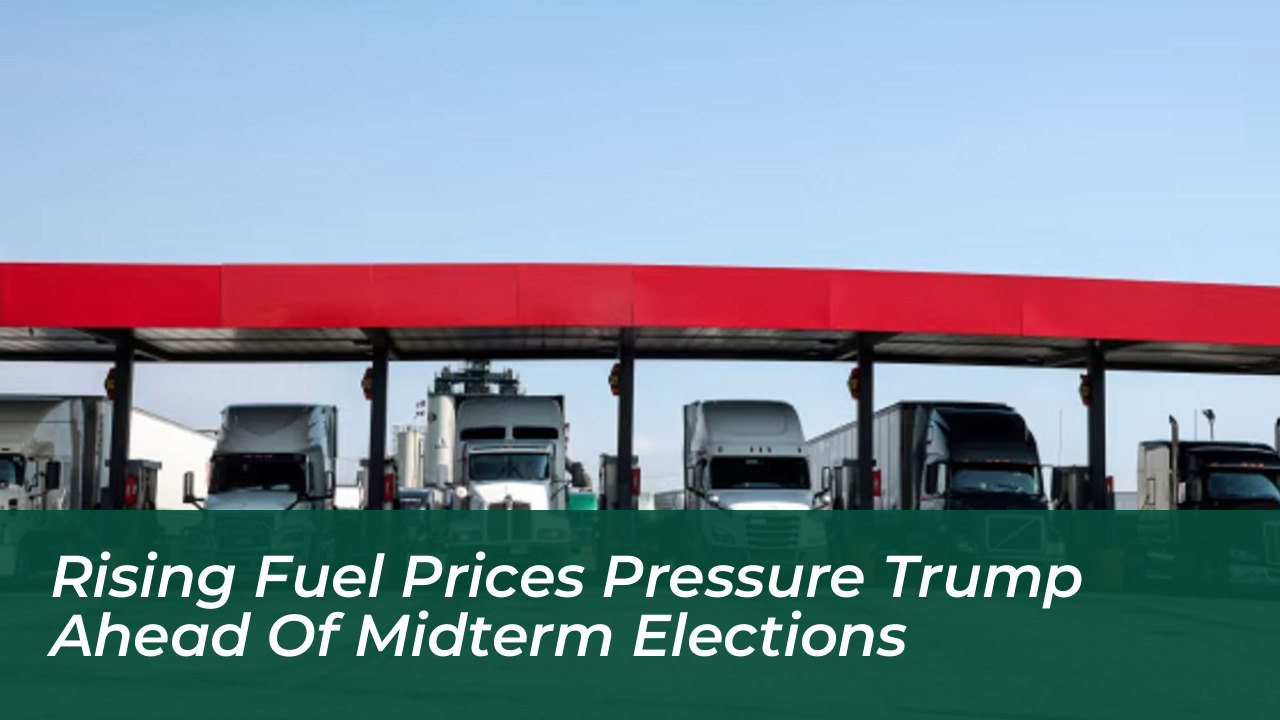

Rising gasoline and diesel costs are creating an intense economic and political challenge for President Donald Trump and the Republican Party ahead of November’s midterm elections. As higher fuel prices strain consumers, small business owners, and logistics providers across the United States, administration efforts to increase fuel supplies have yet to provide sustained relief, while volatile global energy markets signal that further price increases could follow.
According to reports from NBC News, U.S. diesel futures rose by 5% in a single session, reaching their highest levels in weeks, while European diesel futures climbed about 3.8%. Additionally, European natural gas futures surged to their highest levels of the year, signaling renewed pressure across global energy infrastructure. The nationwide average price of diesel has increased by 70% since the United States and Israel launched military strikes on Iran on February 28, while unleaded gasoline prices have climbed by more than 45%. Brent crude recently traded around $106 per barrel, and U.S. benchmark crude approached $95, with both figures up roughly 70% since the beginning of the year.
The Economic Toll on American Workers and Businesses
The surging cost of fuel is forcing working- and middle-class Americans to make difficult financial trade-offs between essential household expenses like groceries, commuting costs, and keeping small businesses operational. In Edinburg, Texas, 28-year-old Amazon delivery driver Quinten Martinez described the heavy toll of watching fuel numbers climb. When asked about President Trump’s assertion that higher pump prices represent an inexpensive cost for the war with Iran, Martinez expressed widespread frustration among motorists.
“Is it going to be groceries this week? Is it gonna be getting gas in our tank to go to work?” Martinez said. “I don’t feel like it’s a good trade-off. I don’t feel like this is good for anyone.”
Commercial operators face similar pressures. In central Michigan, Garth Johnson, who runs a deep-cleaning business utilizing multiple gas-powered vehicles and a diesel-fueled machine, noted that diesel prices reached $6.79 a gallon while he was filling up his SUV. Though Johnson voted for Trump, he admitted that the financial squeeze is affecting his daily livelihood.
Political Fallout and Voter Sentiment Ahead of Midterms
Historically, the political party holding the White House suffers major legislative losses during midterm elections. With approximately seven weeks remaining before election day, Republican candidates at federal and state levels are navigating voter dissatisfaction tied directly to weak economic approval ratings, an unpopular conflict abroad, and a persistent affordability crisis.
National polling underscores the depth of voter distress. A Fox News survey revealed that more than three times as many voters feel they are falling behind financially rather than getting ahead. By a 15-point margin, respondents identified the Democratic Party as better equipped to handle inflation and consumer prices. , 63% of surveyed voters stated that the current administration has made the economy worse, with 61% identifying gas prices as a major household problem compared to 48% two years prior.
Despite these mounting political headwinds, President Trump has largely defended the administration’s foreign policy objectives. While campaigning in North Carolina, Trump minimized the impact of surging fuel costs. “You have a little higher. It’s a very inexpensive price to pay for what we’ve done,” Trump said of the war, describing the military campaign as a necessary measure to prevent Iran from developing a nuclear weapon.
Global Supply Disruptions and Administration Response
The spike in fuel prices is largely driven by supply bottlenecks and infrastructure damage spanning key energy corridors. Attacks on energy assets in the Middle East and Russia have squeezed supplies of diesel, which powers commercial trucks, trains, cargo ships, and agricultural equipment. In the Strait of Hormuz, tanker traffic has slowed significantly due to ongoing security threats, while Houthi rebel actions in the Red Sea and Bab el-Mandeb Strait have further destabilized regional oil shipments from Saudi Arabia and surrounding allies.
In an effort to stabilize domestic markets and lower prices, the Trump administration temporarily suspended fuel export sanctions on Russia to introduce more diesel supply into the market. However, those policy maneuvers faced immediate complications as active conflicts continued to disrupt international trade routes. Whether these diplomatic and supply-side interventions can alleviate consumer costs before voters head to the polls in November remains highly uncertain.