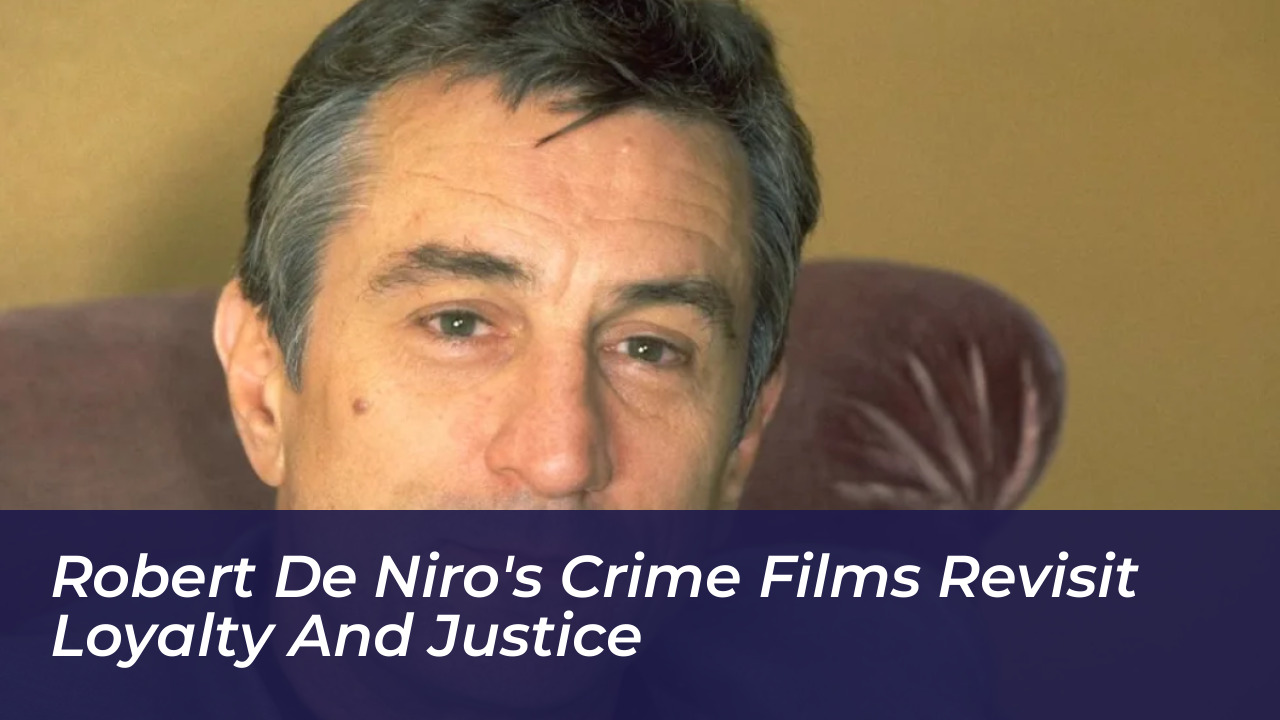

Robert De Niro’s legendary crime films continue to captivate audiences through deep explorations of criminal loyalty, law enforcement ethics, and contested justice. From Martin Scorsese’s iconic Goodfellas, released in the United States on September 19, 1990, to Michael Mann’s gripping urban thriller Heat, which recently returned to Netflix ahead of the planned sequel Heat 2, De Niro has consistently anchored stories examining the friction between personal allegiance and ultimate survival.
Across these cinematic productions, De Niro portrays characters whose relationships expose the fragility of trust within illicit worlds. These films approach crime from varied angles. They analyze both the internal rules governing organized crime rings and the intricate psychological cat-and-mouse dynamic shared between a professional master thief and the dedicated detective pursuing him.
The Code of Silence in Goodfellas
In Goodfellas, Robert De Niro delivers a masterclass in understated menace as James “Jimmy” Conway. This character is loosely based on James “Jimmy the Gent” Burke, who was widely linked to the notorious 1978 Lufthansa heist. The narrative tracks Henry Hill, played by Ray Liotta, as he becomes entangled with organized crime and quickly learns the absolute importance criminals place on refusing to cooperate with authorities.
One of the film’s defining moments occurs when Conway pulls a young Hill aside after his first court appearance. He slips him cash and imparts the cardinal rule of the mob: “Never rat on your friends and always keep your mouth shut.” Delivered with matter-of-fact calm, De Niro’s advice sounds like a rite of passage, but it carries a chilling warning about the violent consequences of breaking the code.
Loyalty Versus Survival in Michael Mann’s Heat
Shifting from organized crime syndicates to independent professional heists, De Niro’s role as Neil McCauley in 1995’s Heat presents a different facet of criminal loyalty. Living by a strict, disciplined code-never getting attached to anything you cannot walk out on in thirty seconds-McCauley approaches heists with icy, calculated precision.
The philosophical tension peaks during the legendary coffee shop scene opposite Al Pacino. The interaction between McCauley and LAPD Detective Vincent Hanna highlights two professionals driven entirely by their crafts. They recognize that their commitment to their work ultimately isolates them from normal human connection. Loyalty in Heat is not about familial mob structures, but rather a solitary professional standard maintained until the bitter end.
The Evolution of De Niro’s Criminal Archetypes
De Niro’s extensive filmography within the crime genre spans decades and showcases a wide range of perspectives on justice and law:
- The Godfather Part II (1974): Portraying a young Vito Corleone, De Niro earned an Academy Award by showing the quiet intelligence and strategic survival instincts behind the rise of a legendary crime empire.
- The Irishman (2019): Reunited with Scorsese, De Niro played hitman Frank Sheeran across five decades, meditating heavily on the loneliness, mortality, and tragic erosion of old-age loyalty.
- The Untouchables (1987): Transforming physically and psychologically into Chicago mob boss Al Capone, De Niro brought terrifying volatility and charm to the other side of கோயில the law.
The Enduring Relevance of Justice and Morality
Whether examining the internal paranoia of Goodfellas, where friends turn on associates for self-preservation, or the professional mutual respect found in Heat, Robert De Niro’s crime films remain culturally vital. They strip away romanticized notions of criminal brotherhood, exposing a high-stakes world where absolute loyalty is demanded, yet true justice remains perpetually out of reach.