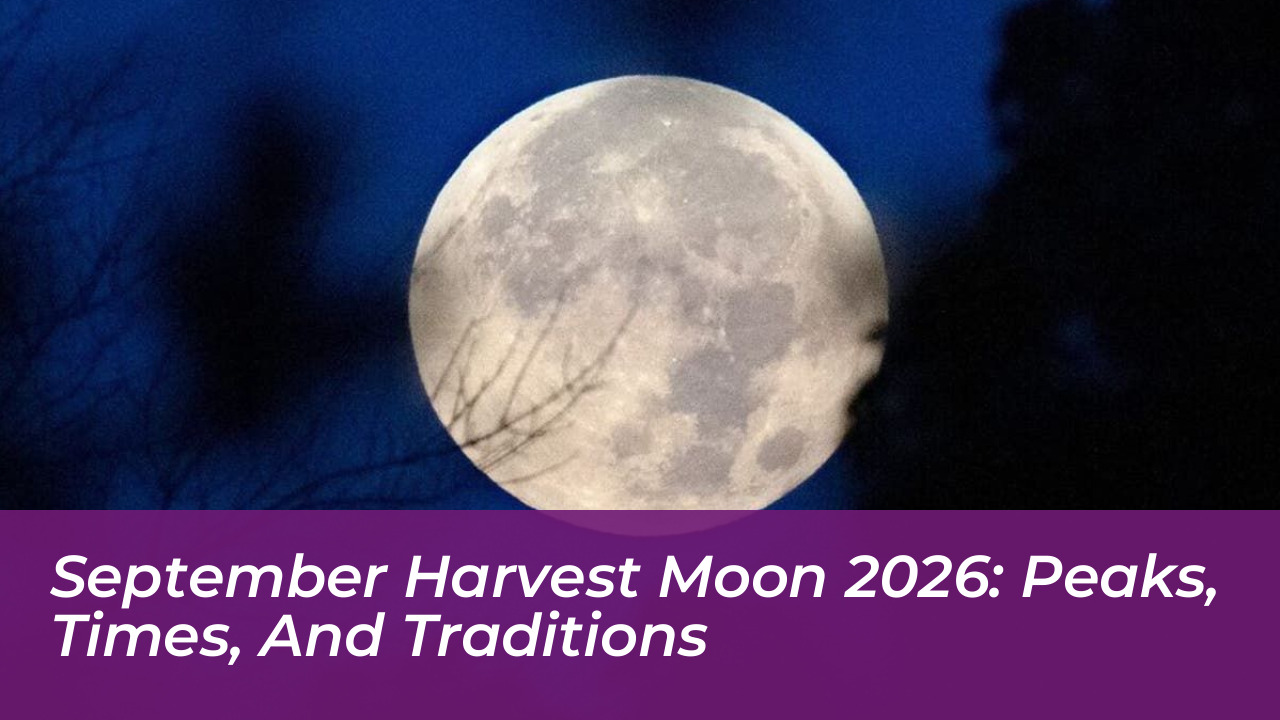
The night sky delivered a striking celestial display as the September 2026 Harvest Moon reached its maximum illumination following the autumnal equinox. Skywatchers across the Northern Hemisphere turned their gaze upward on Saturday, September 26, 2026, to witness the first full moon of the astronomical autumn season. While the exact mathematical peak occurred during daylight hours across North America, the lunar disc offered brilliant illumination throughout the surrounding evenings.
- When Was the Harvest Moon 2026? Exact Times and Time Zones
- Global Peak Illumination Schedule
- Optimizing Your Viewing Experience
- The Celestial Mechanics: Why the Harvest Moon Is Unique
- The Autumnal Anomaly
- Orbital Geometry Explained
- Historical Roots: Nature’s Lantern Before Electric Light
- Extending the Workday
- Economic Value of Moonlight
- Crops Harvested During the September Moon
- Key Agricultural Yields of Late September
- Global Traditions and Cultural Festivals
- The Mid-Autumn Festival in China
- Korean Chuseok and Japanese Tsukimi
- Mabon and the Wheel of the Year
- Indigenous and Alternative Names for the September Full Moon
- Ecological Naming Traditions
- Understanding Seasonal Shifts and Astronomical Impact
- Adapting to Shifting Sunlight Hours
- Modern Observations and Stargazing Tips
- Best Photography Practices for Full Moons
- Frequently Asked Questions
- Why does the Harvest Moon appear orange?
- Is the Harvest Moon always in September?
- How long does the Harvest Moon phase last?
- Does the Harvest Moon affect tides?
This lunar event bridges astronomy, history, and global culture. The September full moon carries distinct orbital characteristics and historical utility that set it apart from every other lunar phase during the calendar year. Understanding the timing, mechanics, and cultural heritage of this event enriches the experience of modern stargazing.
When Was the Harvest Moon 2026? Exact Times and Time Zones
The exact moment of peak illumination for the September 2026 Harvest Moon occurred on Saturday, September 26, at 12:49 p.m. Eastern Daylight Time. Because the moon achieves its full phase at a single physical instant across the globe, local clock times vary depending on geographic longitude.
Global Peak Illumination Schedule
- Eastern Daylight Time (EDT): 12:49 p.m., September 26, 2026
- Central Daylight Time (CDT): 11:49 a.m., September 26, 2026
- Mountain Daylight Time (MDT): 10:49 a.m., September 26, 2026
- Pacific Daylight Time (PDT): 9:49 a.m., September 26, 2026
- Coordinated Universal Time (UTC): 16:49, September 26, 2026
- British Summer Time (BST): 5:49 p.m., September 26, 2026
- China Standard Time (CST): 12:49 a.m., September 27, 2026
Optimizing Your Viewing Experience
North American observers experienced the peak phase while the moon sat below the local horizon. However, the human eye perceives the lunar disc as completely full for approximately 24 to 48 hours on either side of the exact peak. Saturday night, September 26, and Sunday night, September 27, delivered ideal viewing conditions for backyard astronomers and casual observers alike.
The Celestial Mechanics: Why the Harvest Moon Is Unique
Every full moon rises roughly 50 minutes later than it did on the preceding evening. This predictable delay happens because the moon orbits Earth in a counterclockwise direction, forcing our planet to rotate slightly extra each day to catch up.
The Autumnal Anomaly
Around the autumnal equinox, that daily moonrise delay shrinks dramatically. For several consecutive nights at mid-northern latitudes, the moon rises only 25 to 30 minutes later than the night before. Observers stationed further north experience an even sharper shift, where the delay drops below 20 minutes.
Orbital Geometry Explained
The moon does not alter its orbital speed. Instead, the geometry of the moon’s orbit and the shallow angle that the ecliptic makes with the eastern horizon at sunset during autumn creates this effect. The ecliptic represents the apparent path of the sun, which the moon closely tracks. Near the September equinox, the ecliptic intersects the eastern horizon at a very shallow angle. Consequently, each night’s moonrise point shifts only a short distance along the horizon, causing the clock to catch up much faster and bathing the evening in bright moonlight.
Historical Roots: Nature’s Lantern Before Electric Light
The term Harvest Moon serves as a functional descriptor born of necessity rather than a poetic label. Before rural electrification reached agricultural communities, artificial illumination after sunset relied entirely on lanterns, candles, or the moon.
Extending the Workday
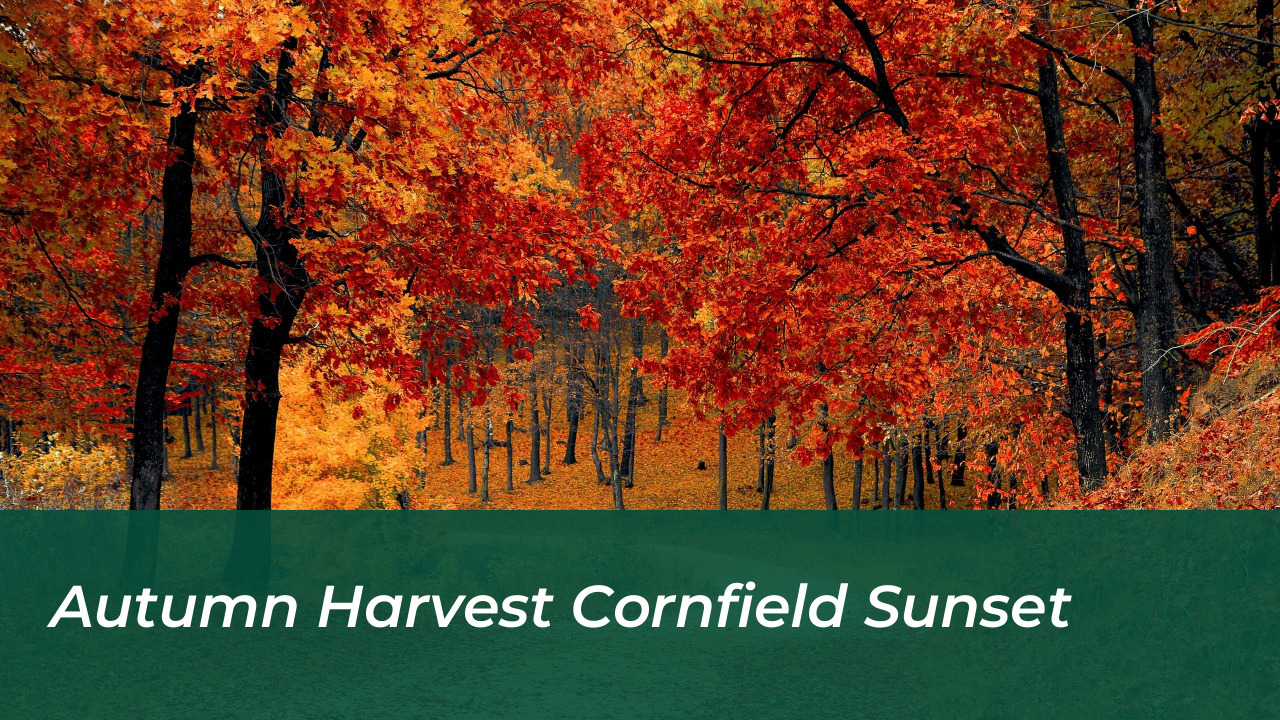
A full moon occurring near the equinox rises near sundown for several evenings running. It hangs low over the eastern horizon for hours, transforming dark croplands into workable fields. Field corn, pumpkins, winter squash, and dry beans reached maturity simultaneously during late September, and the threat of an early frost loomed large over farming families.
Economic Value of Moonlight
Every extra hour of bright moonlight provided tangible economic value during a high-stakes season. It meant another row picked, another wagon filled, and another day of harvest secured before adverse weather spoiled the yield. The earliest documented English-language use of the phrase in American print is credited to author Cornelius Mathews in an 1842 collection of poems, though English settlers brought the oral tradition across the Atlantic generations prior.
Crops Harvested During the September Moon
Late September marks the heart of the agricultural gathering season across North America. Managing these labor-intensive yields required every available hour of daylight and moonlight.
Key Agricultural Yields of Late September
- Field Corn: Harvested by the wagonload across the Midwest as maize dries on the stalk.
- Pumpkins and Winter Squash: Ripening on the vine into vibrant orange hues, varieties like butternut, acorn, and Hubbard cure in the fields before long-term storage.
- Dry Beans: Pole beans and dry beans finish drying on the plant for protein-rich winter storage.
- Apples: Early orchard varieties head directly to presses for seasonal cider production.
Global Traditions and Cultural Festivals
The bright moon illuminating North American fields shines over Asia and Europe at the same physical hour. Consequently, several major international festivals align directly with the September Harvest Moon.
The Mid-Autumn Festival in China
Celebrated on the 15th day of the eighth month of the Chinese lunar calendar, the Mid-Autumn Festival (Zhongqiu Jie) coincides with the full moon closest to the autumn equinox. In 2026, this festival fell on Friday, September 25, immediately preceding the peak of the Gregorian Harvest Moon. Families gather outdoors to share round mooncakes, light decorative paper lanterns, and recount the folklore of Chang’e, the mythical moon goddess.
Korean Chuseok and Japanese Tsukimi
In Korea, the three-day harvest thanksgiving holiday known as Chuseok runs concurrently with the lunar full moon. Families travel to ancestral hometowns, perform memorial rites, and consume traditional rice cakes called songpyeon. Similarly, Japan observes Tsukimi (moon viewing), where participants display pampas grass and eat round white rice dumplings known as tsukimi dango to express gratitude for a successful harvest.
Mabon and the Wheel of the Year
Modern Pagan and Wiccan traditions mark the autumnal equinox itself as Mabon, representing the second of three seasonal harvest festivals. Celebrations focus on gratitude for the gathered earth yields, the seasonal balance of day and night, and preparations for the cold winter months ahead.
Indigenous and Alternative Names for the September Full Moon
While the label Harvest Moon dominates modern meteorological and cultural calendars, various Indigenous nations and historical European communities assigned distinct names to the September full moon based on ecological indicators.
Ecological Naming Traditions
- Algonquin and Haudenosaunee: Corn Moon, reflecting the peak period of maize gathering.
- Anishinaabe (Ojibwe/Chippewa): Waatebagaa-giizis, translating to the Falling Leaves Moon.
- Cherokee: Nut Moon, noting the seasonal drop of hickory, walnut, and chestnut crops.
- Cree: Snow Goose Moon, honoring the massive flocks of waterfowl migrating southward overhead.
- Old English Farming Traditions: Barley Moon, marking the cutting and shocking of barley crops for brewing and baking.
- French and German Wine Regions: Wine Moon, designating the commencement of grape pressing for winemaking.
- Celtic Tradition: Singing Moon, referencing the harvest suppers and field songs closing out the workday.
Understanding Seasonal Shifts and Astronomical Impact
Changes in Earth’s axial tilt dictate the length of our days and the intensity of seasonal light cycles. Studying these patterns provides context for ancient agricultural planning.
Adapting to Shifting Sunlight Hours
Agricultural societies adjusted their daily routines to maximize available sunlight before winter weather arrived.
Modern Observations and Stargazing Tips
Stargazers today can capture stunning photographs of the rising moon using proper camera equipment and open horizons.
Best Photography Practices for Full Moons
Use a telephoto lens and tripod to capture sharp lunar details against twilight landscapes.
Frequently Asked Questions
Why does the Harvest Moon appear orange?
Atmospheric scattering filters out blue wavelengths when the moon sits low on the horizon.
Is the Harvest Moon always in September?
It usually occurs in September, but it can occasionally fall in October depending on lunar cycles.
How long does the Harvest Moon phase last?
The moon appears full to the naked eye for roughly three consecutive nights.
Does the Harvest Moon affect tides?
Spring tides occur during full moons, resulting in higher high tides and lower low tides.