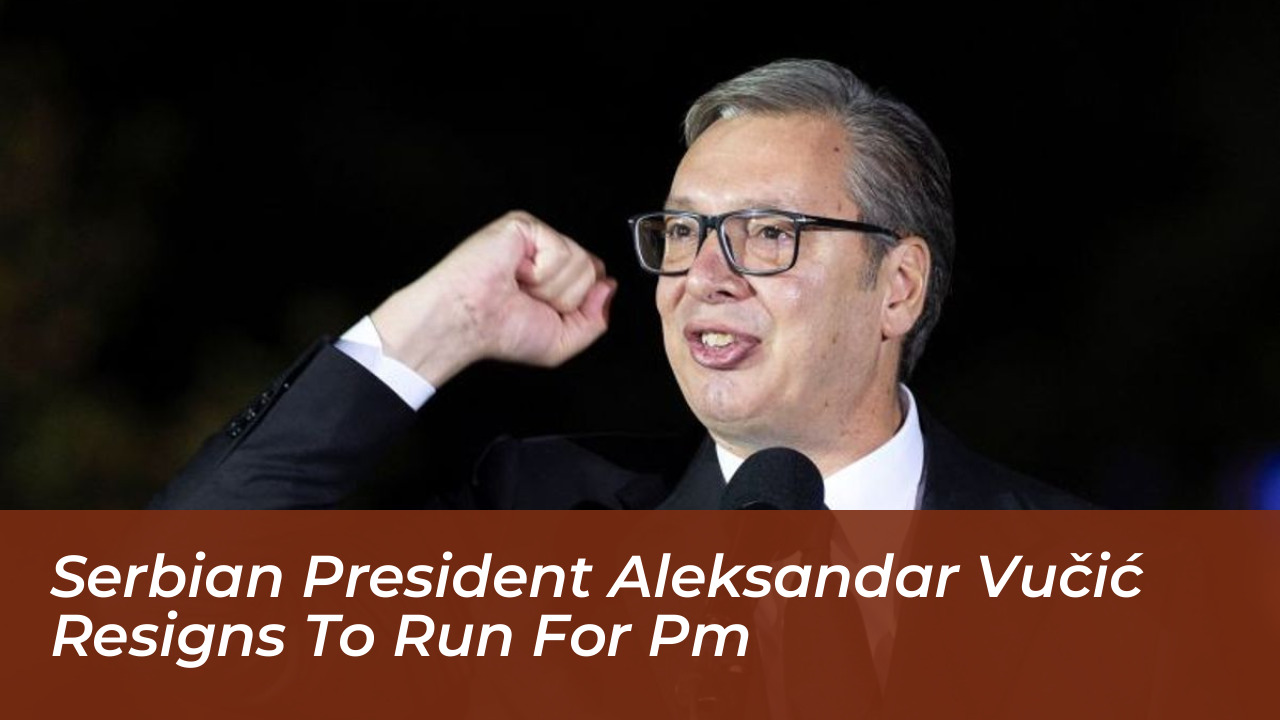
Serbian President Aleksandar Vučić formally resigned on Sunday, stepping down ahead of his constitutional term expiration to run for prime minister in a snap parliamentary election scheduled for October 25. Vučić, who has dominated the country’s political landscape since 2014, is barred by the nation’s constitution from seeking a third consecutive presidential term.
The sudden move comes amid months of widespread anti-government protests and mounting public anger over alleged corruption. Demonstrations intensified significantly following a tragic train station canopy collapse in Novi Sad in November 2024, which claimed 16 lives. University students and various citizen groups have spearheaded a powerful movement demanding systemic accountability and justice.
“I am resigning the duty of the president of the republic,” Vučić stated in Belgrade while reading his resignation text. By stepping down and positioning himself as the candidate for prime minister representing the ruling Serbian Progressive Party (SNS), Vučić aims to retain his grip on power and steer his party through a challenging political climate.
Under Serbia’s constitution, Vučić’s resignation triggers a presidential election that must take place within three months, meaning citizens will head to the polls twice before the end of the year. Parliament Speaker Ana Brnabić, a close political ally of Vučić, will serve as the interim acting president until a new head of state is officially chosen.
In one of his final executive acts before leaving office, Vučić exercised his constitutional authority to pardon 49 individuals, which included 23 participants linked to recent public protests. Serbian public broadcaster RTS confirmed the pardons as part of efforts to address civil unrest following months of intense demonstrations and clashes with authorities.
The upcoming October ballot will pit Vučić’s ruling SNS against a rising, youth-backed anti-corruption movement alongside pro-Western opposition coalitions. While analysts note that the political opposition and the governing party are polling closely, Vučić’s strategic pivot to the role of prime minister-historically a powerful executive position in the country-sets the stage for a high-stakes electoral showdown in the Balkan nation.