With fewer than 40 days remaining before the United States midterm elections, Swing Left Executive Director Yasmin Radjy has outlined the primary strategic opportunities and obstacles facing the Democratic Party. As grassroots organizers deploy for nationwide canvassing across critical battleground districts, Radjy pointed to systemic voter dissatisfaction and economic pressure as the central forces shaping public debate across the political spectrum.
“The two things head and shoulders above everything else that we’re hearing about: one is a feeling like the system is broken, and soon after that are various issues around cost of living,” Radjy noted. She emphasized that while candidates understand the necessity of addressing affordability, connecting these economic concerns directly to public frustration with institutions remains vital.
Expanding the Electoral Map and Rethinking Tactics
Swing Left has significantly scaled up its targets for the upcoming cycle, expanding from an initial list of 33 House seats to roughly 46 competitive districts. This expanded focus encompasses essential “must-win” toss-up races as well as broader “reach” contests designed to build long-term legislative resilience. Prominent examples on the expanded map include critical matchups in Iowa, Texas, and Alaska.
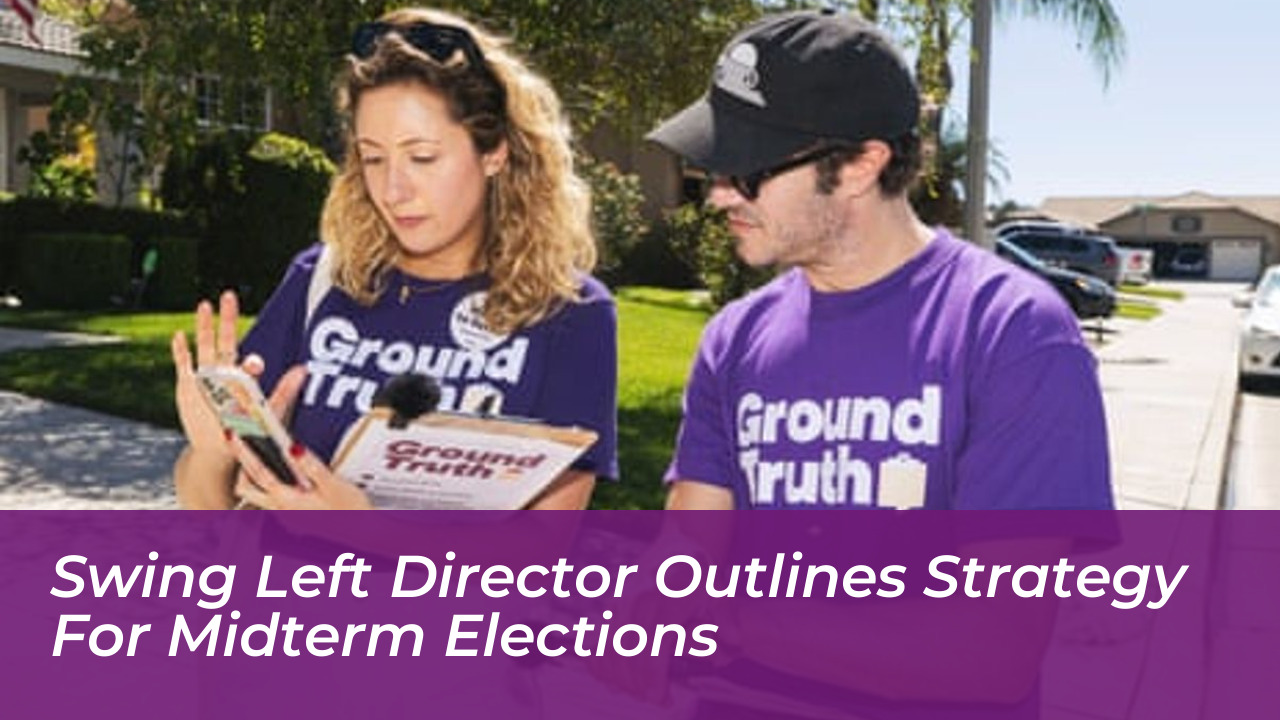
According to Radjy, relying solely on traditional voter turnout efforts is insufficient for securing enduring majorities. Instead, the organization has championed a shift toward deep persuasion through its volunteer-powered initiative, known as “Ground Truth.”
The “Ground Truth” Listening Program
Launched to address gaps in conventional campaign strategies, the Ground Truth program initiates direct voter contact months ahead of standard schedules. Rather than relying on rigid talking points, volunteers engage in extended, open-ended conversations-often lasting 10 to 15 minutes-with every household in targeted precincts, regardless of political affiliation.
Following each interaction, volunteers log detailed summaries using custom AI tools that synthesize broad voter trends and sentiment shifts. These insights are shared directly with campaigns, allowing candidates to refine messaging on key issues such as immigration, national security, and the cost of living.
Looking Beyond Congress: State Power and Redistricting
Radjy emphasized that the upcoming midterms carry implications that extend far beyond control of the House and Senate. Securing governorships and state legislative majorities remains critical for safeguarding democratic processes and preparing for the upcoming post-census redistricting cycle in 2030.
“We are all so focused on 2026… but if we don’t start competing more aggressively and locking in governor’s power and state legislative power, when it comes to 2030… we are going to be in real trouble,” Radjy cautioned, pointing to the structural advantages long pursued by conservative organizations.
With opportunities for civic participation ranging from local volunteer groups to targeted financial support, Swing Left continues to urge voters to engage early and recognize their individual agency in shaping the political landscape for the coming decade.