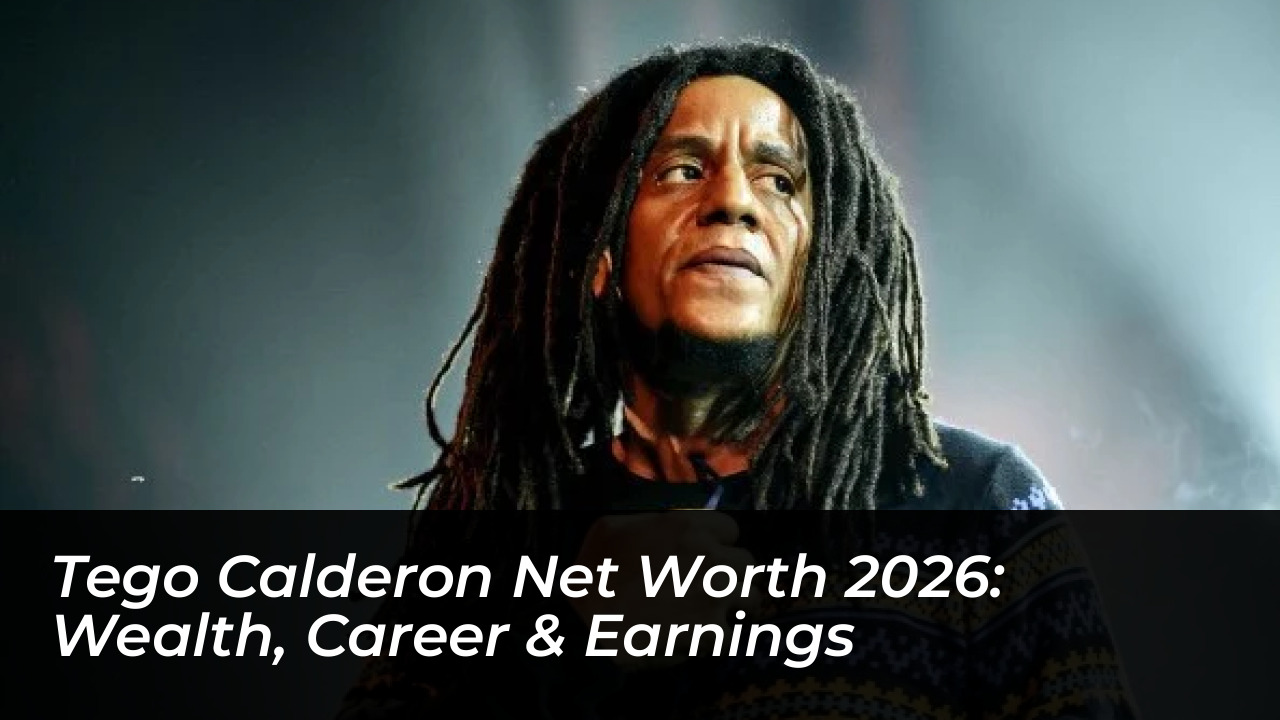



Tego Calderón, widely recognized as one of the most foundational and influential figures in the history of reggaeton and Latin hip-hop, commands an estimated net worth ranging between $3.5 million and $8 million. Nicknamed “El Abayarde,” the Puerto Rican rapper, singer, songwriter, actor, and record executive fundamentally altered the landscape of Latin urban music by injecting Afro-Caribbean rhythms, socially conscious lyricism, and raw artistic integrity into a genre traditionally dominated by electronic production and commercialized tropes.
Despite his massive cultural impact and a career spanning over two decades, Calderón’s financial portfolio reflects a deliberate rejection of standard pop-star monetization strategies. Rather than chasing constant record releases or maximizing endorsement deals, he built a sustainable livelihood through high-demand live concert touring, independent label ownership, and selective cinematic appearances.
Early Life and Musical Foundations
Born Tegui Calderón Rosario on February 1, 1972, in Santurce, Puerto Rico, he spent his formative years immersed in diverse cultural hubs including Río Grande, Carolina, and Miami Beach. His parents introduced him to traditional Puerto Rican music and salsa icons like Ismael Rivera, while his own tastes quickly expanded to encompass jazz, African music, American hip-hop, and heavy metal.
Before launching his career as a rapper, Calderón studied percussion at Puerto Rico’s prestigious Escuela Libre de Música and played drums in rock and heavy metal bands. This deep-rooted background in percussion heavily influenced his approach to reggaeton. Instead of relying solely on electronic beats, his signature sound frequently integrated live instrumentation and traditional rhythms drawn from bomba, plena, rumba, and salsa.
Breakthrough and the Cultural Impact of “El Abayarde”
After years of grinding through Puerto Rico’s underground hip-hop and reggaeton scenes-collaborating with producers and artists like Eddie Dee-Calderón achieved an international breakthrough with his 2002 independent debut album, El Abayarde.
The album shattered commercial expectations, selling hundreds of thousands of copies and spawning definitive early-2000s anthems like “Pa’ Que Retozen,” “Guasa Guasa,” and “Al Natural.” Culturally, the project was a watershed moment. At a time when reggaeton lyrics frequently centered on party themes and materialism, Calderón utilized his platform to address racism, class inequality, Black identity, and the realities of life in impoverished communities. His uncompromising pride in his Afro-Puerto Rican heritage made him an outlier in Latin entertainment, paving the way for future generations of artists to embrace similar social consciousness.
Business Ventures, Record Labels, and Major Deals
Calderón approached his career with sharp business instincts, establishing his own imprint, Jiggiri Records, to maintain creative autonomy. Jiggiri served as his personal recording vehicle while also supporting other emerging acts such as Zion & Lennox and Julio Voltio.
In 2005, Atlantic Records announced a landmark worldwide agreement with Calderón through Jiggiri Records, marking the first time a major non-Latin record label signed a global partnership with a pioneering reggaeton artist. The deal allowed Calderón to retain ownership of his imprint rather than functioning as a standard major-label artist. His insistence on control was legendary; prior to the Atlantic agreement, he notably turned down multimillion-dollar offers from major labels because they demanded too much creative compromise.
His financial journey also involved navigating the complexities of the music industry. In 2006, Calderón filed a lawsuit against his former label, White Lion Records, and its owner, Elías de León, seeking over $810,000 in unpaid royalties and damages related to his early releases. The case was eventually settled out of court.
How Tego Calderón Generates His Income
While record sales, publishing royalties, and label ownership contributed to his wealth, Calderón has historically pointed to live performances as his primary financial engine. During the height of reggaeton’s initial global explosion in the 2000s, he became a massive touring draw across the United States, Puerto Rico, Latin America, and Europe.
Calderón’s strict personal code frequently influenced his bottom line. At the height of his early fame, he rejected a lucrative advertising campaign for Sean “Diddy” Combs’ Sean John clothing line due to concerns regarding manufacturing labor conditions. Similarly, he stepped away from wearing expensive diamond jewelry after learning about the ethical controversies surrounding the global diamond trade.
Acting Career and Film Franchises
Expanding his professional footprint into Hollywood, Calderón built a recognizable acting résumé during the 2000s and 2010s. He made his feature film debut as Choco in the 2007 crime drama Illegal Tender, produced by John Singleton.

Shortly thereafter, he entered the blockbuster Fast & Furious cinematic universe. He first appeared as Leo Tego alongside fellow reggaeton icon Don Omar in the 2009 short film Los Bandoleros, directed by Vin Diesel, before reprising the role in Fast & Furious (2009). The duo returned as fan-favorite members of Dominic Toretto’s crew in 2011’s massively successful Fast Five-participating in the iconic Rio de Janeiro vault heist-and later appeared in 2017’s The Fate of the Furious.
Later Career, Awards, and Legacy
Maintaining a highly selective release schedule during the 2010s and 2020s, Calderón continued to garner critical acclaim. His 2015 studio album, El Que Sabe, Sabe-named in honor of his late father-won the Latin Grammy Award for Best Urban Music Album. Nearly a decade later, his 2023 single “La Receta” earned him a second Latin Grammy for Best Reggaeton Performance, proving his enduring relevance in an ever-shifting musical landscape.
Today, Tego Calderón’s net worth reflects a career built on terms of uncompromising artistic independence. By prioritizing personal integrity, cultural representation, and live performance over relentless commercial saturation, he cemented a legacy as one of the most respected pioneers in Latin music history.
Frequently Asked Questions About Tego Calderon
What is Tego Calderón’s estimated net worth?
Tego Calderón has an estimated net worth ranging between $3.5 million and $8 million, accumulated through his pioneering music career, live concert tours, acting roles, and entrepreneurial ventures.
How did Tego Calderón make most of his money?
While album sales, publishing, and his record label Jiggiri Records contributed to his wealth, Calderón has stated that live concert touring has historically been his primary source of income.
What are some of Tego Calderón’s most famous songs?
Some of his most iconic tracks include “Pa’ Que Retozen,” “Guasa Guasa,” “Al Natural,” “Bandoleros” (with Don Omar), and his Latin Grammy-winning single “La Receta.”
Did Tego Calderón star in the Fast & Furious movie franchise?
Yes, Calderón played the character Leo Tego alongside Don Omar (who played Rico Santos). They appeared in Fast & Furious (2009), Fast Five (2011), and The Fate of the Furious (2017).
Has Tego Calderón won any Latin Grammy Awards?
Yes, he won the Latin Grammy for Best Urban Music Album in 2015 for El Que Sabe, Sabe and won another Latin Grammy for Best Reggaeton Performance in 2023 for “La Receta.”
Why is Tego Calderón considered a pioneer in reggaeton?
Calderón is credited with moving reggaeton from Puerto Rico’s underground into the global mainstream while infusing the genre with traditional Afro-Caribbean instrumentation and socially conscious lyrics addressing race and poverty.