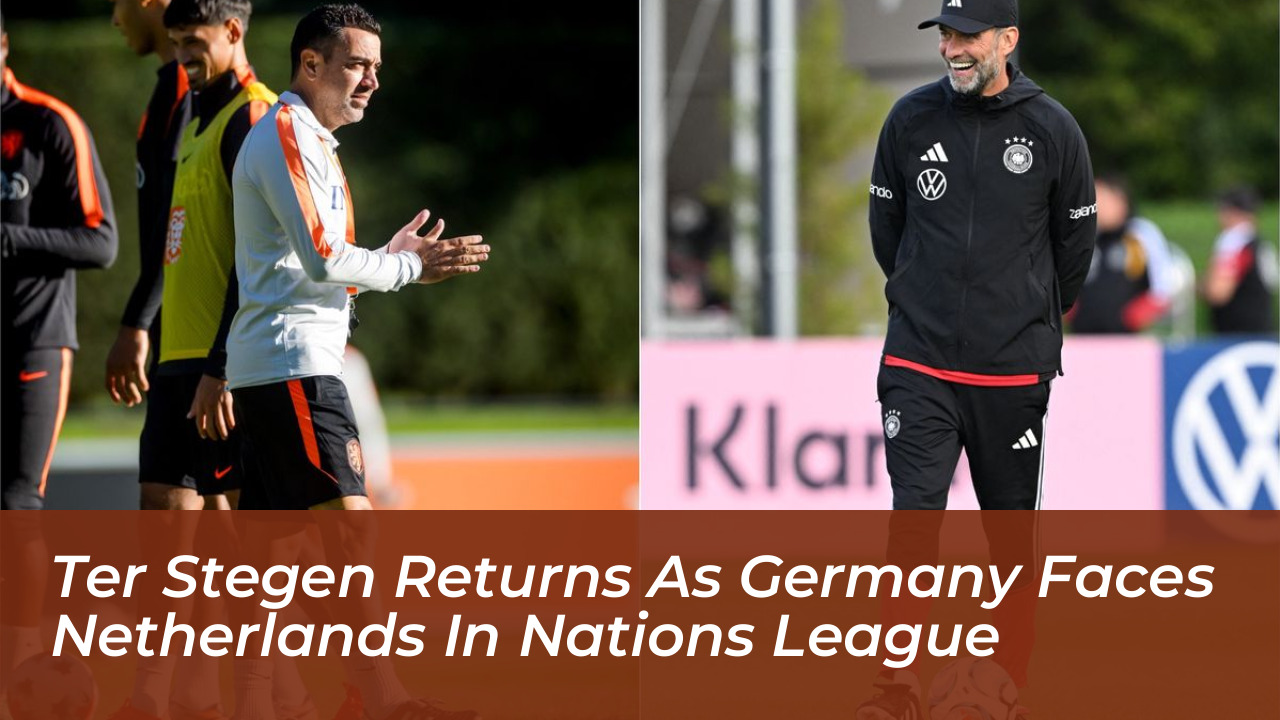
Marc-Andre ter Stegen steps back onto the international pitch on September 24, 2026, reclaiming the starting goalkeeper jersey for Germany against the Netherlands. This UEFA Nations League fixture at the Johan Cruyff Arena in Amsterdam marks a defining milestone in German football. Following a turbulent period marked by severe injuries, a club move to Ajax, and the permanent international retirement of Manuel Neuer, ter Stegen finally secures his status as the undisputed number one under new manager Jurgen Klopp. The fixture carries immense weight beyond the traditional European rivalry. It signals the official managerial debuts of two modern tactical icons, with Jurgen Klopp taking charge of Germany and Xavi Hernandez leading the Netherlands.
- The Long Road Back for Germany’s New Number One
- Overcoming Injuries and Club Turmoil
- Stepping Out of Manuel Neuer’s Shadow
- Jurgen Klopp Overhauls Germany with Dual Squad Strategy
- Managing Player Fatigue in an Extended Calendar
- Goalkeeping Union and Rising Prospects
- Tactical Integration of Klopp’s Philosophy
- Implementing High-Intensity Pressing
- Revamping the Midfield Structure
- Germany Group A2 Squad Breakdown and Fixture Schedule
- Fixture Details
- Upcoming Group A2 Fixtures
- The Strategic Significance of the Amsterdam Clash
- Testing Recovery Under Competitive Pressure
- Frequently Asked Questions
- Why did Marc-Andre ter Stegen miss previous international matches?
- Who is the new manager of the German national team?
- How does the dual squad system work for Germany?
- Where is the UEFA Nations League match against the Netherlands played?
Both footballing powerhouses enter this Nations League campaign with a point to prove after disappointing round of 32 eliminations at the North American World Cup earlier in the summer. Fans across Europe are watching closely to see how these tactical adjustments translate onto the pitch during this high-stakes encounter.
The Long Road Back for Germany’s New Number One
Overcoming Injuries and Club Turmoil
Ter Stegen last featured for Die Mannschaft on June 8, 2025, during a 2-0 defeat to France in the Nations League third-place playoff in Stuttgart. A series of debilitating knee and back injuries derailed his momentum at Barcelona, eventually relegating him to the bench at Camp Nou. Doubts surrounded his ability to return to the elite tier of international football after missing crucial months of competitive action.
A strategic loan move to Eredivisie giants Ajax provided the necessary platform for his physical and professional revival. Securing regular minutes under club management allowed the veteran shot-stopper to regain peak physical condition and match sharpness. Playing his comeback match at the Johan Cruyff Arena holds profound symbolic value, transforming his current club home into the stage for his international resurrection.
Stepping Out of Manuel Neuer’s Shadow
Manuel Neuer officially ended his international career following the World Cup, clearing the path for ter Stegen to seize control. While previous interim managers utilized alternatives like Oliver Baumann during qualifying phases, Klopp immediately established a clear hierarchy upon his appointment. The incoming coach designated ter Stegen as his definitive first-choice goalkeeper for the upcoming international cycle.
This unwavering backing from the coaching staff removes any lingering ambiguity regarding the starting role. Ter Stegen now has the mental freedom to focus entirely on his on-field responsibilities without constantly looking over his shoulder for potential replacements.
Jurgen Klopp Overhauls Germany with Dual Squad Strategy
Managing Player Fatigue in an Extended Calendar
The September and October international window introduces an unprecedented challenge with four fixtures packed tightly together. To manage player fatigue and evaluate a broad talent pool, Jurgen Klopp announced a massive 44-man selection divided into two distinct squads. The first group focuses on the clashes against the Netherlands and Greece, while the second group prepares for fixtures against Serbia and a return match in Greece.
Klopp made it clear that this setup does not feature a traditional A or B team design. Instead, it balances veteran leadership with youthful exuberance. This innovative squad management approach protects players from burnout while giving the coaching staff an extended look at emerging talent across the Bundesliga and foreign leagues.
Goalkeeping Union and Rising Prospects
Ter Stegen anchors the first squad alongside backup options Alexander Nubel of Besiktas and Finn Dahmen of Augsburg. Meanwhile, Bayern Munich prospect Jonas Urbig headlines the second wave of call-ups, representing the long-term future of the German goalkeeping union. The selection philosophy emphasizes healthy internal competition.
The broader roster also incorporates 11 uncapped players, signaling an aggressive talent evaluation across German football. Young standouts like Eintracht Frankfurt forward Younes Ebnoutalib and SV Elversberg midfielder Felix Keidel receive a genuine opportunity to impress the new coaching staff on the international stage.
Tactical Integration of Klopp’s Philosophy
Implementing High-Intensity Pressing
Implementing a high-intensity tactical system requires rapid adaptation from players who spent years under different strategic setups. Ter Stegen noted that the limited training time ahead of the Amsterdam clash forces the team to rely on foundational principles rather than overly complex game plans. Klopp expects his squad to defend collectively through structured pressing rather than depending on individual defensive heroics.
For ter Stegen, commanding the penalty area behind a newly configured defensive line requires vocal leadership. Precise distribution from the back becomes vital to jumpstart transitional attacks against a potent Dutch press. Defenders like Philipp Treu must maintain tight positional discipline to shield the goalkeeper from sustained pressure.
Revamping the Midfield Structure
Tactical adjustments shift captain Joshua Kimmich out of the defensive line and back into his preferred central midfield role. This move restores stability and creative passing in the center of the pitch. Kimmich acts as the primary connector between ter Stegen’s goal kicks and the advancing forward line.
Fluid movement in midfield helps break down stubborn defensive blocks, ensuring Germany maintains sustained offensive pressure. The seamless transition from defense to attack remains a core tenet of Klopp’s tactical blueprint for this new era.
Germany Group A2 Squad Breakdown and Fixture Schedule
Fixture Details
- Match: Netherlands vs. Germany in the UEFA Nations League
- Venue: Johan Cruyff Arena, Amsterdam
- Date: September 24, 2026
Upcoming Group A2 Fixtures
- Match against Greece on September 27, 2026
- Match against Serbia on October 1, 2026
- Return match in Greece on October 4, 2026
| Squad Group | Key Goalkeepers | Primary Focus Fixtures |
|---|---|---|
| Squad One | Marc-Andre ter Stegen, Alexander Nubel, Finn Dahmen | Netherlands, Greece |
| Squad Two | Jonas Urbig, Noah Atubolu, Finn Dahmen | Serbia, Away vs Greece |
The Strategic Significance of the Amsterdam Clash
Testing Recovery Under Competitive Pressure
Beyond the managerial matchup between Klopp and Xavi, Group A2 of the UEFA Nations League sets the tone for qualification cycles leading toward major international tournaments. Ter Stegen faces a potent Dutch attack in hostile territory, testing his reflexes and recovery from past injuries under extreme competitive pressure. Success in Amsterdam validates Klopp’s immediate reliance on experience over youth in high-stakes fixtures.
Ter Stegen acknowledges that maintaining long-term health remains his primary objective as he targets longevity up to the European Championship and beyond. By anchoring the German defense, the Ajax loanee finally steps out of the long shadow cast by his predecessors to write the defining chapter of his international career.
Frequently Asked Questions
Why did Marc-Andre ter Stegen miss previous international matches?
Severe knee and back injuries sidelined the goalkeeper for extended periods, limiting his competitive minutes at club and international levels.
Who is the new manager of the German national team?
Jurgen Klopp took charge of the German national team, bringing a high-intensity tactical philosophy and an innovative squad management strategy.
How does the dual squad system work for Germany?
Klopp selected a 44-man pool divided into two distinct groups to manage player fatigue across a tightly packed schedule of four autumn fixtures.
Where is the UEFA Nations League match against the Netherlands played?
The high-profile fixture takes place at the Johan Cruyff Arena in Amsterdam.