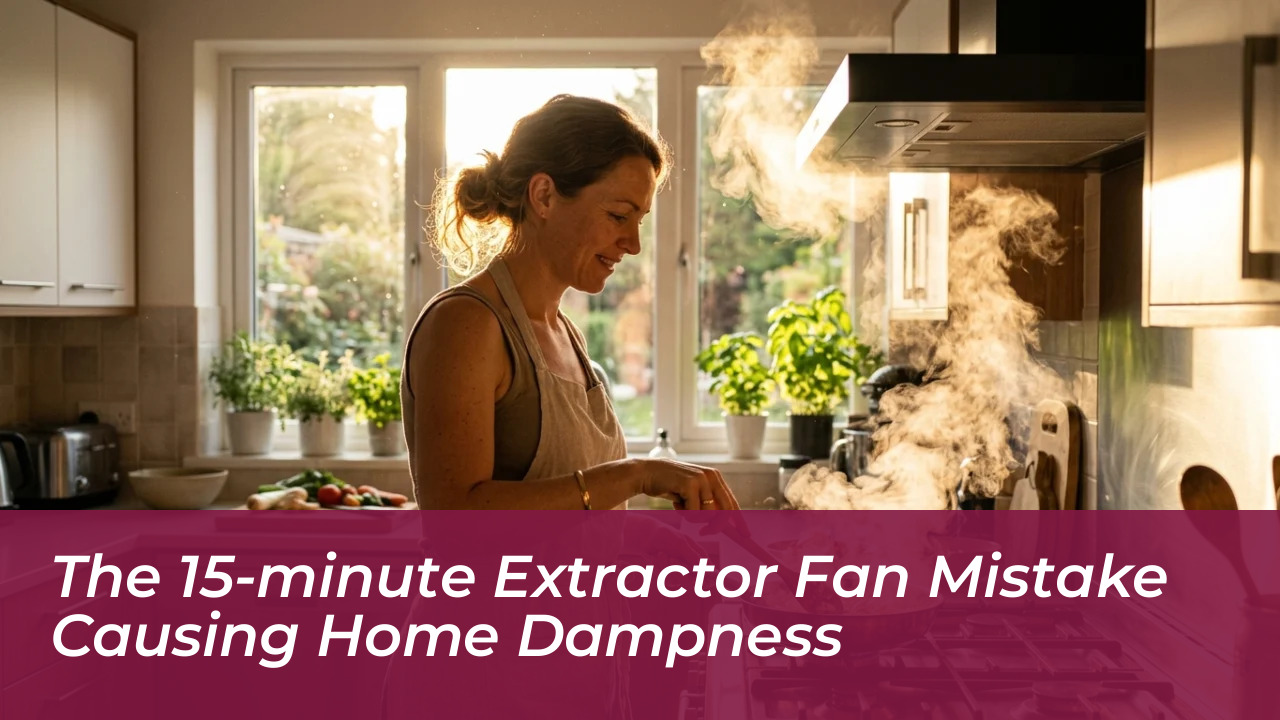

As colder temperatures settle across the UK and households routinely shut their windows tight to preserve warmth, a hidden hazard builds up indoors. While sealing up draughts keeps rooms comfortable, it also locks inside all the humidity generated by standard daily routines. According to industry experts, switching off your kitchen or bathroom extractor fan the exact second you finish cooking or showering traps litres of airborne water inside your property, rapidly accelerating condensation and damp.
A typical household of four living in a three-bedroom property generates up to 112 pints of airborne moisture every single week simply by breathing, boiling the kettle, bathing, and preparing meals. When this invisible water vapour meets cold external walls and window glass, it rapidly converts into heavy surface condensation. Left unmanaged, this persistent dampness creates the ideal breeding ground for stubborn black mould along window seals, silicone joints, and exterior-facing corners.
The 15-Minute Rule: Why Prematurely Cutting the Power Fails
A widespread assumption among many homeowners is that running an extractor fan solely during a steamy shower or while boiling food is sufficient. In reality, steam remains suspended in the air long after the hob is switched off or the shower tap is closed. Cutting the extraction prematurely leaves a dense cloud of water droplets floating in the room, where it settles onto cool tiles, ceilings, and windowpanes.
Ruth MacEachern, a ventilation expert at EnviroVent, highlights that everyday tasks quickly saturate domestic living spaces unless airflow is managed systematically. She points out that routine actions like boiling kettles and hot cooking generate massive volumes of ambient humidity that cannot vanish instantly.
“As households spend more time indoors during the colder months, everyday activities such as cooking, showering and even boiling the kettle can cause moisture levels to rise. In fact, four people living in a three-bed property could produce up to 112 pints of moisture a week from just breathing, cooking, showering and boiling the kettle.”
Allowing the extractor fan to run for a full 15 minutes post-activity ensures the room undergoes a complete air change. This extended cycle physically draws the lingering moisture out of the building envelope before it has time to condense against colder surfaces.
Practical Daily Habits to Cut Kitchen and Bathroom Dampness
Extending ventilation runtimes is only one part of maintaining a dry indoor environment. Minor adjustments to food preparation and bathing routines significantly decrease the initial volume of water vapour pumped into domestic spaces. Implementing targeted habits helps lower everyday moisture output across key hotspot rooms:
- Cover pots and pans: Always place tight lids on saucepans when boiling water on the hob to keep steam trapped inside the cookware.
- Keep the dishwasher closed: Resist opening the appliance cycle immediately after it finishes; allow it to cool down completely so steam condenses internally rather than escaping into the kitchen.
- Limit oven checks: Avoid opening the oven door unnecessarily during cooking, which releases bursts of hot moisture into the room.
- Lower bathing temperatures: Run slightly cooler water for baths and showers to reduce the immediate production of heavy steam.
- Seal off the bathroom: Keep the bathroom door firmly closed during and after washing to stop warm humidity from migrating into colder bedrooms and hallways.
- Drain the bath promptly: Empty standing bathwater straight away after use instead of leaving a warm, evaporating pool sitting in the tub.
Managing Indoor Laundry Without Causing Mould
Drying damp clothes indoors is another major cause of seasonal dampness across British properties, particularly for households without an outdoor washing line or tumble dryer. Hanging wet garments across bedroom radiators dumps several litres of water directly into cold living areas, rapidly driving up ambient humidity levels.
To eliminate this problem, ventilation experts recommend turning your bathroom into a dedicated, temporary drying zone. Place clothes airers inside the room, engage the heated towel rail to provide gentle warmth, and keep the extractor fan running to pull damp air straight outdoors. Ensure drying racks are not overcrowded so that air circulates freely between fabric layers, which prevents persistent musty odours from settling into fabrics.
Moisture Control Checklist
Tracking the practical effectiveness of common humidity-reduction habits helps identify where everyday routines might be inadvertently introducing moisture into living areas. Reviewing your daily practices ensures that your home remains protected against structural dampness all winter long.
- Post-shower fan management: Leave the extractor fan running for a minimum of 15 minutes after showering.
- Boiling food on the hob: Keep saucepans securely covered with lids throughout the entire cooking process.
- Emptying the dishwasher: Wait until the internal cycle cools completely before opening the appliance door.
- Drying wet laundry indoors: Position drying racks in the bathroom with the door shut and the fan running.
- Post-bath routine: Drain bathwater immediately after use rather than leaving standing warm water.
Addressing moisture at the exact point of creation prevents it from dispersing through cold hallways and settling in structural nooks. By combining extended extraction times with small habit changes, households can keep indoor humidity under control all winter long, protecting both indoor air quality and interior paintwork from costly black mould damage.