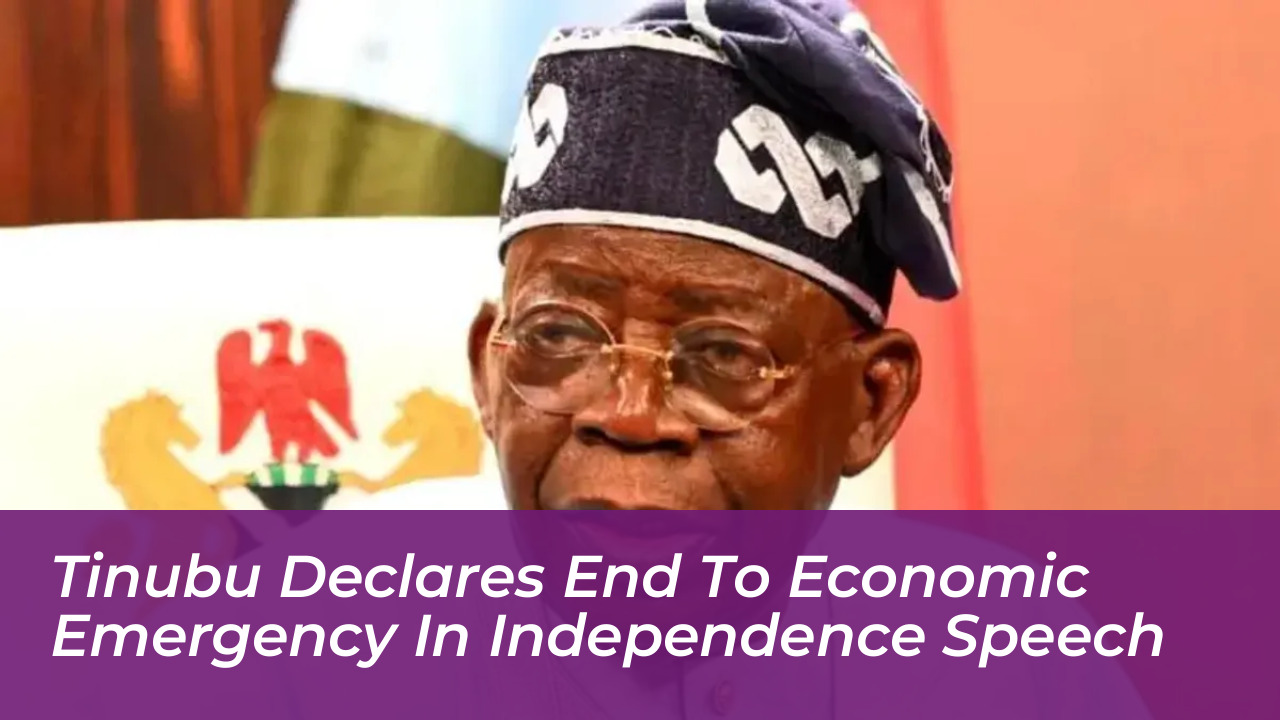
Nigerian President Bola Tinubu announced during his 66th Independence Day broadcast on October 1, 2026, that the nation has officially completed its period of emergency economic stabilization. He stated that Nigeria is now shifting its core focus toward widespread, shared prosperity.
Tinubu defended structural adjustments enacted since his administration took office. These changes include the removal of fuel subsidies and the unification of foreign exchange rates. He emphasized that these painful measures were vital to correct long-standing economic failures. Comparing past national leadership mistakes to treating severe ailments with temporary relief, he noted that his administration refused to rely on short-term fixes that only worsened structural defects.
The Shift From Reform to Prosperity
Addressing the nation after three years of recovery efforts, President Tinubu stated that the foundational phase of his economic roadmap has successfully concluded. “The emergency treatment is over. The foundation has been repaired. The central economic task before us has changed,” Tinubu declared during the broadcast.
He pointed to several positive indicators to demonstrate that tough policy choices have yielded measurable stabilization. According to the administration, Nigeria has experienced economic growth of more than four percent this year, lower inflation rates, rebuilt foreign reserves, and a significantly more stable foreign exchange market. Additionally, the President noted that oil theft has declined while non-oil export revenues reached a record high in 2025, exceeding $6 billion.
Addressing Everyday Hardships and Lowering Living Costs
While celebrating macroeconomic progress, Tinubu acknowledged that millions of citizens continue to struggle with basic needs such as food, school fees, medical bills, and transportation. He stressed that the administration’s next phase is entirely dedicated to reducing the cost of living by driving down production and transportation expenses.
To achieve this, the government is pursuing targeted strategies, which include:
- Expanding mechanized irrigation and dry-season farming to boost local crop yields.
- Providing farmers with greater access to quality seeds and fertilizers.
- Improving storage facilities and logistics networks to minimize post-harvest losses.
- Continuing heavy investments in national infrastructure, including roads, railways, and ports.
- Leveraging Nigeria’s vast natural gas resources to power new industrial zones and reactivate shuttered factories.
“When a farmer produces more cheaply, when fewer crops are lost between the farm and the market, when a manufacturer spends less on electricity, and when a truck reaches its destination faster, all those savings will ultimately find their way into the price of goods in the market,” Tinubu explained.
Social Interventions as a Bridge to Growth
To cushion the transition toward broader prosperity, the administration intends to maintain and expand targeted social intervention programs. Initiatives such as direct support for vulnerable households, updates to the National Social Register, the Nigerian Education Loan Fund, and CREDICORP are designed to protect citizens while the wider economy grows.
“Our objective is not to manage poverty more efficiently. We will defeat it,” Tinubu stated firmly. He urged Nigerians to look past the sacrifices of the reform era and move forward with confidence toward a future defined by abundance, security, and equal economic opportunity.